Historical Knife Replicas vs. Antique Originals
An antique knife is the surviving original: it carries the maker's stamp, age and wear, and its value comes from rarity and provenance. A historical replica reproduces the shape, proportions and character of a period pattern in a newly made blade. You can own a 19th-century Bowie profile or an early medieval seax in sound steel, handle it freely and display it without worrying about damaging a museum piece. The knives in this collection are handmade reproductions and historically inspired designs. None is sold as an antique or as an exact copy of a single surviving artifact.
Bowie Knives of the Old West and the Sheffield Trade
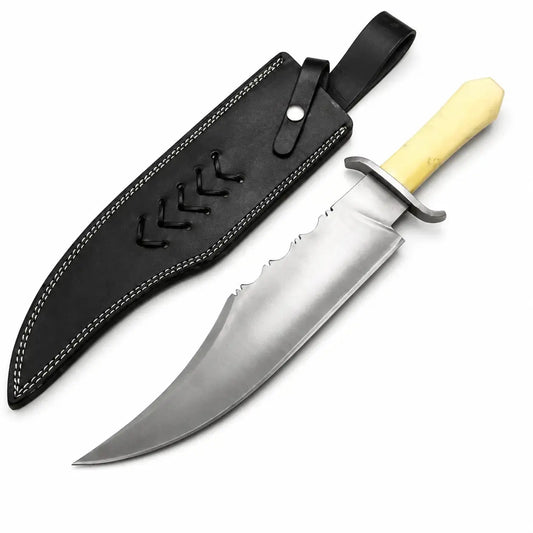
The Bowie knife takes its name from Jim Bowie and became the defining large knife of the American frontier in the 1830s and 1840s. Demand grew so fast that cutlers in Sheffield, England, began making Bowie knives for export to America, and makers such as George Wostenholm's I*XL works shipped them in large numbers during the Gold Rush years. These "California" style Bowies often had long clip-point blades and stag handles.
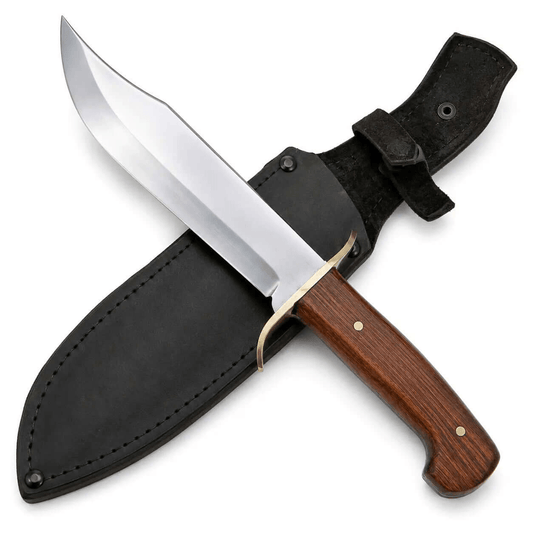
The Bowie patterns here span that range: a Sheffield-style California Bowie with a stag horn handle, Old West and Western Bowies with wood handles, one with a brass guard, a Bowie inspired by examples held in the Smithsonian, and large 12-inch heritage designs tied to the Jim Bowie and Alamo story. Because no knife carried by Jim Bowie is known to survive with certainty, Alamo-inspired pieces follow the period style rather than one authenticated knife. For a wider choice, see our full Bowie knives collection.
Bowie Variations Collectors Look For
The Bowie name covers many shapes. The coffin-handle Bowie, named for its six-sided handle that resembles a coffin outline, was popular in the mid-1800s. The Arkansas toothpick has a long, straight, narrow blade and is closely tied to Bowie lore. Civil War era Bowies were often large, simply made knives carried by soldiers on both sides. Comparing clip point, spear point and straight-back blades is part of what makes these patterns rewarding to collect.
Frontier and Fur-Trade Knives
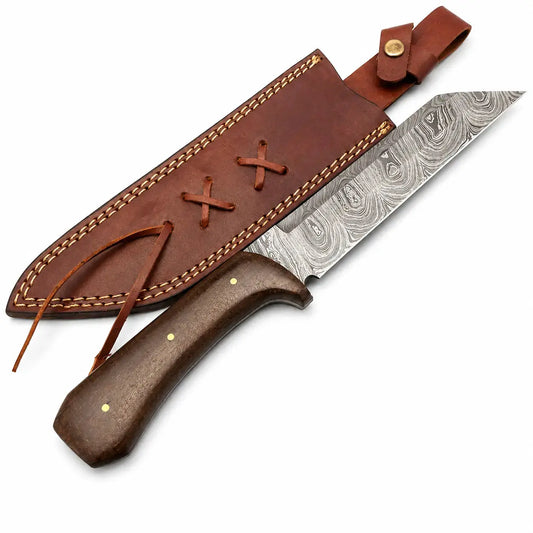
Before the Bowie became famous, the knife on most trappers' and settlers' belts was a plain butcher or skinning knife. John Russell's Green River Works in Massachusetts made so many of these from the 1830s onward that "Green River" became shorthand for a dependable frontier blade. Fur-trade and 1800s butcher patterns are simple: a thin carbon steel blade, wood scales and a few rivets. They show how the working knife of the period really looked, alongside the larger Bowies collectors usually know first.
Early Medieval and Viking-Age Knives
The seax was the everyday single-edged knife of early medieval northern Europe, used by Anglo-Saxon, Frankish and Norse peoples for work, hunting and eating. Sizes ranged from small utility knives to long blades, and many show the angular "broken back" spine collectors recognize today. A seax replica suits anyone building a Viking-age or medieval collection, and a Damascus blade gives it a layered pattern that echoes early pattern-welded steel. More pieces from this period are in our Viking seax knives.
WWII-Era Knife Patterns
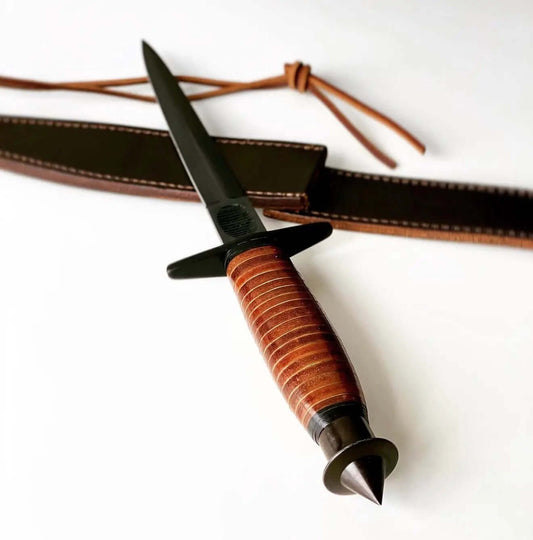
World War II produced some of the most collected knife patterns of the 20th century. The V-42, made by W. R. Case & Sons from 1942, was issued to the First Special Service Force, the joint American and Canadian unit known as the Devil's Brigade. It's recognized by the thumb rest on its ricasso and its pointed pommel. Originals now trade at auction, which is why many collectors choose a newly made V-42 pattern for display. If you collect WWII designs, our Fairbairn-Sykes knives cover another well-known pattern of the same era.
Traditional Knives and Tools from Around the World
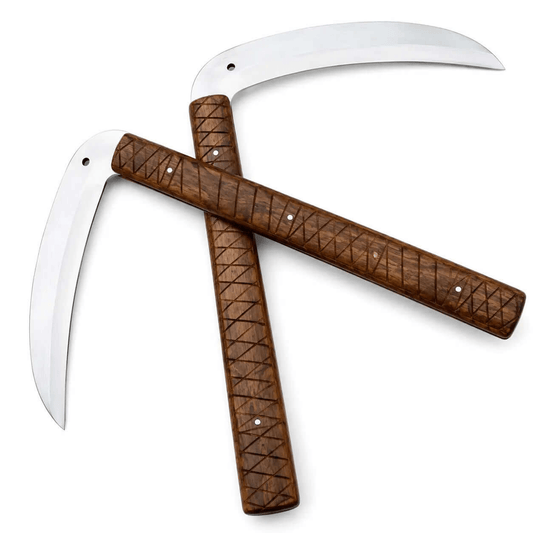
Historical knives aren't only about the frontier and the battlefield. The Japanese kama is a short hand sickle with a curved blade set at an angle to a wooden handle, used for centuries to harvest rice and cut grass. The kukri, with its forward-curved blade, is the traditional knife of Nepal and is closely associated with the Gurkhas. The Scottish sgian-dubh is a small knife worn tucked into the sock with Highland dress. The Japanese tanto is a short, straight blade with roots in the samurai era; our tanto knives show the profile in modern form. Each shape grew from its own work, climate and tradition.
Steel, Handles and Sheaths
Original period knives were mostly made from plain carbon steel. The replicas here use high carbon steel for an authentic feel and a patina that develops with age, D2 tool steel for better stain resistance and edge holding, and Damascus where a patterned blade suits the design. Handles follow period materials: stag horn, camel bone and hardwood, with micarta where durability matters more than tradition. Most pieces come with a leather sheath. Keep carbon steel blades dry and lightly oiled, and don't store a knife in its leather sheath for long periods, since leather can hold moisture against the blade.
Choosing a Historical Knife
Start with the era or story that interests you most, whether that's the Old West, Viking-age Europe or World War II, then compare blade length, steel and handle. A large Bowie makes a strong display centerpiece, while a seax or kama adds range to a mixed collection. For more pieces with a story behind them, browse our collectible knives.