


Nickel for Halloween
perfect!!! good size
AMAZING!!!!! Great quality of finishes and materials. Very satisfied.
The item as described , fast delivery, well packed. satisfied. thak you.
Very good. Good price.
Unique Blades Runner
Couldn't load pickup availability
Looking for a custom-made knife? We can work with your preferred blade style, size, steel, handle material, engraving, and sheath options.
📩 Request a Custom Order with your design idea, reference image, or requirements for pricing and availability.
Keep your handmade knife clean and dry to help preserve its finish and condition.
◆ Cleaning: Wipe the blade clean and dry after handling or use.
◆ Oiling: Apply a light coat of mineral or camellia oil before storage, especially on carbon and tool steels.
◆ Moisture: Avoid prolonged exposure to water or damp conditions.
◆ Storage: Store the knife and leather sheath in a cool, dry place.
◆ Avoid Soaking: Do not place the knife in a dishwasher or soak it in water.
Note: Care requirements may vary depending on the blade steel, handle material, and finish of the individual product.
We ship worldwide with tracking and protective packaging.
◆ Processing: Standard orders usually ship within 4–7 business days.
◆ Delivery: Transit times vary by destination and carrier.
◆ Tracking: Tracking details are provided after dispatch.
◆ Customs: International buyers may be responsible for applicable import duties or taxes.
For questions about an order or delivery, please contact us.
All our blades are individually handcrafted
By purchasing, you acknowledge understanding and acceptance of our terms.


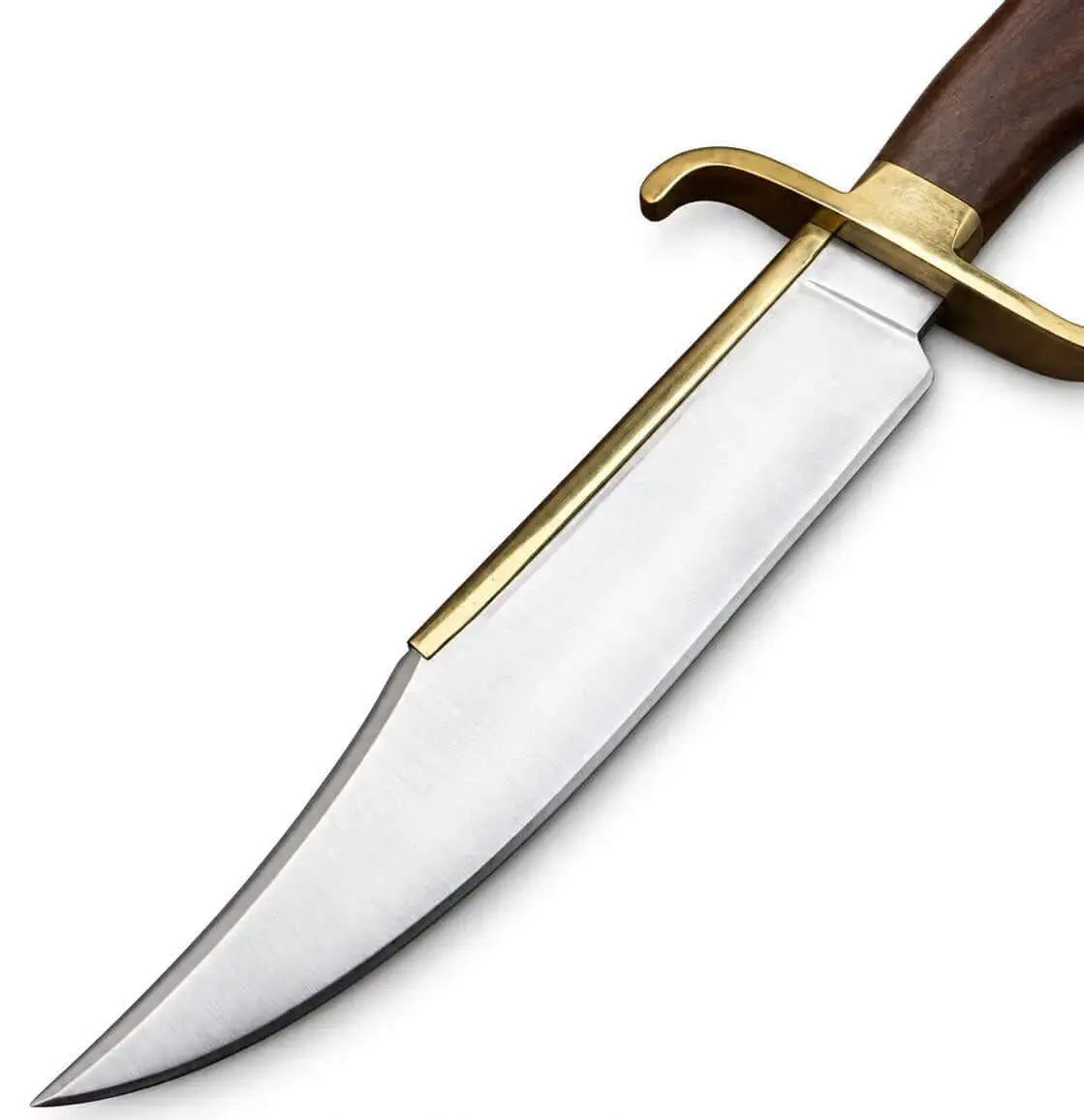
This Alamo Jim Bowie knife replica is a handmade heritage piece built around the enduring knife tradition associated with James Bowie and the Alamo. The 18-inch fixed blade features a 12-inch high-carbon-steel blade, 6-inch wood handle, and original leather sheath. It is supplied sharp and is intended for responsible collecting, historical-style display, and photography.
The story behind Alamo Jim Bowie’s actual knife is more complicated than a single surviving artifact. James Bowie’s association with the large knife that eventually carried his name began before the Texas Revolution. The Handbook of Texas records Rezin Bowie’s account that he designed an early hunting knife for his brother and that blacksmith Jesse Clifft forged it. That early knife was described more like a large butcher knife than the later clip-point Bowie profile familiar today.
James Bowie later became permanently associated with the Alamo, where he died on March 6, 1836. The Alamo itself treats some of the familiar stories about Bowie defending himself from his sick bed with pistols and a knife as part of the mixture of documented history and legend surrounding the battle.
For that reason, the precise appearance and provenance of the knife Jim Bowie carried at the Alamo should not be treated as conclusively settled. Historical collections contain Bowie-family knives, period examples, later commemorative pieces, and proposed candidates, but that is different from having an undisputed surviving knife that can establish one exact Alamo pattern.
This listing is therefore best understood as a James Bowie heritage replica inspired by the Alamo and Bowie-knife tradition rather than a claim of authenticated provenance to one conclusively identified surviving artifact.
The scale of this piece gives it the visual presence expected from a classic Jim Bowie knife. Its 12-inch blade also sits within the broad dimensions documented for some early Bowie knives, which the Handbook of Texas notes could range up to approximately 12½ inches in blade length. Early examples varied considerably in shape, fittings, guards, and handles, so the Bowie knife developed as a family of designs rather than one permanently fixed pattern.
This version uses high carbon steel for the blade and wood for the handle, keeping the construction visually appropriate for a historical-style piece while remaining a newly made handmade knife. The leather sheath completes the traditional presentation without suggesting that the materials or dimensions reproduce a documented museum artifact exactly.
The result is an Alamo Bowie knife that works naturally within collections focused on James Bowie, Texas history, frontier-era designs, traditional Bowie knives, and American historical replicas.
It is a Jim Bowie knife replica and heritage interpretation, but it should not be represented as an authenticated copy of one conclusively proven Alamo knife. The surviving historical record supports James Bowie’s strong connection to the Bowie knife, while the exact knife he possessed at the Alamo remains surrounded by competing artifacts, traditions, and legends.
That distinction allows the piece to retain its James Bowie Alamo identity without turning historical uncertainty into an unsupported provenance claim.