Bowie Knives in Traditional and Handmade Styles
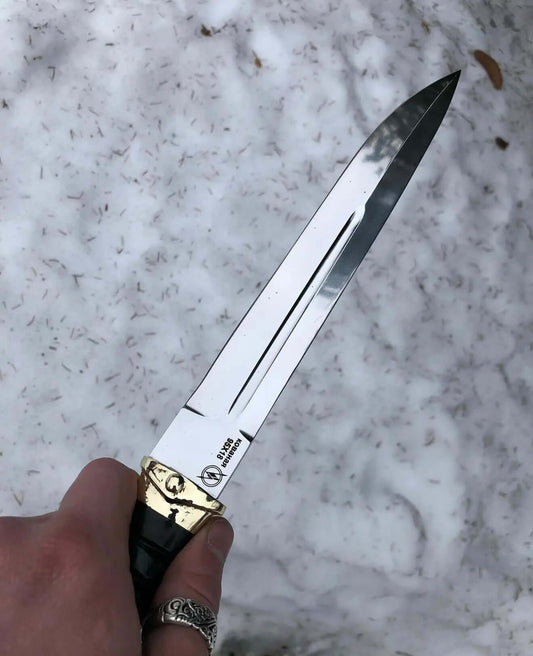
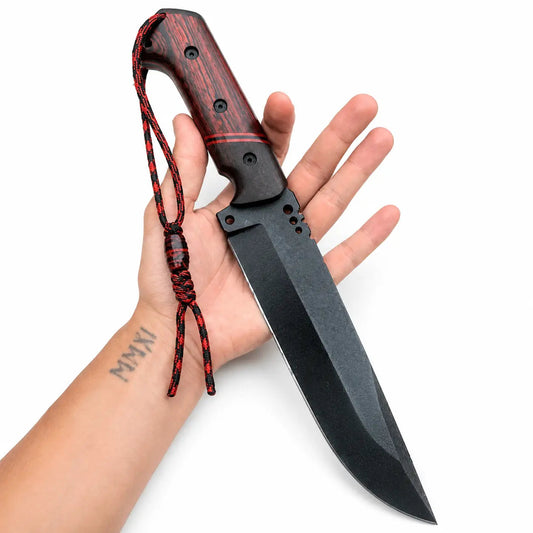
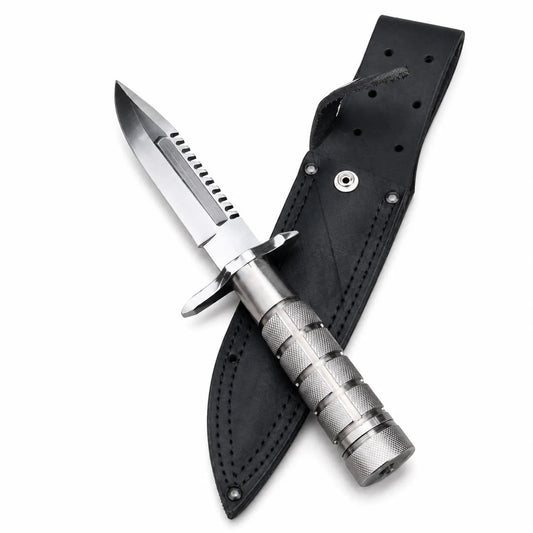
The Bowie knife has developed into a broad fixed-blade category rather than one single standardized design. Modern Bowies can range from large, traditional-looking knives with pronounced clip points and guards to smaller handmade interpretations that retain the recognizable Bowie character in more manageable proportions.
That variety is one of the main reasons to compare individual designs rather than choosing by the Bowie name alone. Blade length, width, point shape, steel, tang construction, handle material, guard style, and sheath can all change how a knife looks and feels.
Some buyers prefer the classic Western Bowie appearance, while others are drawn to a custom Bowie knife, Damascus blade, hand-forged finish, or a design built around natural handle materials. The category also overlaps with hunting and outdoor fixed blades, although a Bowie has its own recognizable design identity.
Clip-Point and Western Bowie Knife Designs
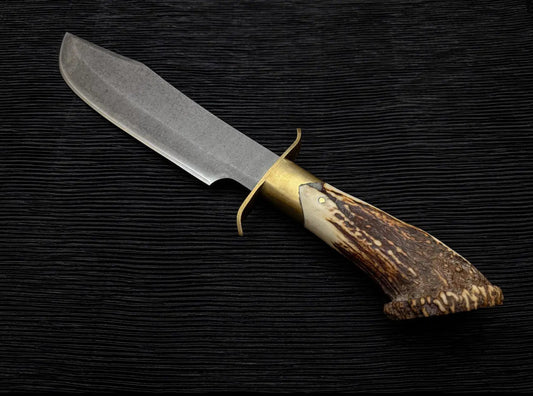
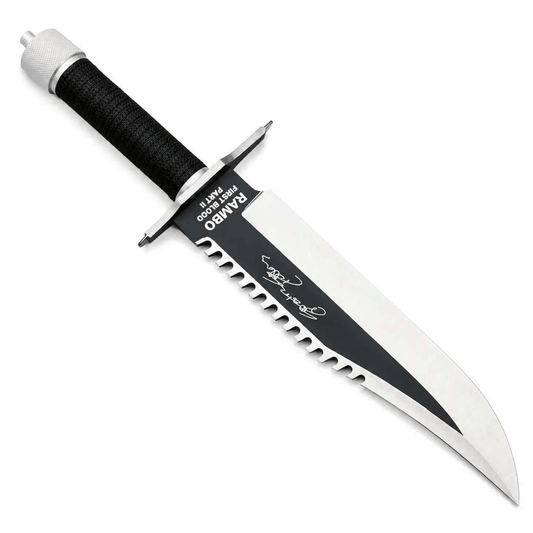
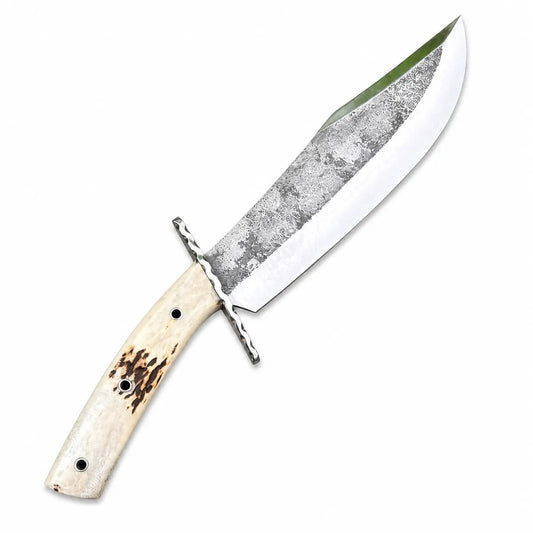
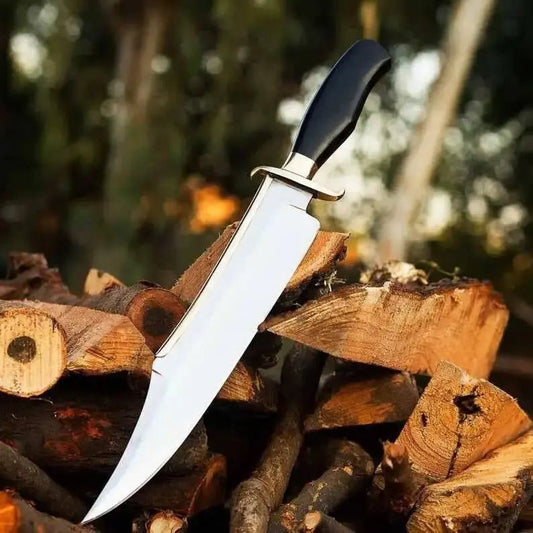
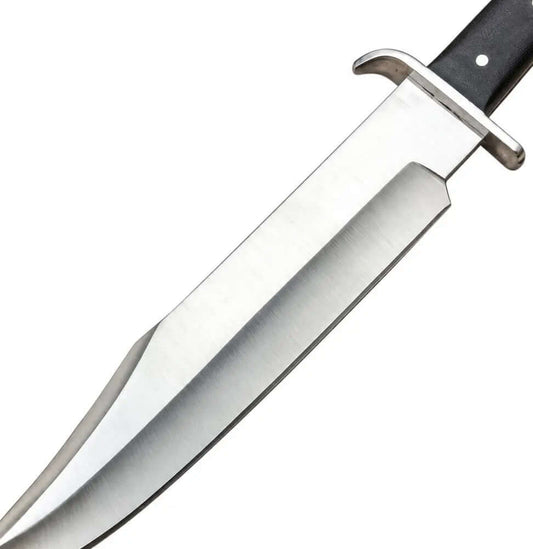
The clip point is one of the blade shapes most closely associated with the modern Bowie style. The spine slopes or curves downward near the tip, creating a more defined point and giving the blade the profile many buyers immediately recognize as a Bowie.
Not every Bowie uses an exaggerated clip, however. Some have a relatively subtle clipped section, while others feature a long and dramatic upper profile. Guard shape, blade width, handle proportions, and overall size also contribute to the finished appearance.
A Western Bowie knife often emphasizes those traditional visual elements: a substantial fixed blade, visible guard, strong point, and classic handle styling. More contemporary Bowies may simplify the guard or use modern handle materials while keeping the same broad design language.
When comparing styles, look at the complete knife rather than focusing only on the point.
Large Bowie Knives and Smaller Designs
Size is a major part of the Bowie category.
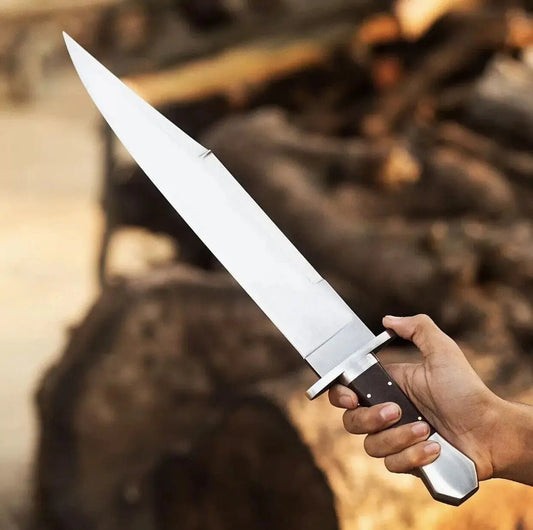
A large Bowie knife provides the substantial proportions many collectors associate with traditional Bowie designs. A longer and broader blade creates a stronger visual presence and can make the knife particularly suitable for buyers interested in larger outdoor fixed blades or display pieces.
Smaller Bowie knives take a different approach. They retain recognizable features of the style while reducing the overall dimensions. This can appeal to someone who wants Bowie character without choosing one of the largest blades in the collection.
Neither approach is automatically better. Compare:
- Overall knife length
- Blade length
- Blade width and thickness
- Handle length
- Guard proportions
- Overall weight
- Sheath dimensions when supplied
Always use the measurements on the individual product page when deciding between sizes. A photograph alone can make it difficult to judge how large a Bowie actually is.
Handmade, Hand-Forged and Custom Bowie Knives
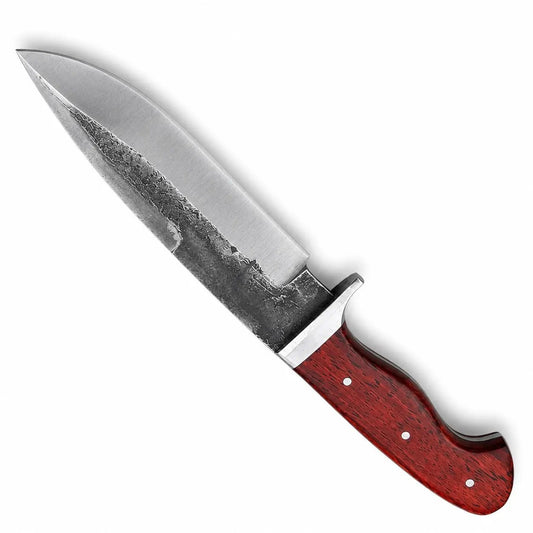
A handmade Bowie knife gives the maker more freedom to combine different blade finishes, handles, guards, pins, spacers, and sheath styles than a strictly standardized design.
Hand-forged and custom-style Bowies can also show subtle differences from piece to piece. Natural handle materials vary in grain and coloration, and hand-finished surfaces may have small characteristics that distinguish one knife from another.
A custom Bowie knife may place greater emphasis on a particular blade profile, handle material, decorative guard, Damascus pattern, or traditional Western appearance. The word “custom” should still be understood through the details of the individual listing, because construction and personalization options can differ between products.
For shoppers interested in craftsmanship as much as size, these details can be more meaningful than simply choosing the largest Bowie available.
Damascus Bowie Knives and Blade Steel
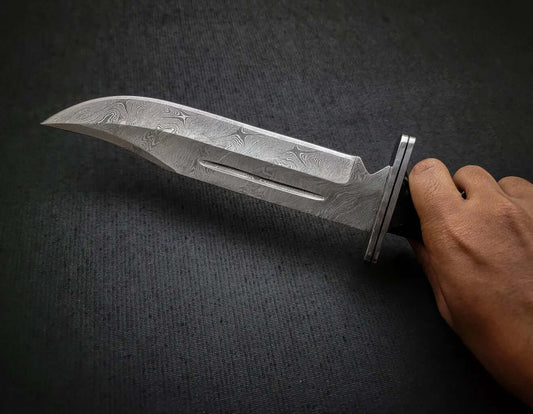
A Damascus Bowie knife combines the substantial Bowie profile with the visible patterning associated with pattern-welded Damascus steel. Because a Bowie often has a broad blade surface, Damascus patterns can become an especially prominent visual part of the design.
That makes Damascus Bowies attractive to collectors and buyers who want the blade material itself to contribute to the appearance of the knife.
Other Bowie designs may use tool steel, high-carbon steel, or other blade steels depending on the individual product. Each material brings different considerations for edge care, sharpening, corrosion resistance, and appearance.
Steel should therefore be considered together with blade geometry and construction rather than treated as the only measure of a knife. Check the exact product specifications before comparing two Bowies made from different steels.
Full-Tang Construction, Handles and Guards
A full tang Bowie knife uses a construction in which the blade steel continues through the handle. When full-tang construction is important to you, confirm it in the specifications of the individual knife rather than assuming every Bowie uses the same internal structure.
Handles can change the character of the knife just as much as the blade.
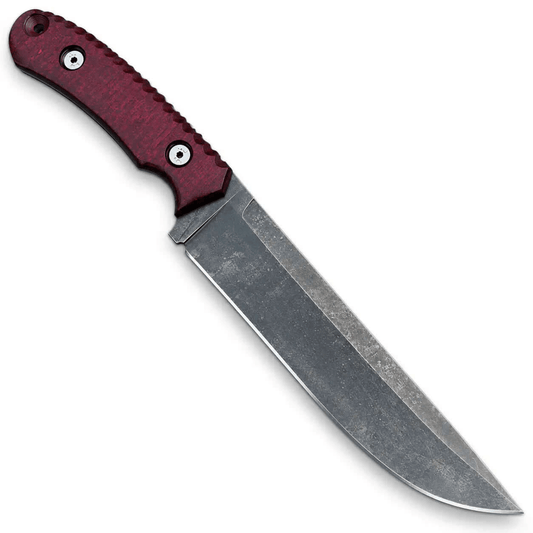
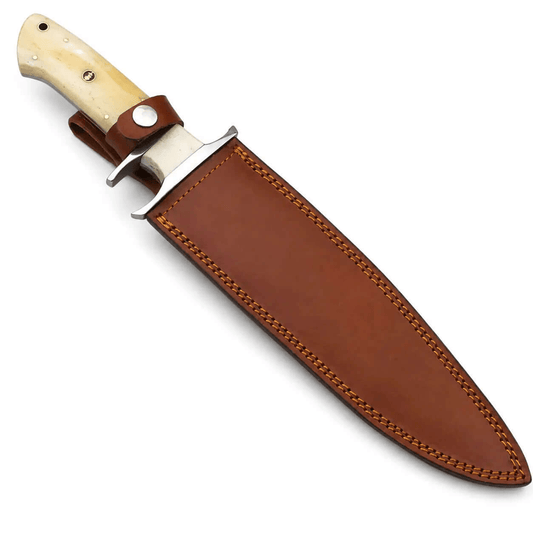
Traditional-looking Bowies may use wood, stacked leather, bone, horn, or stag-style materials, while other designs use modern materials such as Micarta or G-10. Natural materials tend to create greater variation in grain, color, and texture, while manufactured handle materials usually have a more uniform appearance.
The guard is another defining visual feature. Some Bowies use a straightforward crossguard, while others have more decorative shapes that reinforce the Western or collector-oriented character of the knife.
When comparing handles, consider dimensions and contour as well as material. A large blade should be paired with proportions that make sense for the complete knife.
Bowie Knives With Sheaths
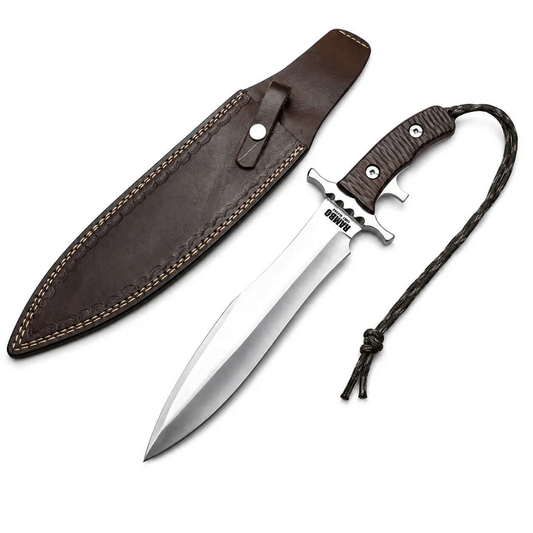
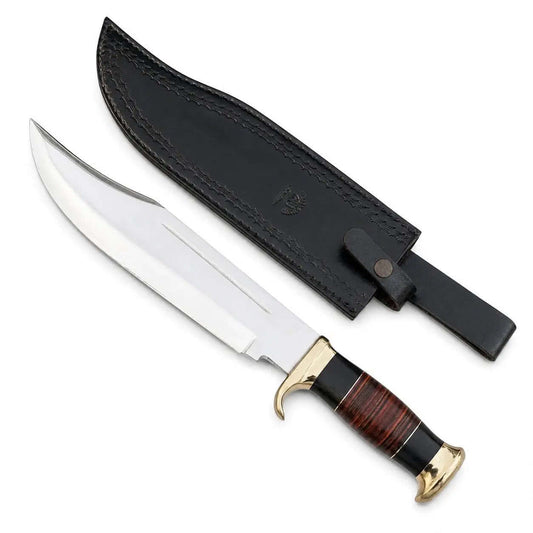
A Bowie knife sheath protects the edge and gives a fixed blade a dedicated cover for storage or carrying.
Leather sheaths are particularly well matched with traditional and handmade Bowie designs because they complement wood, horn, stacked leather, Damascus, and other classic materials. Sheath shape, stitching, retention method, belt attachment, and decoration can vary considerably between individual knives.
If a sheath is important to your purchase, check the product page to confirm exactly what is supplied. Do not assume that every knife in the collection includes the same style of sheath.
The sheath can also be part of the visual presentation of a collectible Bowie, especially when the leather work has been shaped specifically around the blade and guard.
Bowie Hunting Knives and Other Outdoor Blades
A Bowie hunting knife combines Bowie-style proportions with the broader outdoor and hunting fixed-blade category.
The two terms should not be treated as identical. Hunting knives include many blade profiles, including drop points, skinners, compact fixed blades, and gut-hook designs. A Bowie is more strongly identified by its overall blade style and traditional proportions.
For detailed skinning work, a dedicated skinning knife may provide a more specialized curved edge and compact shape. Someone looking for a larger outdoor fixed blade may prefer the additional size and traditional form of a Bowie.
This distinction helps keep each collection useful: Bowie knives focus on Bowie-style design, while hunting and skinning collections can concentrate on profiles developed around more specific field-processing tasks.
Choosing a Bowie Knife
Start with size. Decide whether you want the visual impact of a large Bowie or a more compact design.
Next, compare the blade profile. A pronounced clip point gives the knife a traditional Bowie appearance, while modified profiles can offer a more modern interpretation.
Then look at construction and materials. Depending on what matters most to you, compare:
- Handmade or hand-forged character
- Full-tang construction where specified
- Damascus, carbon, tool, or other blade steel
- Wood, horn, bone, leather, Micarta, or other handle materials
- Guard shape
- Blade finish
- Sheath style
- Overall dimensions and weight
Collectors may give greater priority to Damascus patterning, natural handle materials, decorative guards, or traditional Western styling. Buyers choosing an outdoor knife may focus more closely on size, grip, construction, steel care, and sheath design.
Also distinguish a completed Bowie from Bowie knife blanks. A blank is intended for knife making, handle fitting, or further finishing and belongs in a separate category from a completed handmade Bowie.
FAQ About Bowie Knives
What is the difference between a large Bowie knife and a small Bowie knife?
The main difference is overall proportion. Large Bowies emphasize the substantial blade and traditional presence associated with the style, while smaller versions retain Bowie design elements in a more compact format. Always compare actual dimensions before choosing.
Are Bowie knives always clip point?
Clip points are strongly associated with the Bowie style, but modern Bowie designs can vary. The complete combination of blade proportions, point shape, guard, handle, and fixed-blade construction is more useful for identifying the style than one feature by itself.
What is a full-tang Bowie knife?
A full-tang Bowie has blade steel that continues through the handle. Because tang construction differs between products, check the individual specifications whenever full tang is an important buying requirement.
Why choose a Damascus Bowie knife?
Damascus adds visible patterning across the blade, which can be especially noticeable on the broad surface of a Bowie. It is often chosen by buyers who value handmade appearance and collector-focused design as well as the Bowie profile itself.
Browse the available Bowie knives and compare size, blade shape, steel, handle materials, guards, construction, and sheath styles to find the design that best matches your outdoor needs or collection.