What Makes a Bowie Knife a Bowie
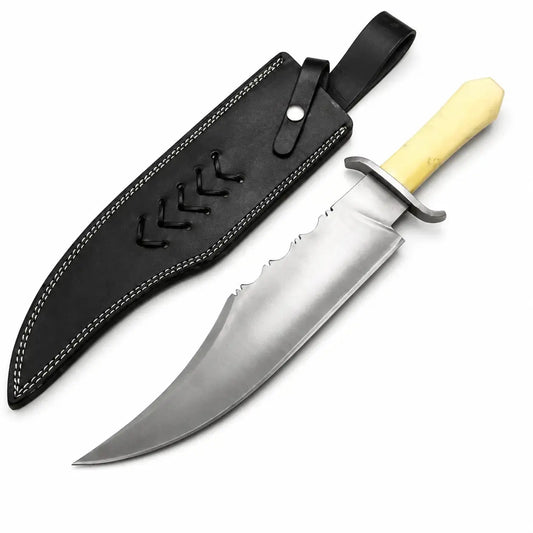
A Bowie knife is a large fixed blade knife with a few defining features: a long blade, usually with a clip point where the spine dips toward the tip; a cross guard that separates the blade from the handle; and a handle sized for a full grip. The name comes from Jim Bowie, the frontiersman whose knife became famous after the 1827 Sandbar Fight, and the original design is often credited to his brother Rezin. Makers have built the pattern in many forms since then, which is why two Bowies can look quite different and still belong to the same family.
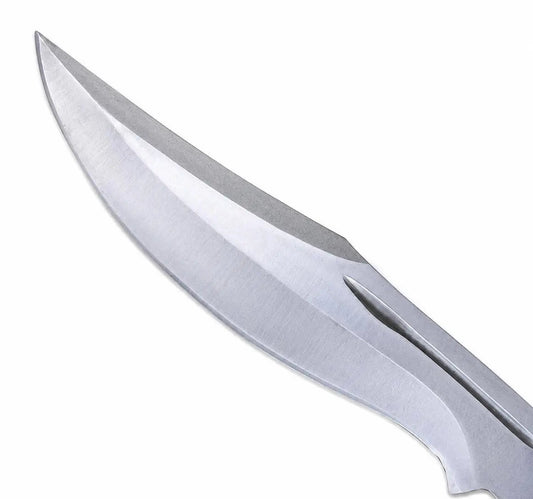
The clip point is what most buyers notice first. It gives a fine, controllable tip for detail work, while the curved belly behind it handles slicing. Some Bowies add a false edge along the clip, and some use a straighter spine closer to a drop point. These are variations of the same knife, not different knives.
Bowie Knife Steels: High Carbon, D2 and Damascus
The Bowie knives here are made in three main steels, and each suits a different buyer.
High carbon steel is the traditional choice. It takes a keen edge, is easy to resharpen, and darkens to a patina with use. It needs oil and dry storage, because it will rust if it's left wet.
D2 tool steel is a high-chromium, semi-stainless steel. It resists wear and holds an edge longer than plain carbon steel, and it stains less, but it takes more work to sharpen once it dulls.
Damascus steel is pattern-welded: layers of different steels are forged together and then etched so the pattern shows on the blade, which means no two Damascus blades look the same. People choose it as much for looks as for cutting, and like carbon steel it needs a light coat of oil to keep the pattern clean. Our wider range of Damascus steel knives shows the same steel in other blade styles.
Historical Bowie Patterns
Many collectors buy Bowies for their history, so this collection includes new handmade knives made in 19th-century styles. They're historical patterns, not antiques. You'll find related pieces among our historical knives.
Coffin Handle and Mexican-Style Bowies
The coffin handle gets its name from its six-sided outline, which widens and then tapers like an old coffin. It was one of the common early Bowie handle styles and is easy to recognize in a display. Mexican-style Bowies follow the versions made by smiths south of the border as the pattern spread in the 1800s, and they're often built with long blades.
Sheffield, California and D-Guard Bowies
Cutlers in Sheffield, England exported large numbers of Bowie knives to the United States in the mid-1800s, often with etched blades and nickel silver fittings. California Bowies date to the Gold Rush era and are known for ornate silver-mounted handles. A D-guard Bowie has a handguard that loops from the cross guard down to the pommel, a style associated with the Civil War period.
Arkansas Toothpick
The Arkansas toothpick is a close relative of the Bowie. Its long, narrow blade tapers evenly to a point instead of dipping into a clip. Collectors often keep the two side by side to compare the profiles.
Western, Frontier and Hunting Bowie Knives
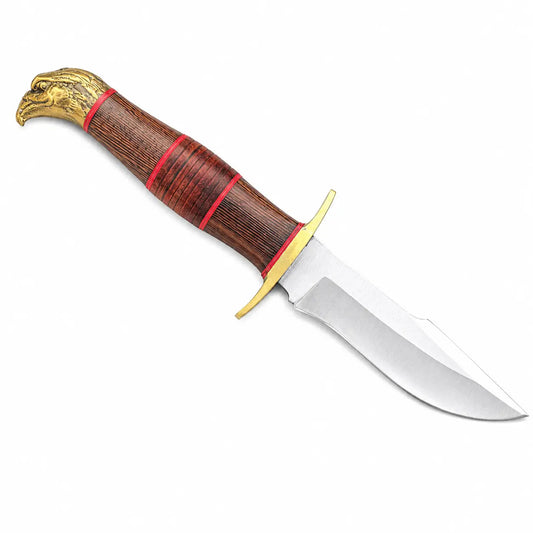
Western and frontier Bowies follow the look of knives carried in the 19th-century American West: wood or natural handles, brass guards, and satin or mirror-polished blades. A Bowie with a blade of about 7 to 9 inches can also work as a camp or hunting knife for cutting rope, camp chores and general field work. Longer blades chop better but are less handy for close work. If game processing is your main need, our hunting knives include smaller, purpose-built profiles.
Movie Replica Bowie Knives
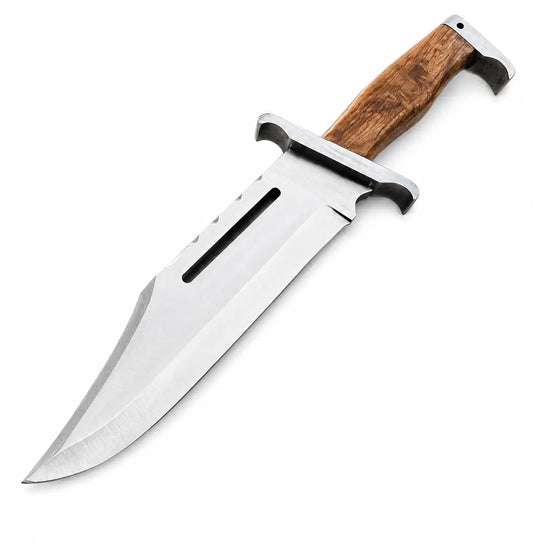
Films have kept the Bowie in the public eye, and some of the most popular Bowies are screen designs. The replica Bowies here follow the blade shape and proportions of well-known film knives and are made by hand as collector pieces, for fans who want to own the knife they remember. See more in our movie replica knives collection, including the Rambo knife replicas.
Choosing a Bowie Knife Size
Blade length is the main choice. Blades of about 6 to 8 inches are the most practical for carrying and outdoor use. Blades of 9 to 10 inches are the classic large Bowie size, balancing presence and control. Blades of 12 inches or more make big Bowies that are mostly for display and collecting, and they feel heavier in the hand. Overall length usually runs 5 to 6 inches more than the blade, so a 10-inch blade gives a knife of about 15 to 16 inches.
Fixed Blade or Folding Bowie
Traditional Bowies are fixed blades, often with a full tang (the steel runs through the whole handle), which makes them strong and simple to look after. A folding Bowie puts a smaller clip point blade into a pocket folder. It gives up some strength in exchange for easy carry, and suits buyers who want the Bowie look every day.
Handle Materials and Guards
The handle changes how a Bowie feels and looks. Wood such as wenge gives a warm, classic finish. Stag antler and bone are natural materials, so their texture and color vary from piece to piece. Micarta and G-10 are layered composites that resist moisture and keep a steady grip when wet. The guard matters too: brass is the traditional finish on Western and historical patterns, while steel suits a plainer working look.
Caring for a Bowie Knife and Its Leather Sheath
Every Bowie knife in this collection comes with a leather sheath. Wipe the blade dry after use and give carbon steel and Damascus a thin coat of oil. For long-term storage, keep the knife out of the sheath, since leather can hold moisture against the steel. When sharpening, hold the same angle along the belly and up to the clip point. A little leather conditioner now and then keeps the sheath from drying out and cracking.
Use the steels, sizes and patterns above as a guide, then browse the collection for the Bowie that fits how you'll use or display it.