Handmade Kitchen Knives for Different Cooking Styles
A kitchen knife collection works best when it offers more than variations of the same blade. Different ingredients and preparation methods benefit from different profiles, which is why this collection includes both versatile everyday designs and more specialised culinary knives.
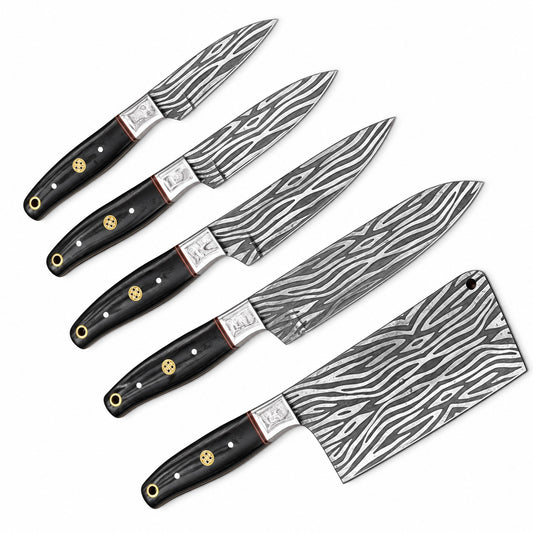
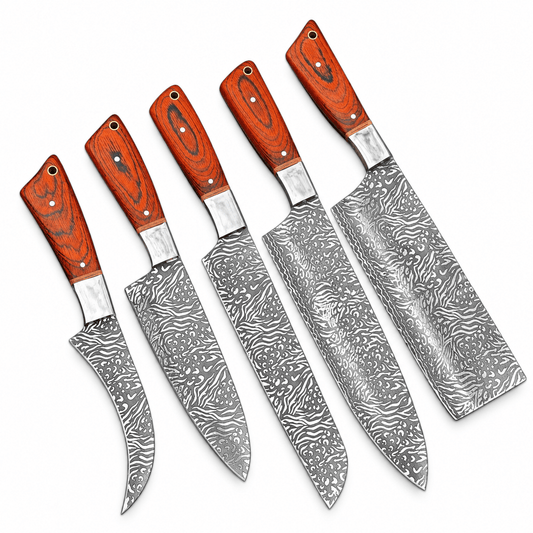
At the centre of the range are chef knives designed for common preparation work such as chopping vegetables, slicing ingredients, portioning food, and general cutting at the counter. For shoppers who prefer several complementary blades rather than one all-purpose knife, kitchen knife sets bring multiple profiles together in a coordinated collection.
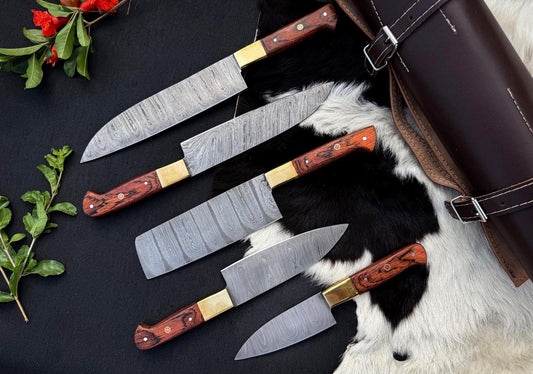
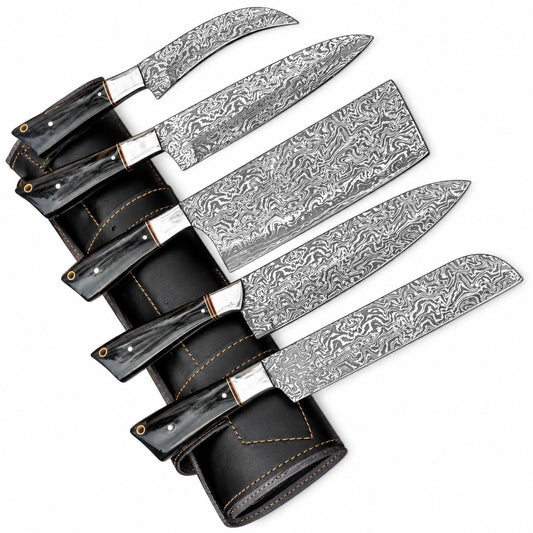
Because these knives are handmade, the individual character of the blade, handle materials, grind, finish, and pattern can vary between designs. That handcrafted character is particularly noticeable across forged and patterned-steel models.
Choosing a Kitchen Knife Profile
The best profile depends less on having the largest possible knife and more on matching the blade shape to the type of preparation you normally do.
Chef Knives
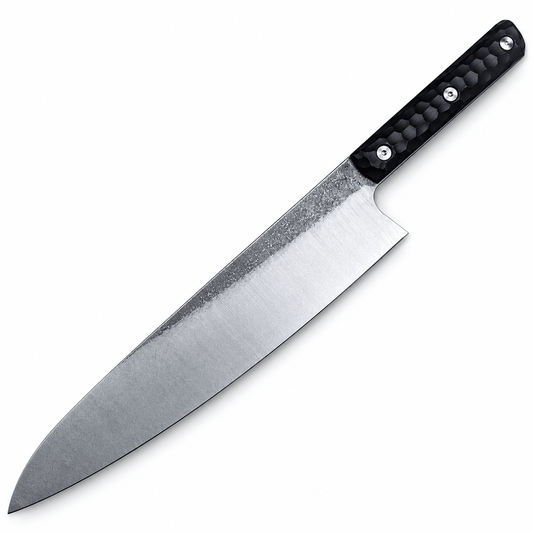
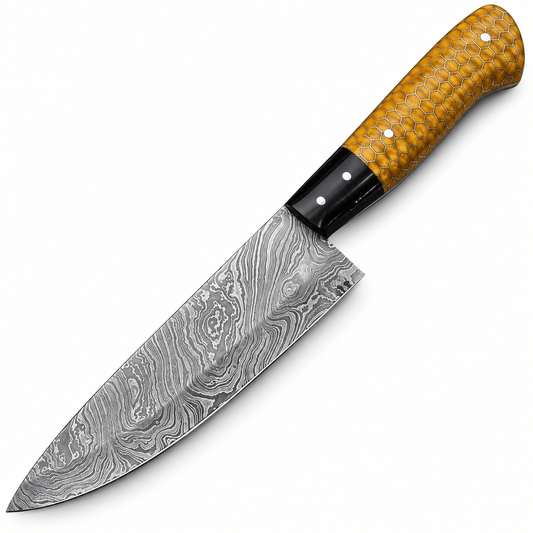
A chef knife is the broad all-purpose category within this collection. Its familiar blade shape makes it a practical starting point for cooks who want one primary kitchen knife rather than several highly specialised designs.
Blade length, belly shape, point geometry, handle design, and overall proportions can differ considerably between individual chef knives, so comparing the actual dimensions and product photographs is important when choosing between models.
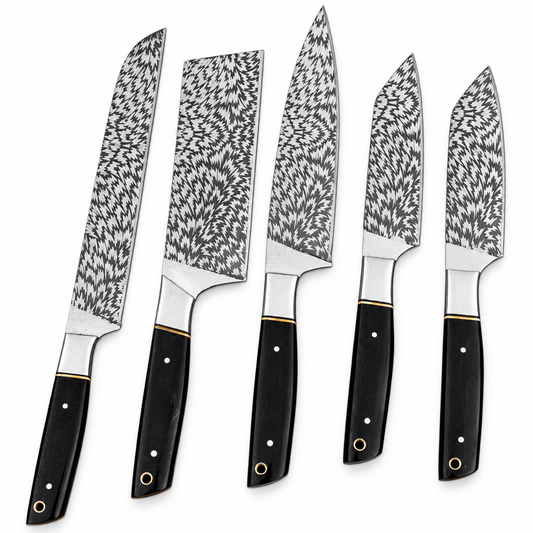
Gyuto, Santoku and Honesuki Styles
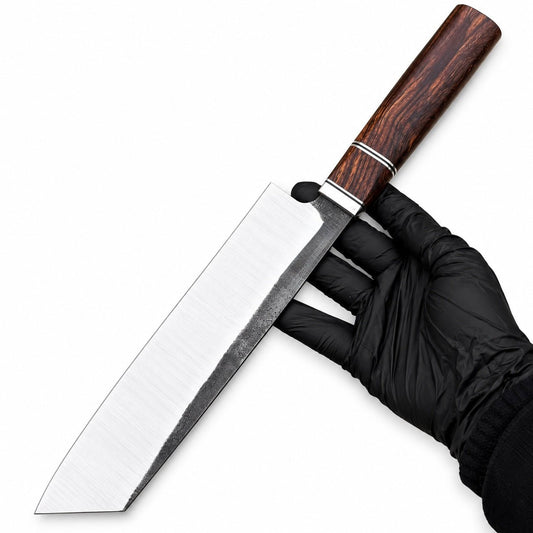
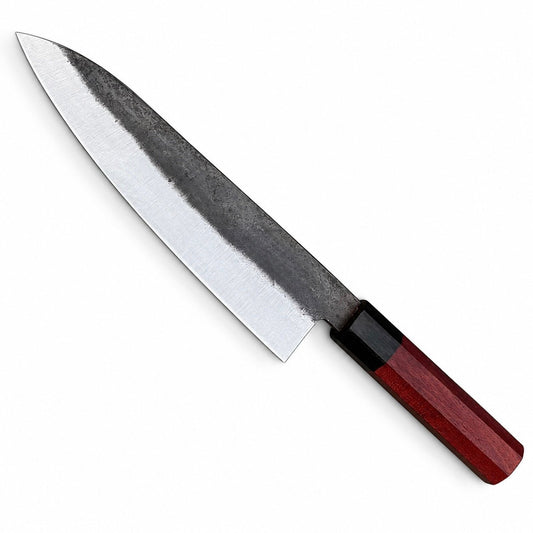
The collection also includes Japanese-style kitchen knife profiles such as gyuto, santoku, and honesuki designs.
A gyuto provides an alternative chef-knife profile with a relatively streamlined shape. Santoku designs generally use a different blade geometry and tip profile, giving shoppers another option for routine preparation. Honesuki-style knives have a more specialised shape and should be selected according to the particular preparation work for which the individual product is designed.
These terms describe established knife styles; they should not be interpreted as indicating Japanese manufacture unless a specific product description states that separately.
Specialty Kitchen Knives
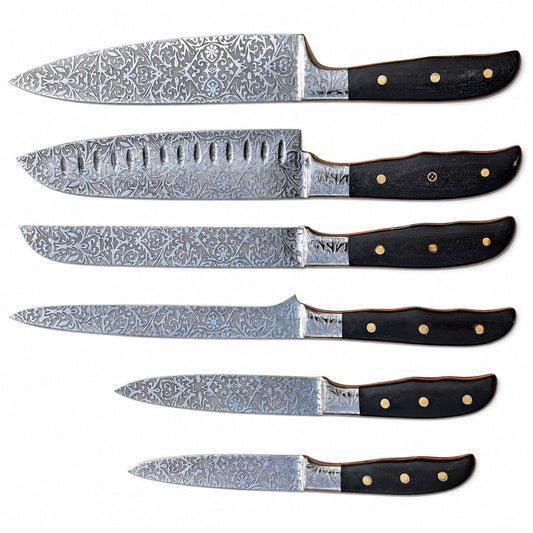
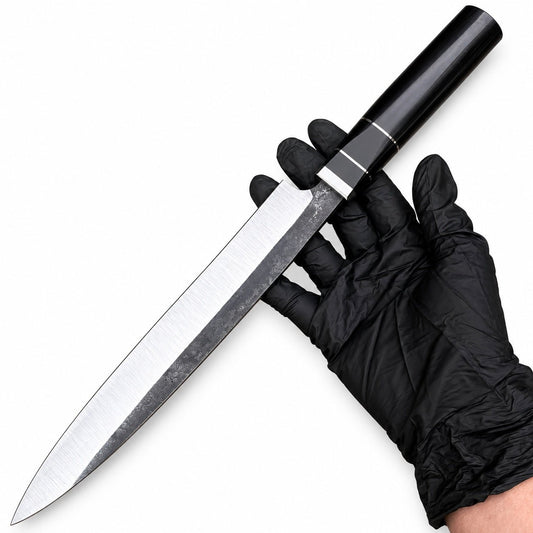
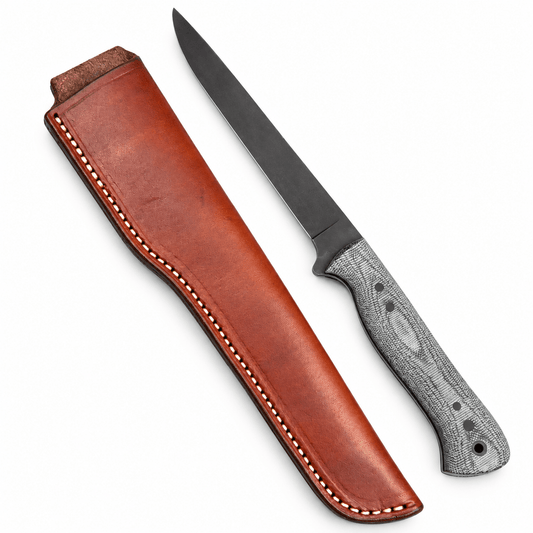
Some kitchen jobs are better suited to a dedicated blade. The wider UBR culinary range includes specialty profiles such as bread knives, fillet knives, brisket knives, and steak knives, giving shoppers options beyond the conventional chef knife.
Rather than choosing a specialty knife simply because it looks different, consider what you prepare most often. A dedicated slicing or bread profile may complement an existing chef knife, while someone building a kitchen collection from the beginning may prefer a multi-piece set.
Damascus, D2 and High-Carbon Steel Kitchen Knives
Steel choice is another meaningful difference between the knives in this collection.
Damascus kitchen knives are particularly recognisable for their patterned blade appearance. They combine practical culinary construction with a decorative surface that makes each design visually distinctive, especially when paired with natural or contrasting handle materials.
The collection also includes high-carbon steel kitchen knives. Carbon-steel blades are well suited to shoppers who appreciate traditional knife materials and are comfortable giving the blade appropriate cleaning, drying, and maintenance after use.
D2 steel appears in selected kitchen and chef knife designs as another option for buyers comparing different blade materials. Because steel type is only one part of a knife's overall design, blade geometry, thickness, handle shape, balance, and intended kitchen task should also be considered before choosing.
Always check the individual product page for the exact steel, dimensions, handle material, finish, and construction of the knife you are considering rather than assuming every model in the collection is made the same way.
Single Chef Knives or Kitchen Knife Sets?
A single chef knife can be the better choice when you already own supporting kitchen cutlery or want to select each blade individually. It also allows you to focus on the particular blade length, steel, handle, and profile that best matches your cooking preferences.
A chef knife set or larger kitchen knife set makes more sense when you want several complementary profiles with a related design. Depending on the set, this can provide different blade shapes for general preparation, slicing, bread, meat, or more specialised kitchen work without purchasing each knife separately.
UBR's kitchen range includes individual knives as well as multi-piece chef and culinary sets, including handmade designs intended for shoppers who want something different from mass-produced kitchen cutlery.
Handmade and Hand-Forged Kitchen Knives
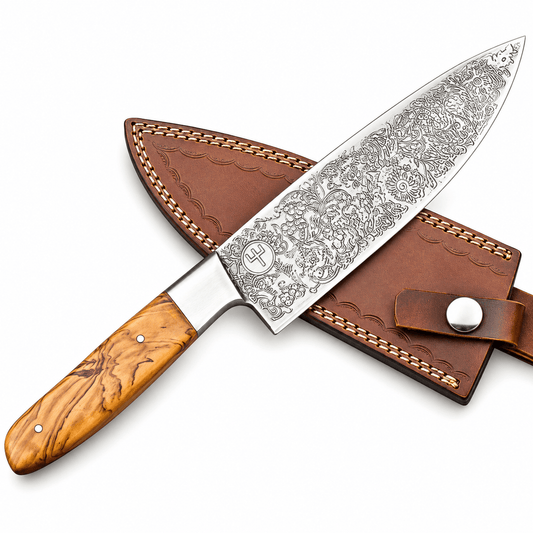
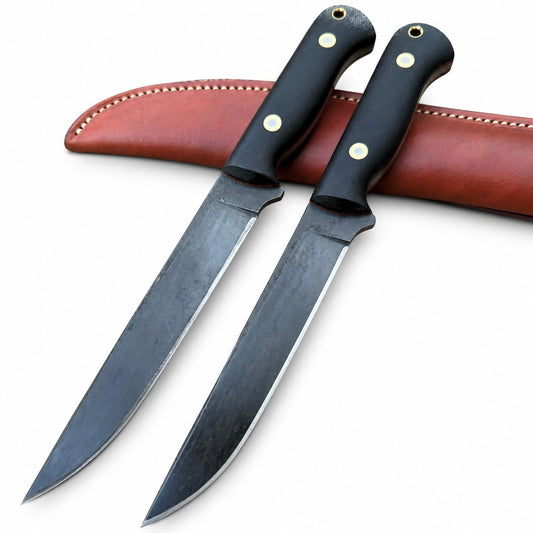
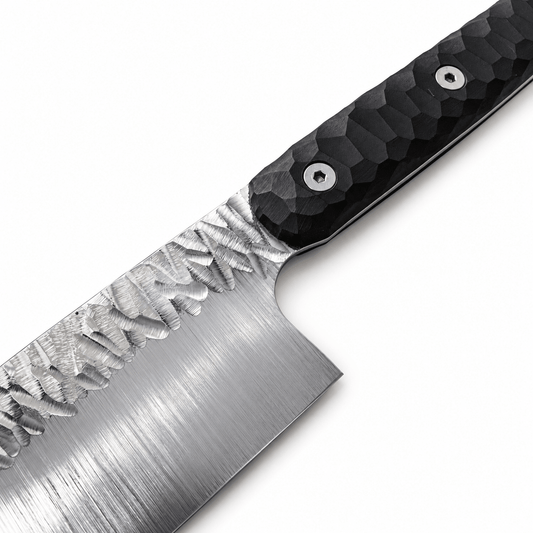
For this collection, craftsmanship is part of the product identity rather than simply a decorative description. Hand-forged kitchen knives and handmade chef knives can show differences in blade pattern, finish, handle character, and other details that naturally come with small-scale production.
That makes the product photographs and individual specifications especially important. Two knives belonging to the same broad kitchen category can feel and look very different because of their blade profile, steel, handle geometry, dimensions, and finishing choices.
Custom handmade kitchen knife designs and sets can also provide more flexibility for shoppers interested in particular combinations of blade style, steel, or handle appearance where customisation is offered.
Build the Kitchen Knife Selection Around How You Cook
There is no reason every kitchen needs the same combination of knives. Start with the type of preparation you perform most often, then compare the available blade profiles and materials.
Choose a versatile chef knife when you want one primary culinary blade, explore specialty profiles when a particular task needs a more focused design, or compare kitchen knife sets when you want several complementary knives together.
Browse the collection to compare handmade kitchen knives by profile, steel, handle design, size, and set configuration and select the combination that best fits your kitchen.