


Unique Blades Runner
historical seax knife – High Carbon Steel with Stag Bone
historical seax knife – High Carbon Steel with Stag Bone
- 14-day returns
- Ships from USA
- Trusted by 100,000+ customers
- 99% customer satisfaction rating
Couldn't load pickup availability
Personalization Info
Personalization Info
🎨 Make Your Blade Truly Unique
We offer custom engraving on many of our handmade knives, swords, and daggers. Whether it’s a name, initials, logo, or symbol — we use a high-precision 50W fiber laser to mark your item with sharp, lasting detail.
✨ How to Personalize Your Order:
- 📧 Send your engraving details to uniquebladesrunner@gmail.com
- 🖋️ Include text or artwork (initials, name, or small graphic)
- ✅ We’ll confirm if engraving is available for your chosen product
🕒 Please note: Personalized items may take extra processing time and are not eligible for return.
Have questions? Feel free to reach out before placing your order — we’re happy to help!
Custom Orders
Custom Orders
🛠️ Custom Orders Welcome
Looking for something unique? We offer fully custom-made knives, swords, and collectibles designed to your exact preferences. Whether it’s for display, gifting, or your personal collection — we’re here to bring your idea to life.
✨ Custom Options Include:
- Blade length and style
- Handle material (wood, bone, stag, etc.)
- Steel type (Damascus, high carbon, D2, 1095, 5160, 80CrV2, stainless, or custom on request)
- Engraving or decorative finishes
📩 Reach out at uniquebladesrunner@gmail.com with your design idea or reference image. We’ll reply with availability, pricing, and estimated delivery time.
Care Instructions
Care Instructions
Your handmade blade deserves proper care to last a lifetime. Follow these tips to preserve its beauty and performance:
🔪 General Care:
- Keep the blade clean and dry after use
- Apply a thin coat of oil (mineral, camellia, or gun oil) regularly
- Avoid prolonged exposure to water or moisture
🔥 Damascus & High Carbon Steel:
- These steels are not stainless — they require extra care
- Store in a cool, dry place with low humidity
- Wipe with an oiled cloth before storing
🧊 Stainless Steel Blades:
- More resistant to rust, but still benefit from proper care
- Clean with a soft cloth and mild soap — dry immediately
- Light oiling helps preserve the finish and smoothness
Never place your blade in a dishwasher or soak it in water. Proper care ensures long-term durability and appearance.
Shipping Information
Shipping Information
🚚 Shipping Information
We ship worldwide with reliable tracking and protective packaging to ensure your blade arrives safely.
📦 Processing Time:
- Standard items: Ships in 4–7 business days
- Custom orders: Varies based on design complexity
✈️ Estimated Delivery:
- Domestic: 5–7 business days
- International: 10–20+ days (depending on customs)
🌍 Customs & Duties:
- International buyers are responsible for any applicable import taxes or customs fees
You’ll receive tracking info once your order is shipped. Have questions about shipping times? Email us anytime.
Disclaimer
Disclaimer
All our blades are individually handcrafted — no two items are exactly alike. Slight variations in grain, polish, or dimensions are part of the artistry.
- Our products are intended for collectors, chefs, and outdoor users
- Not designed for harm or misuse of any kind
- Must be used responsibly and in accordance with local laws
By purchasing, you acknowledge understanding and acceptance of our terms.


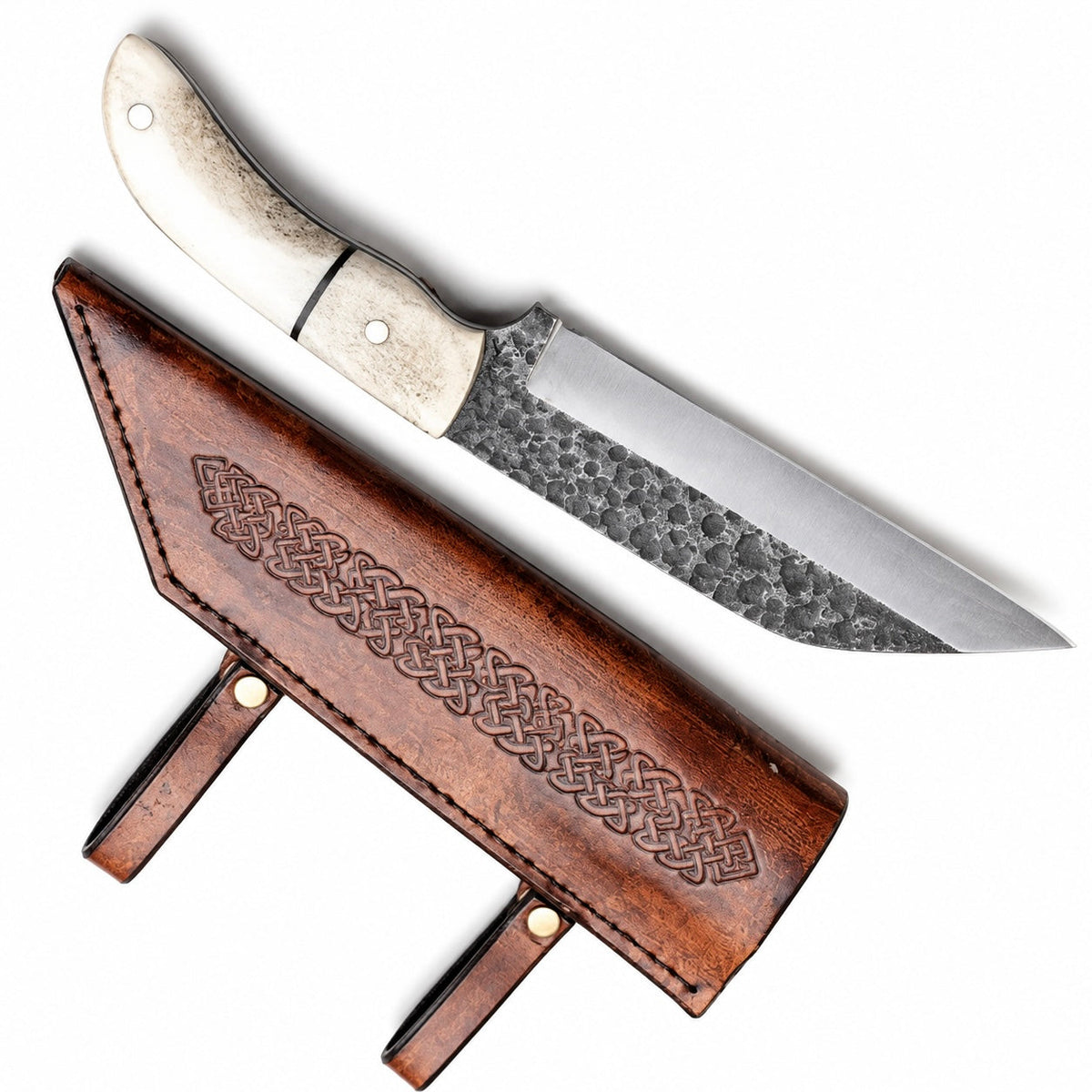
Historical Seax Knife with Stag Bone – Early Medieval Inspired Handmade Blade
historical seax knife designs trace their identity to the distinctive single-edged knives associated with Anglo-Saxon and other Germanic communities of the Early Middle Ages. This handmade interpretation pairs that recognizable seax profile with a high carbon steel blade and stag bone handle, creating a heritage-inspired collector piece with strong traditional character. Often searched as an Anglo-Saxon seax, Viking seax knife, Saxon knife, or medieval seax, this design appeals to historical blade enthusiasts, reenactment collectors, and buyers drawn to artisan blacksmith craftsmanship.
Historical Seax Knife and Its Anglo-Saxon Heritage
The seax was a recognizable single-edged blade form found across early medieval Germanic culture, with archaeological examples particularly associated with Anglo-Saxon England. Historical seaxes appeared in different proportions, including broader broken-back profiles and longer, narrower forms, making the term a family of designs rather than one single standardized pattern.
This historical seax knife draws on that broader heritage without claiming to duplicate one specific museum artifact. Its silhouette carries the straightforward character expected from an early medieval knife, while the natural stag bone gives the handle an individual appearance that suits the rustic aesthetic of traditional Saxon and Viking Age inspired craftsmanship.
High Carbon Steel and Traditional Stag Bone Character
High carbon steel is especially appropriate for a handmade seax because it reflects the dark, functional visual character buyers often associate with hand-forged historical blades. Rather than giving the piece a modern decorative identity, the material helps preserve the strong, uncomplicated appearance of an Anglo-Saxon style knife.
Stag bone adds another layer of individuality. Natural variations in texture and tone mean the handle complements the historical character of the blade while giving each artisan-made piece its own visual personality. For collectors searching for a stag bone seax or handmade medieval knife, this material combination creates a particularly fitting presentation.
A. Recognizable Early Medieval Design: The single-edged form immediately connects the piece with the seax tradition known from Anglo-Saxon and wider Germanic material culture.
B. Collector and Display Appeal: A historical seax knife works naturally within collections of Viking Age replicas, Saxon artifacts, medieval reproductions, historical knives, and heritage-inspired display pieces.
C. Handmade Character: Artisan construction gives this piece the subtle individuality expected from traditional blacksmith-made goods rather than the uniform appearance of mass production.
Made for Historical Blade Collectors
Collectors often encounter alternative terms such as long seax, Saxon seax, Viking sax, scramasax, and broken-back seax when researching this historical blade family. Although these terms can refer to different periods and blade forms, they help illustrate how widely the seax tradition developed across early medieval Europe.
Produced by skilled artisans backed by more than 20 years of experience in handmade and forged goods, this historical seax knife is intended for buyers who appreciate craftsmanship as much as historical inspiration. The combination of high carbon steel, stag bone, and traditional styling makes it equally suitable as a medieval collector knife, heritage gift, or distinctive display piece.
FAQ About historical seax knife
What is a seax knife?
A seax is a historical single-edged knife or short blade associated primarily with Germanic peoples, including Anglo-Saxon communities during the early medieval period.
Is this based on an Anglo-Saxon design?
Yes. This historical seax knife takes inspiration from the broader Anglo-Saxon and Germanic seax tradition rather than representing one specific archaeological artifact.
Why is it sometimes called a Viking seax?
Seax-style blades are also connected with Viking Age contexts, so collectors commonly search for terms such as Viking seax knife, Norse seax, and Viking sax.
What makes the stag bone handle distinctive?
Natural stag bone provides organic texture and variation, complementing the rustic appearance expected from a handmade historical blade.
Is this suitable for a historical collection?
Yes. The historical seax knife is especially relevant to collections focused on Anglo-Saxon history, Viking Age replicas, medieval craftsmanship, and early Germanic blade designs.