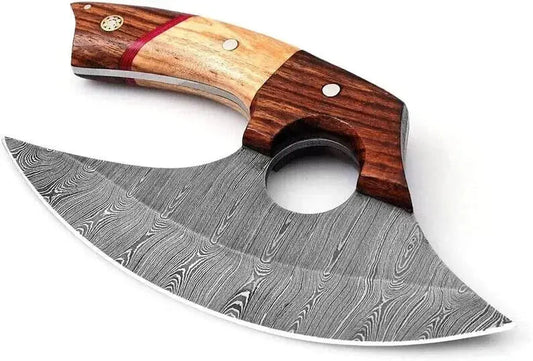
Ulu Knives and the Traditional Curved-Blade Design
Ulu Knives are defined by a broad, sweeping cutting edge combined with a handle positioned above or across the blade rather than extending from one end like a conventional knife. This distinctive configuration is closely associated with traditional Inuit, Yupik, and other Arctic cultures, where ulu-style tools developed as highly recognizable examples of functional regional craftsmanship.
Modern handmade ulu knives often preserve this characteristic semicircular or crescent-shaped profile while introducing different steels, finishes, handle materials, and artisan interpretations. For shoppers, that means the category can include everything from traditional-inspired pieces to contemporary forged variations designed primarily for collectors, display, craft appreciation, or general cutting applications where permitted and appropriate.
The category is also searched under phrases such as handmade ulu knife, traditional ulu knife, Inuit-style knife, Eskimo ulu knife, curved blade knife, crescent blade knife, and forged ulu knife. Although terminology varies, the defining feature remains the broad curved edge beneath an elevated handle.
Traditional and Handmade Ulu Knife Styles
Not every ulu follows exactly the same proportions or construction. Handmade production naturally creates differences in blade sweep, thickness, handle shape, finishing, and overall visual character.
Traditional-Inspired Ulu Designs
Traditional-inspired designs generally emphasize the recognizable crescent blade and compact upper handle. Some pieces use a nearly continuous semicircular edge, while others have a shallower curve or slightly extended corners.
This style appeals to shoppers interested in Arctic knife heritage, traditional knife patterns, historical cutting tools, and distinctive regional craftsmanship. A traditional ulu knife can also stand apart visually in a broader collection containing Bowie Knives or other conventional fixed-blade designs because its geometry is fundamentally different.
Hand-Forged and Artisan Ulu Variations
Handmade and hand-forged ulu knives introduce the individual character associated with blacksmith production. Small differences in forge marks, polishing, handle shaping, edge geometry, and finishing can distinguish one artisan-made piece from another.
Depending on the individual listing, a forged ulu knife may emphasize a rustic blacksmith finish, a cleaner polished appearance, or a combination of traditional form and contemporary craftsmanship. Buyers who appreciate handmade knives often value these visible signs of individual production rather than expecting every piece to resemble a factory-produced item.
Collector and Display-Focused Designs
The unusual silhouette of an ulu makes it especially recognizable as a collector piece. Curved blade geometry, decorative handles, distinctive steel finishes, and heritage-inspired construction can all contribute to display appeal.
Collectors interested in historical knives, traditional tools, artisan blacksmith work, or unusual blade profiles may therefore explore this category alongside broader Collectible Knives collections.
Blade Materials, Handles and Ulu Craftsmanship
Materials can vary significantly between individual Ulu Knives, so shoppers should review each product listing before comparing specific pieces.
Handmade examples may be produced from high carbon steel or other suitable blade steels, depending on the design. Carbon steel is frequently associated with traditional and blacksmith-made knives because it can develop a distinctive working finish and reflects the aesthetic many buyers associate with forged craftsmanship.
Handle construction can vary just as much. Depending on the individual design, products within the collection may include hardwood handles, natural-material accents, shaped grips, or more decorative artisan handle treatments. The handle is particularly important on an ulu because its placement directly above the curved edge forms a major part of the knife's visual identity.
Finishing also changes the character of the piece. A polished ulu has a cleaner presentation, while visible forge texture can emphasize handmade character. Some designs lean heavily toward traditional simplicity, while others incorporate more decorative shaping intended for collectors and display enthusiasts.
Because specifications differ, customers comparing a handmade ulu knife should consider the complete combination of blade profile, material, handle construction, finish, dimensions, and craftsmanship rather than judging the category by steel type alone.
What Makes the Ulu Blade Shape Distinctive?
The defining characteristic of an ulu is its curved cutting edge. Instead of concentrating the blade toward a narrow point, the profile provides a wide arc beneath the handle.
This geometry gives the knife a very different visual balance from straight-backed hunting knives, clip-point Bowie designs, daggers, or conventional kitchen blades. The user holds the knife above the edge, creating a compact shape where the handle and blade are vertically connected.
Traditional forms have existed in multiple regional variations rather than one universal standardized pattern. Modern makers may therefore produce different interpretations while preserving the recognizable ulu identity.
For collectors, these differences can make the category particularly interesting. A deep crescent profile, shallow arc, wide blade, narrow bridge between handle and blade, or distinctive forged finish can significantly change the overall appearance while still remaining recognizable as an ulu-style knife.
Choosing the Right Ulu Knife
When comparing Ulu Knives, begin with the blade profile. A deeper curved edge creates a more traditional visual appearance, while a shallower arc may give the design a more contemporary character.
Next, compare construction and finish. Buyers who prefer visible handmade character may appreciate forge marks and rustic finishing, while collectors seeking a cleaner presentation may prefer polished surfaces and precisely shaped handles.
Material is another important consideration. Specific blade steels vary between products, and each listing should be checked for the actual steel used rather than assuming every ulu is constructed from the same material.
Handle design also plays a major role because it dominates the upper portion of the knife. Wood grain, natural materials, carved shapes, and simple traditional-inspired handles can each create a very different aesthetic.
Collectors may also compare overall dimensions and proportions. Some buyers prefer a compact traditional appearance, while others look for larger handmade versions that create a stronger display presence.
Those interested in personalized craftsmanship can also explore Custom Orders where suitable custom work is available. Buyers sourcing multiple artisan pieces may similarly find Wholesale or Bulk Orders relevant for appropriate products.
Ulu Knives for Collectors and Heritage-Design Enthusiasts
An ulu offers a combination of cultural design history, recognizable geometry, and handmade craftsmanship that differs substantially from most common knife categories.
For collectors, the appeal often comes from the form itself. The elevated handle, curved cutting edge, and compact silhouette immediately identify the piece as belonging to the ulu family of designs.
Traditional tool enthusiasts may appreciate the connection with Arctic craftsmanship, while blacksmith collectors may focus more on forging techniques, blade finishing, handle work, and handmade variation. Others simply appreciate unusual historical blade forms and enjoy displaying them alongside Bowie knives, daggers, handmade fixed blades, or other artisan metalwork.
Because the category contains both heritage-inspired and modern handmade interpretations, shoppers can choose according to the type of craftsmanship and presentation they value rather than looking for one standardized design.
Why Choose Unique Blades Runner for Handmade Ulu Designs?
Unique Blades Runner focuses on handmade and artisan-made metalwork across a wide variety of traditional, collectible, and distinctive blade designs. Backed by more than 20 years of craftsmanship experience, our work reflects long-term familiarity with forging, shaping, finishing, handle construction, and the visual details that distinguish handmade production.
Within an ulu collection, that experience allows traditional curved profiles to be interpreted through individual blacksmith craftsmanship rather than treated as generic factory forms. Materials, dimensions, handle designs, and finishes may vary between listings, giving shoppers the opportunity to compare pieces according to their preferred style.
Customers interested in other distinctive handmade designs can also explore related Collectible Knives and other traditional blade collections where relevant.
FAQ About Ulu Knives
What are Ulu Knives?
Ulu Knives are curved-blade knives based on traditional Arctic designs in which the handle is positioned above the broad cutting edge. Modern versions may range from traditional-inspired pieces to handmade collector designs.
What is another name for an ulu knife?
People commonly search for terms such as traditional ulu knife, Inuit-style knife, Eskimo ulu knife, crescent blade knife, curved blade knife, and Arctic ulu. Terminology can vary depending on regional and commercial context.
Are ulu knives handmade?
Many modern ulu designs are produced through artisan or handmade methods, although manufacturing varies by seller. Products in this collection should be checked individually for their stated construction, steel, handle material, and finish.
What materials are used for handmade ulu knives?
Materials vary between individual pieces. Handmade designs may use carbon steel or other blade steels together with wooden, natural-material, or artisan-shaped handles. Always check the specific listing for confirmed materials.
Why do collectors like traditional ulu designs?
Collectors are often attracted to the unusual curved blade profile, elevated handle layout, historical design heritage, regional craftsmanship, and the visual differences between individual handmade interpretations.
How should I compare different ulu styles?
Compare blade curvature, size, steel, handle construction, finish, overall proportions, and handmade detailing. A traditional-looking ulu may emphasize heritage styling, while another piece may focus more strongly on modern blacksmith aesthetics.
Are Ulu Knives suitable for a historical or handmade blade collection?
Yes. Ulu Knives can complement collections focused on traditional tools, historical blade designs, forged craftsmanship, and unusual knife profiles because their construction is visually different from conventional fixed-blade knives.
Ulu Knives remain distinctive because few knife forms combine such recognizable curved geometry with such a strong connection to traditional Arctic craftsmanship. From heritage-inspired profiles to individually finished handmade pieces, the collection gives shoppers and collectors an opportunity to compare materials, handle designs, blade shapes, and artisan interpretations within one specialized category.