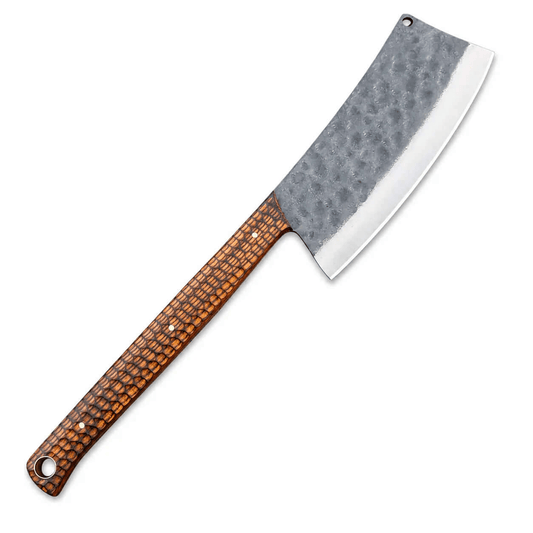
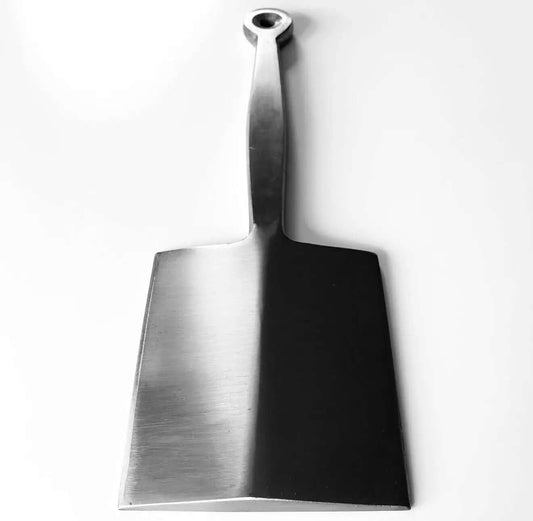
Cleaver Knives, Broad Blade Profiles and Traditional Designs
Cleaver Knives are distinguished by their wide blade profiles, substantial construction, and instantly recognizable shape. While the word “cleaver” is commonly associated with traditional butcher and kitchen tools, modern handmade cleaver designs cover a much broader range of styles, from classic meat cleavers and butcher cleavers to compact forged designs and collector-oriented pieces.
One of the defining characteristics of a cleaver is the amount of blade surface it offers. Compared with narrow utility or chef-style blades, cleavers generally feature a tall blade with a relatively straight cutting edge and a strong visual profile. Blade dimensions, thickness, edge geometry, tip shape, and intended use can vary considerably between individual designs.
For shoppers browsing handmade knives rather than a single standardized factory pattern, these differences are part of the appeal. Artisan-made cleaver designs may reflect traditional butcher tools, rustic blacksmith construction, modern custom styling, or more decorative interpretations intended for collectors and display.
Important Cleaver Knife Styles to Compare
Traditional Meat and Butcher Cleavers
Traditional meat cleavers and butcher knives remain among the most recognizable designs within this category. These styles usually emphasize a wide rectangular or slightly curved blade profile and a comfortable handle that provides control over the large cutting surface.
The terms meat cleaver, butcher cleaver, butcher knife, and heavy-duty kitchen cleaver are sometimes used interchangeably by shoppers, although individual blade geometry can differ. Some designs have a heavier spine and substantial construction, while others are comparatively refined and intended for more controlled food preparation.
When comparing these designs, consider the blade dimensions and construction shown on each individual listing rather than assuming every cleaver has the same thickness or intended application.
Handmade and Forged Cleaver Knives
Handmade cleaver knives have a different character from uniform mass-produced kitchen tools. Small variations in forging, grinding, polishing, handle shaping, and finishing can give each artisan-made blade its own appearance.
Forged cleavers may feature polished surfaces, rustic forge-inspired finishes, visible grind lines, decorative details, or combinations of traditional and contemporary styling. Some buyers specifically search for a hand-forged cleaver because they appreciate blacksmith craftsmanship and the distinctive character associated with individually produced metalwork.
These designs also complement broader collections of handmade knives and forged goods for shoppers who enjoy comparing different blade forms created through similar craft traditions.
Compact and Custom Cleaver-Style Designs
Not every cleaver follows the proportions of a large butcher blade. Compact cleaver knives use the familiar broad profile in a smaller format, creating a distinctive alternative to conventional fixed-blade shapes.
Custom cleaver designs may also introduce unusual handle forms, decorative finishes, different tip geometries, or artistic interpretations of traditional chopping blades. Where customization is available, buyers interested in a particular material, dimension, finish, or design concept can explore Custom Orders rather than assuming every listed design can be modified.
Blade Materials, Handles and Handmade Craftsmanship
Materials are an important consideration when comparing Cleaver Knives, but they should always be checked on the individual product page because construction varies from design to design.
Products within a handmade cleaver collection may use high-carbon steel, tool steels, stainless varieties, Damascus-patterned steel, or other blade materials depending on the individual piece. Each steel type has its own balance of edge characteristics, maintenance requirements, appearance, and finishing possibilities.
High-carbon steel is particularly associated with traditional forged blade making because it can develop a distinctive working appearance over time and responds well to careful maintenance. Stainless steels offer different corrosion-resistance characteristics, while patterned or decorative steels can add visual interest to collector-focused blades.
Handle construction also contributes strongly to the personality of a cleaver. Depending on the design, handles may incorporate hardwood, bone, horn, synthetic materials, metal fittings, pins, or other artisan-made combinations. A rustic wooden handle can reinforce a traditional butcher-inspired appearance, while polished materials and decorative fittings can move a design toward a more collectible presentation.
Some fixed-blade cleaver designs may also be supplied with leather sheaths or protective covers, but sheath availability should always be confirmed from the specific listing.
Choosing the Right Cleaver Knife
The best cleaver depends heavily on what you value most in the design. Instead of looking only at overall appearance, compare several practical and visual characteristics.
First, examine the blade profile. A tall rectangular meat-cleaver shape creates a very different experience from a compact cleaver-style fixed blade. Edge length, blade height, spine thickness, tip geometry, and overall weight can all influence how substantial a particular design feels.
Next, consider the material and finish. Buyers who appreciate traditional blacksmith aesthetics may prefer visible forged character or high-carbon steel, while others may be drawn toward polished finishes, patterned blades, or highly decorative collector pieces.
Handle shape is equally important. Cleavers have relatively broad blades, so handle proportions can significantly influence visual balance and comfort. Compare handle length, contour, material, guard or bolster construction where present, and the relationship between the handle and blade.
For display-oriented buyers, visual craftsmanship may be especially important. Decorative steel patterns, distinctive handle materials, handcrafted leatherwork, unusual blade profiles, and individually finished details can make one design stand apart from another.
Shoppers primarily interested in kitchen preparation should instead pay closer attention to the product's stated intended use, blade dimensions, steel, edge geometry, and care requirements.
Cleaver Designs for Collectors and Handmade Blade Enthusiasts
The cleaver shape has developed appeal beyond conventional butcher work because its broad silhouette provides blacksmiths with a large surface for creative finishing and design.
Collectors may appreciate unusual forged cleavers for their bold proportions, traditional craftsmanship, rustic styling, or distinctive handle work. A handcrafted cleaver can sit naturally beside Bowie Knives, collectible fixed blades, historical-inspired pieces, and other artisan metalwork within a broader collection.
Gift buyers may also find these designs interesting when shopping for someone who enjoys handmade blades, cooking tools, blacksmith craftsmanship, or distinctive functional art. Rather than choosing solely by size, it is worth considering whether the recipient prefers a traditional butcher aesthetic, polished modern craftsmanship, rustic forged character, or a more elaborate display-focused design.
Why Choose Unique Blades Runner
Unique Blades Runner focuses on handmade and artisan-made metalwork with attention to recognizable blade profiles, materials, finishing, and distinctive design details. Backed by more than 20 years of craftsmanship experience, the collection reflects long-standing involvement in producing knives, swords, forged goods, and related handcrafted pieces.
Our cleaver selection is intended to offer more than one interpretation of the category. Different designs can appeal to shoppers looking for traditional butcher-style blades, custom-inspired craftsmanship, collectible forged pieces, or visually distinctive handmade knives.
Because dimensions, materials, handles, finishes, and accessories can differ, individual product listings should always be reviewed for exact specifications. Buyers seeking larger quantities for retail or other commercial requirements can also explore Wholesale / Bulk Orders where appropriate.
FAQ About Cleaver Knives
What types of cleavers are included in this collection?
The collection may include traditional meat-cleaver profiles, butcher-style cleavers, handmade forged cleavers, compact cleaver-style designs, and collector-oriented variations. Exact products can change as different designs become available.
Are all cleavers made from the same type of steel?
No. Steel selection varies between individual products. Depending on the design, a cleaver may use high-carbon steel, tool steel, stainless steel, patterned steel, or another material. Check each listing for exact blade specifications.
What is the difference between a meat cleaver and a butcher cleaver?
The terms often overlap in commercial searches. Both generally describe broad-bladed cutting tools associated with food preparation and butchery, but individual designs can differ in blade thickness, weight, dimensions, edge geometry, and intended application.
Are Cleaver Knives handmade?
Many Cleaver Knives in an artisan collection can be handmade or hand-finished, but construction should be confirmed on the individual product listing. Handmade examples often show distinctive forging, grinding, handle work, and finishing characteristics.
Can a cleaver be collected or displayed rather than used in a kitchen?
Yes. Some buyers choose handmade cleavers because of their forged appearance, unusual blade geometry, decorative materials, or blacksmith craftsmanship. Collector-focused designs can be appreciated alongside other handmade and display blades.
Do cleaver knives come with leather sheaths?
Some cleaver-style fixed blades may include leather sheaths or protective covers, while traditional kitchen cleavers may not. Sheath inclusion varies, so the specific product description should be checked before ordering.
What should I compare when choosing a cleaver?
Consider blade length and height, thickness, steel type, edge profile, handle construction, overall proportions, finish, intended use, and whether you prefer a traditional butcher design or a more distinctive handmade collector style.
Explore Handmade Cleaver Craftsmanship
From traditional butcher-inspired forms to compact custom designs and distinctive forged pieces, Cleaver Knives offer considerable variety within one recognizable blade category. Comparing blade profiles, materials, handles, finishes, and handmade details can help you find a design that suits your practical preferences, collection, or appreciation for artisan blacksmith work.