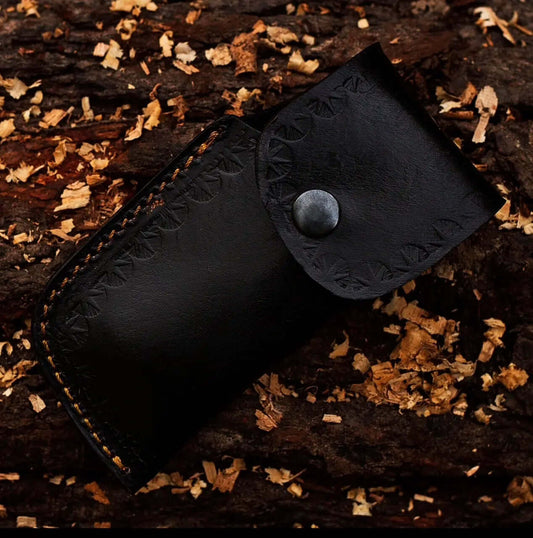
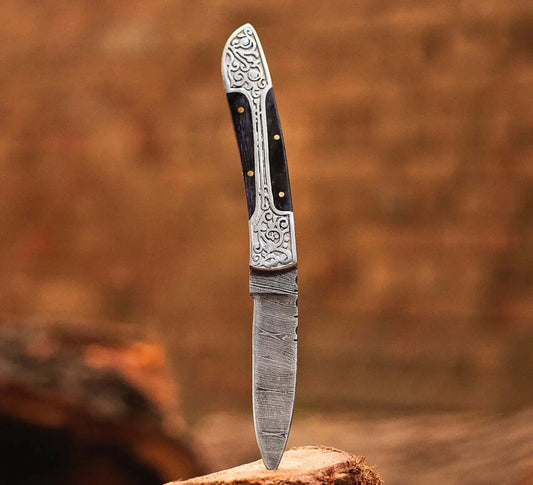
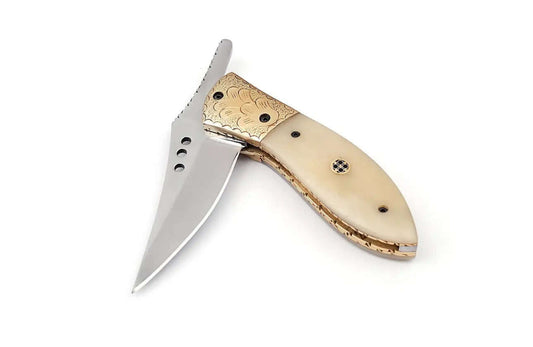
Handmade Pocket Knives and Folding Designs
A pocket knife is defined as much by its compact folding format as by the blade itself. Unlike a fixed-blade knife, the blade folds into the handle, reducing the overall size when closed and making the design convenient to store with everyday gear.
Within that basic format, pocket knives can differ significantly. Blade length, profile, handle proportions, opening method, locking system, weight, and closed size all influence how a particular knife feels and functions.
UBR focuses on handcrafted designs rather than treating every folding knife as the same product. For shoppers comparing pocket knives, the most useful approach is to look at the complete design rather than choosing on appearance or blade length alone.
Folding Pocket Knives for Everyday Utility
The terms folding knife and pocket knife overlap closely, and many products can accurately be described by both.
A folding pocket knife combines a blade that stores inside its handle with dimensions intended to remain more compact when closed. This format makes folding knives useful for routine cutting tasks such as opening packaging, cutting cord or material, workshop use, outdoor preparation, and other everyday utility.
The important differences appear in the details. Some folding knives prioritize a slim, compact profile, while others use larger handles and blades for shoppers who prefer a more substantial design.
Because folding knives and pocket knives represent substantially the same product family, they are best treated together rather than creating nearly identical collections that compete for the same search intent.
EDC Pocket Knives and Compact Designs
EDC knife is commonly used for compact knives selected for everyday utility. Within the pocket-knife category, an EDC pocket knife usually emphasizes manageable dimensions, convenient storage, and a practical blade profile.
A small pocket knife can be especially useful when minimizing bulk matters. Larger folders provide more handle and blade area but naturally take up more space when closed.
When comparing compact options, consider both the open and closed dimensions. A knife that looks relatively large when opened may still fold into a manageable size, while handle thickness can affect how compact the knife actually feels when stored.
Rather than assuming the smallest knife is automatically the most convenient, compare the proportions of the complete folded design.
Traditional Pocket Knives and Modern Folding Styles
Traditional pocket knives often appeal to shoppers who value classic proportions, natural-looking handle materials, understated shapes, and the familiar character associated with older folding-knife patterns.
Modern folders may take a different approach with more contemporary handle shapes, blade profiles, clips, or opening and locking systems.
Neither style is inherently better. The choice depends on whether you prefer classic pocket-knife character, a more modern everyday design, or something that combines elements of both.
For collectors, these design differences can be just as important as blade specifications because the shape of the handle, hardware, finish, and overall proportions give each pocket knife its individual identity.
Choosing a Pocket Knife by Size and Blade Profile
Size is one of the quickest ways to narrow the collection, but overall length should be considered alongside blade and handle proportions.
Small Pocket Knives
A small pocket knife emphasizes compact dimensions. These designs can suit shoppers who prefer minimal bulk or want a smaller folding knife alongside other everyday tools.
Check closed length as well as blade length. Closed dimensions provide a better indication of how compact the complete knife will be when folded.
Medium and Larger Folding Knives
A larger folding knife provides more blade and handle area. Some shoppers prefer this additional size because it gives the knife a more substantial feel during general utility work.
The tradeoff is increased overall size when folded. Comparing exact product dimensions is therefore more useful than relying on labels such as small, medium, or large.
Blade Shape
Pocket-knife blades can use different profiles depending on the individual design. Point shape, edge shape, blade width, and length all affect the character of the knife.
Instead of selecting a blade purely by appearance, consider the type of routine cutting you expect to perform and compare the exact profile shown on each product page.
Opening and Locking Mechanisms
The folding mechanism is one of the main characteristics separating pocket knives from fixed-blade designs.
Different folders may use different opening and locking arrangements. When comparing products, check whether the individual knife uses a locking or non-locking design and how the blade is opened and closed.
A locking mechanism is intended to hold the blade in its open position until the lock is intentionally released. Traditional non-locking folding designs use a different construction and provide a noticeably different experience.
Because mechanisms can vary from one model to another, always use the individual product details rather than assuming every folding knife in the collection operates in the same way.
Custom and Personalized Pocket Knives
Handcrafted folders also provide room for more individual styling.
Where customization is available, custom pocket knives may use different handle appearances, finishes, details, or other requested features. Personalized or engraved pocket knives can also create a more individual piece for collecting, gifting, or keeping as part of a personal knife collection.
Customization should still begin with the knife itself. Blade profile, dimensions, handle shape, and folding construction determine the core design, while personalization adds individual character afterward.
For a specific custom requirement, compare the available handmade designs first and then confirm which personalization options can be applied to that model.
Pocket Knives for Collecting and Outdoor Use
The compact folding format also makes pocket knives relevant beyond routine everyday tasks.
For outdoor trips, a folder can complement larger camping knives when a smaller cutting tool is preferred for lighter jobs. Shoppers whose main requirement involves game processing or specialized field work may instead want to compare dedicated hunting knives, which are organized around a different set of blade profiles and uses.
This distinction helps keep the pocket-knife collection focused: the central feature here is the folding, compact format rather than a specialized hunting or camping application.
Compare Pocket Knives by the Complete Design
The best way to choose among handmade pocket knives is to compare the features that affect the entire folded knife: blade profile, open and closed dimensions, handle shape, folding mechanism, locking design, and overall construction.
A lightweight compact folder, a traditional pocket knife, and a larger handcrafted folding knife can all belong to the same broad category while serving different preferences.
Browse the available designs and choose the pocket knife whose size, construction, appearance, and folding format best match what you want from the collection.