How to Choose a Hunting Knife
A good hunting knife matches the work you'll actually do with it. Most hunters use one knife for field dressing, skinning and quartering, and another, larger knife for camp chores. Before looking at steel or handle material, settle three things: the blade shape, the blade length, and whether you want a fixed blade or a folder. Those choices decide how the knife handles in the field far more than any single feature.
Hunting Knife Blade Shapes
Drop Point
The drop point is the most common hunting profile. The spine curves down gently to the tip, which leaves a strong point and a long, curved belly. The belly does most of the skinning and slicing, and the lowered point is less likely to cut into organs during field dressing. If you buy only one hunting knife, a drop point is the safest choice.
Clip Point
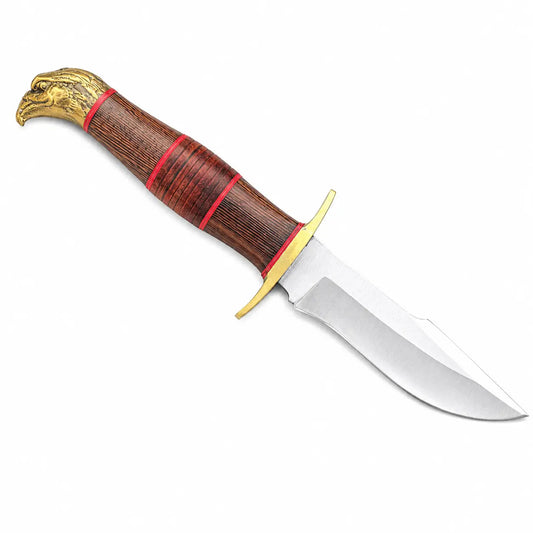
On a clip point, the spine is cut away toward the tip, giving a thinner, finer point for detail work and the classic look of traditional American hunting knives. Many heritage hunters and Bowie-style hunting knives use this shape. The fine tip takes more care around the body cavity than a drop point does.
Skinners and Gut Hook Knives
Skinning knives have shorter blades with a strongly upswept belly for separating hide from meat in long, controlled strokes. A gut hook is a small sharpened hook ground into the spine, used to open the hide along the belly without cutting deeper. Hunters who process their own game often carry a skinner next to a general hunting knife. Browse dedicated profiles in our skinning knives collection.
Caping Knives
A caping knife is a small, pointed knife for fine work around the head, ears and eyes when preparing a cape for mounting. It's a specialist tool, usually used alongside a main hunting knife.
Blade Length: Small, Mid-Size and Large Hunting Knives
Blades of about 3 to 4 inches are the easiest to control for skinning and small game. Blades of 4 to 6 inches are the all-round hunting size, long enough to field dress a deer and short enough for close work. Blades of 7 to 9 inches move toward camp knife territory: better for quartering, cutting rope and light chopping, but less precise inside the body cavity. Hunters after larger game such as elk or hog often prefer the longer end of the mid-size range for reach.
Hunting Knife Steels: D2, High Carbon and Damascus
D2 tool steel is a high-chromium, semi-stainless steel. It holds an edge through a lot of skinning and resists staining better than plain carbon steel, which suits wet, bloody work. The trade-off is that it takes more effort to sharpen.
High carbon steel takes a very keen edge and is quick to touch up with a stone in the field. It needs wiping and oiling after use, because blood and moisture will rust it if left on the blade, and it darkens to a patina over time.
Damascus steel is pattern-welded from layers of different steels, then etched so the pattern shows. Hunters choose it for its looks as much as its cutting, and it needs the same oil and dry storage as carbon steel. Stainless steels are another option common in this category: they need the least maintenance but are usually harder to bring back to a fine edge.
Handle Materials for Hunting Knives
Grip matters more on a hunting knife than on most knives, because hands get wet, cold and slippery. Micarta and G-10 are layered composites that don't absorb moisture and keep their grip when wet, which makes them strong working choices. Stag horn and bone give a traditional look, and each handle's texture and color is different. Wood is warm in the hand and classic, but it benefits from an occasional coat of oil to keep it from drying out. A guard or finger choil helps keep your hand behind the edge during slippery work.
Classic Hunting Knife Patterns
Many buyers want the look of hunting knives that have been in camps for generations: clip point hunters with stacked or stag handles, brass guards and pommels, and long, slim frontier-era trade knife profiles. The collection includes handmade knives in these heritage styles, made to be used in the field as well as kept in a collection. For a larger blade, our Bowie knives include hunting-sized Bowies with the same classic lines.
Fixed Blade, Folding Hunting Knives and Knife Sets
Fixed blade hunting knives are the traditional choice. With no hinge or lock, they're stronger, easier to clean after field dressing, and simple to keep sanitary. Folding hunting knives are lighter and easier to carry in a pocket or pack, and they suit hunters who want a backup blade or work mostly with small game. Hunting knife sets pair two or three blades, usually a general hunter, a skinner and sometimes a caping or boning knife, so each stage of processing has its own tool.
Matching the Knife to the Game
For deer, a 4 to 5 inch drop point does nearly everything, from opening the cavity to skinning. Elk and other large game reward a slightly longer blade and a dedicated skinner to save time. Hog hunters often want a sturdy blade with a good guard, because hogs have thick hide and fat. Small game and birds need only a short, nimble blade. If you butcher your own meat at home, a boning knife with a narrow, flexible blade makes cleaner cuts than a thick hunting blade. For a knife that also covers camp work, look at our camping knives.
Caring for a Hunting Knife in the Field
Rinse and wipe the blade as soon as you can after field dressing, dry it fully, and give carbon steel and Damascus a light coat of oil. Don't store a knife in its leather sheath while it's damp, because leather holds moisture against the steel. A small whetstone or ceramic rod in your pack keeps the edge working through a long day. If you'd rather build your own, our hunting knife blanks come in the same popular profiles.
Compare the shapes, sizes and steels above, then browse the collection to find the hunting knife that fits your game and the way you hunt.