Chef Sets for Complete Kitchen Preparation
Chef Sets are designed for shoppers who want several complementary kitchen knives grouped into one coordinated collection. Instead of selecting every blade separately, a complete kitchen knife set can provide a combination of shapes suited to slicing, chopping, trimming, carving, peeling, portioning, and other everyday preparation work.
The exact selection differs from one set to another. Some collections focus on essential chef knives and smaller preparation blades, while larger multi-piece knife sets may include specialist profiles for bread, meat preparation, vegetables, detailed cutting, and serving. This variety makes the category relevant to home kitchens, culinary enthusiasts, professional-style workspaces, gift buyers, and people building a coordinated kitchen cutlery collection.
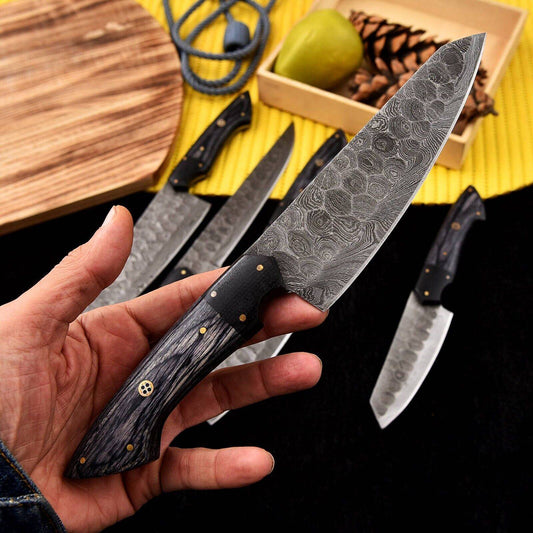
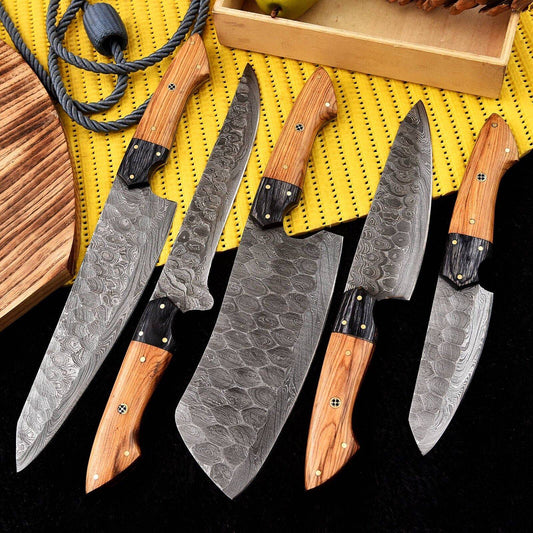
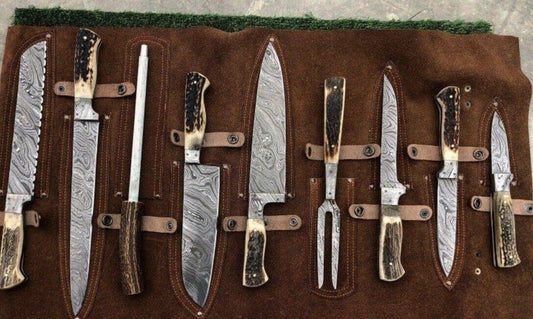
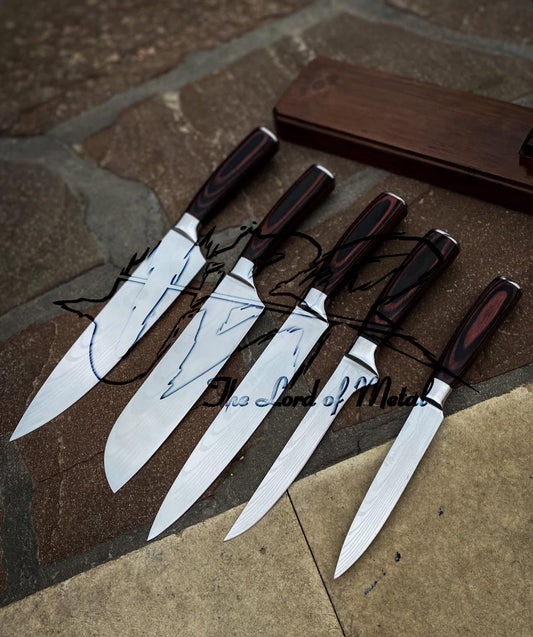
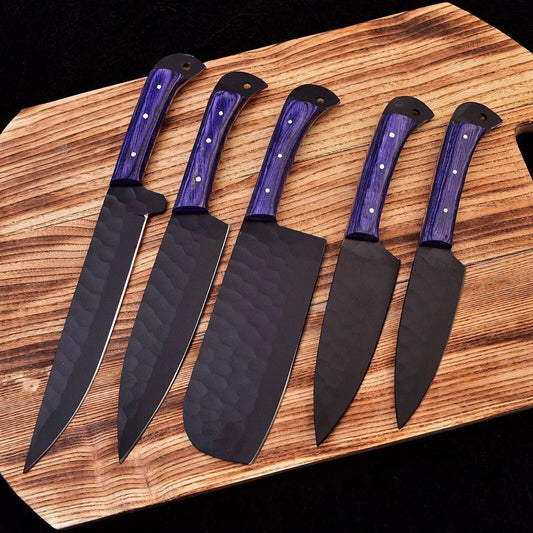
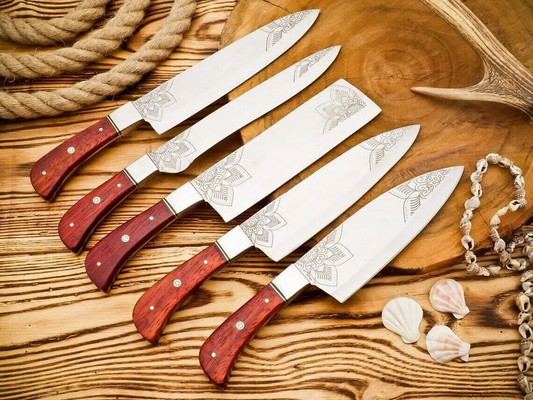
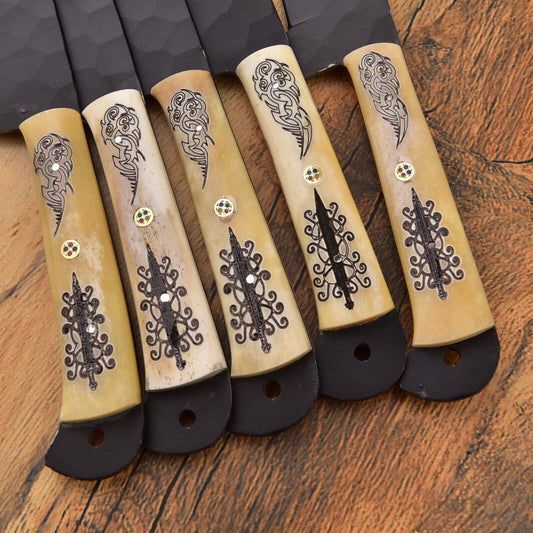
Handmade kitchen knife sets also differ visually from mass-produced matching cutlery. Blade profiles, surface finishes, handle patterns, natural materials, steel textures, and artisan finishing can give each collection its own identity while retaining the practical relationship between the individual knives.
Kitchen Knife Types Found in Chef Knife Sets
A useful chef knife set is usually built around different blade shapes rather than multiple knives that perform exactly the same task. Understanding those profiles makes it easier to compare one set with another.
Chef Knives and Gyuto-Style Blades
The chef knife is often the central blade in a kitchen set because its broad profile supports many general preparation tasks. Western-style chef knives commonly feature a curved cutting edge, while Japanese gyuto knives often have a slimmer geometry and a profile suited to controlled slicing and general kitchen preparation.
Some handmade Chef Sets combine traditional chef knife proportions with contemporary handle materials or forged blade finishes, creating collections that appeal to both practical users and buyers interested in artisan kitchen cutlery.
Santoku and Vegetable Preparation Knives
Santoku knives are another common option in premium kitchen knife collections. Their recognizable profile works well for a wide range of vegetable, meat, and general food preparation tasks.
Other sets may include nakiri-inspired vegetable knives or broad chopping profiles. These styles expand the usefulness of a set for cooks who frequently prepare vegetables, herbs, and ingredients requiring controlled repetitive cutting.
Utility, Paring and Detail Knives
Smaller utility knives and paring knives provide greater control for preparation that does not require the size of a full chef blade. They can be useful for peeling, trimming, detailed ingredient work, and smaller produce.
A set that combines large and compact knives generally offers broader preparation coverage than a collection made entirely from similarly sized blades.
Bread, Carving and Specialist Kitchen Knives
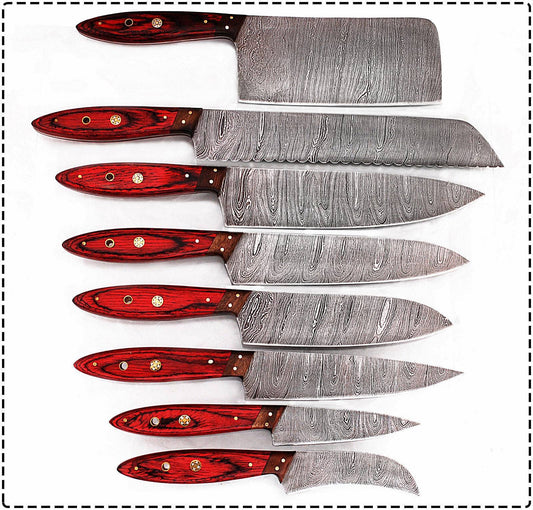
Depending on the individual listing, larger kitchen knife sets may include a bread knife, carving knife, slicing knife, brisket-style slicer, boning profile, or other specialist design.
Not every set contains every knife type, so shoppers should compare the actual blade combination shown in each listing rather than judging a set only by the number of pieces.
Blade Materials, Handles and Artisan Craftsmanship
Materials are an important point of comparison when browsing handmade kitchen knives. Specific steels vary between individual listings, and a single collection may contain products made from different materials.
Products within this category may include D2 steel chef knives, high carbon steel kitchen knives, Damascus steel kitchen knife sets, or other steels specified on the individual product page. Each material has its own visual character, maintenance requirements, and performance characteristics.
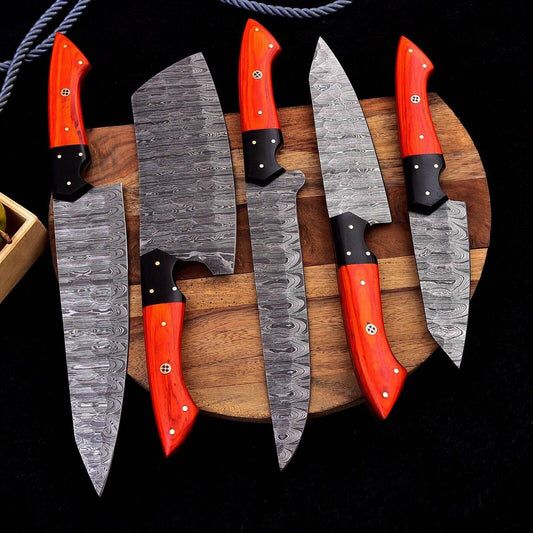
Damascus kitchen knives are particularly recognizable for their layered or patterned appearance. For many buyers, that surface pattern adds visual interest to a kitchen collection as well as a handcrafted feel. High carbon steel designs often appeal to shoppers who appreciate traditional blade materials, while D2 steel may be chosen in sets where that material is specified by the maker.
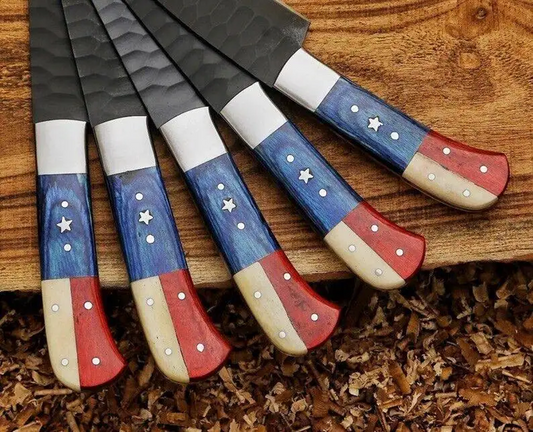
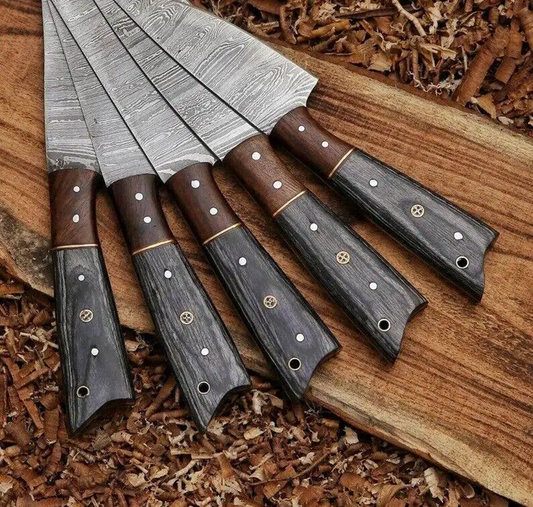
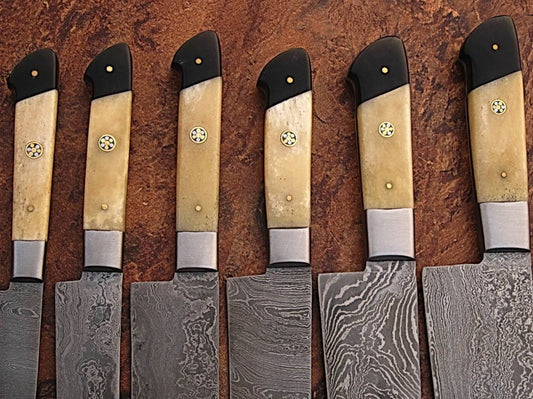
Handle construction also influences the look and feel of a chef set. Depending on the design, kitchen knives may use wood, resin-based materials, composite handles, horn-inspired styling, or other artisan finishes. Handle shape, balance, grip profile, and overall proportions can be just as important as decorative appearance when comparing sets.
Because these are collection-level descriptions, materials should always be confirmed on the individual listing. Not every Chef Set uses the same steel, handle material, construction method, or finish.
Handmade and Damascus Chef Knife Set Styles
One reason shoppers browse artisan kitchen knife sets is the range of designs available beyond standard factory cutlery.
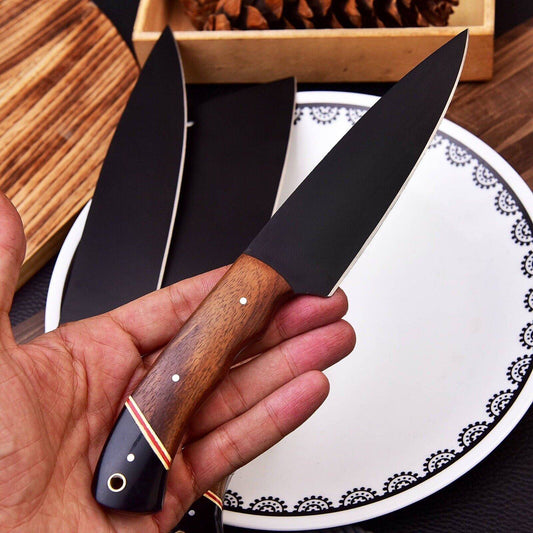
Some sets follow a traditional coordinated appearance, using the same handle style across every blade. Others emphasize visible forging character, patterned Damascus steel, contrasting materials, polished surfaces, or darker forged finishes.
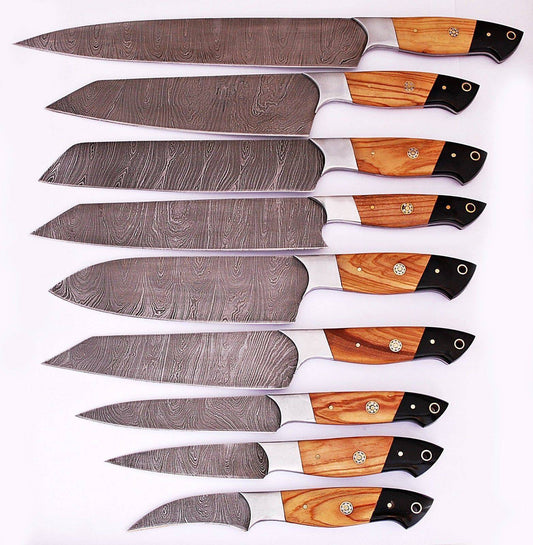
A handmade chef knife collection may also combine Western and Japanese-inspired kitchen profiles. For example, one set could pair a broad chef knife with a santoku, utility blade, paring knife, and carving profile. Another may place greater emphasis on specialist culinary shapes.
These differences matter because a seven-piece knife set and another seven-piece set may serve very different preparation needs. Blade selection is therefore more useful than piece count alone when comparing collections.
Shoppers looking for additional culinary designs can also explore related Chef Knife Sets or individual kitchen knife listings where available, while buyers interested in personalized builds may consider Custom Orders for suitable designs.
Choosing the Right Chef Knife Set
When comparing Chef Sets, begin with the type of food preparation you perform most often. A compact set containing a chef knife, utility knife, and paring knife may cover the essentials for many kitchens, while a larger professional-style knife set can offer more dedicated blade profiles.
Consider the following factors together rather than focusing on only one specification:
Blade selection: Look at what each knife actually contributes. A varied set generally provides more versatility than several nearly identical profiles.
Steel type: Check the individual product details for the specified blade material. Damascus steel, D2 steel, high carbon steel, and other materials can differ in appearance and maintenance.
Handle design: Compare handle shape, material, and visual style. A matching handle theme can give the collection a more coordinated presentation.
Set size: Larger numbers do not automatically mean a better match. A five-piece set with useful profiles may suit one cook better than a larger collection containing blades they rarely use.
Kitchen style: Some buyers prefer polished and refined kitchen cutlery, while others prefer forged textures, darker finishes, traditional handmade character, or patterned steel.
Care requirements: Handmade kitchen knives should be cleaned, dried, and stored according to their steel and handle materials. High carbon steels in particular can require more attentive drying and maintenance than more corrosion-resistant alternatives.
For buyers comparing handmade chef knife sets online, the individual listing should always be the final source for dimensions, materials, number of pieces, and included blade profiles.
Who Are Chef Sets Suitable For?
A coordinated chef set can make sense for someone equipping a new kitchen, replacing mismatched cutlery, expanding an existing cooking setup, or choosing a distinctive culinary gift.
Home cooks may value the convenience of having several complementary preparation knives available in one collection. Culinary enthusiasts may focus more closely on blade geometry, steel, handle construction, and the combination of Western or Japanese-style profiles.
Handmade sets also have visual appeal for buyers who appreciate forged goods and artisan craftsmanship. Patterned Damascus blades, distinctive handles, polished finishes, and individually finished components can make a kitchen knife collection interesting beyond basic utility.
For gift buyers, a coordinated multi-piece chef knife set can provide a more complete presentation than a single kitchen knife, particularly for cooking enthusiasts, new homeowners, or people building a dedicated culinary workspace.
Why Choose Unique Blades Runner for Handmade Kitchen Knife Sets?
Unique Blades Runner focuses on artisan-made forged products and distinctive knife designs rather than limiting the collection to one standard kitchen profile. Backed by more than 20 years of craftsmanship experience, the emphasis is on offering varied designs for buyers who appreciate both practical kitchen cutlery and handmade character.
Within the Chef Sets collection, shoppers can compare different numbers of pieces, blade profiles, steel choices, handle styles, and finishes instead of being restricted to one visual format.
Custom work may also be available for suitable designs, allowing buyers with specific requirements to explore personalized options rather than relying only on existing configurations. Wholesale or Bulk Orders may also be relevant for qualifying buyers seeking larger quantities of handmade kitchen cutlery.
FAQ About Chef Sets
What knives are normally included in a chef knife set?
The contents vary by design. A set may combine a chef knife with santoku, utility, paring, bread, carving, slicing, or other kitchen profiles. Always check the individual listing for the exact combination included.
Are Chef Sets suitable for everyday cooking?
Yes. Chef Sets can provide several complementary blade profiles for common kitchen preparation, but the best set depends on the types of ingredients and preparation work you perform most frequently.
What is the difference between a chef knife and a santoku knife?
Both are versatile kitchen knives, but their profiles are different. A traditional chef knife often has more curvature along the cutting edge, while a santoku commonly has a flatter edge and distinctive Japanese-inspired geometry.
Are Damascus chef knife sets handmade?
Many artisan Damascus kitchen knife sets involve significant hands-on finishing and assembly, but construction methods differ between makers and products. Check each listing for specific handmade or hand-forged details.
Which steel is best for a kitchen knife set?
There is no single steel that is ideal for every buyer. D2, high carbon steel, Damascus constructions, and other steels differ in maintenance, appearance, edge characteristics, and corrosion resistance. The right choice depends on your priorities and care routine.
How should handmade kitchen knives be cared for?
Hand wash the knives, avoid leaving them wet, dry them promptly, and store them where the cutting edges are protected. Follow any additional care guidance provided for the particular steel and handle material.
How do I choose between different Chef Sets?
Compare the actual blade profiles, steel material, handle design, number of useful pieces, finish, and your normal cooking habits. The most suitable Chef Sets are those whose included knives match the preparation work you regularly perform rather than simply offering the highest piece count.
Chef Sets offer a practical way to build a coordinated kitchen collection while exploring different blade shapes, steel choices, artisan finishes, and handle designs. From compact handmade chef knife sets to larger Damascus and multi-piece culinary collections, the category gives shoppers several ways to match kitchen cutlery with their cooking style and design preferences.