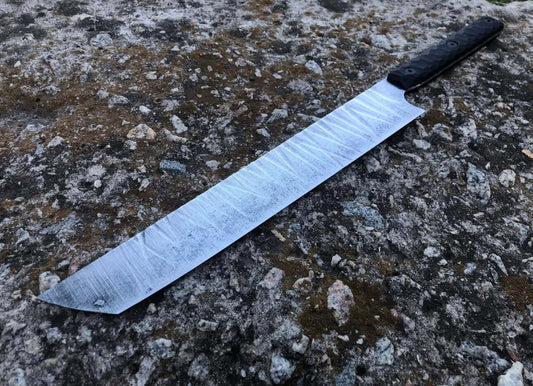
Which Chef Knife Fits the Way You Cook?
All four knives here share high carbon steel blades, so the real difference is shape. Each profile is built around a cutting motion, and picking the right one comes down to what you prepare most often.
Chef's Knife and Gyuto: The All-Rounders
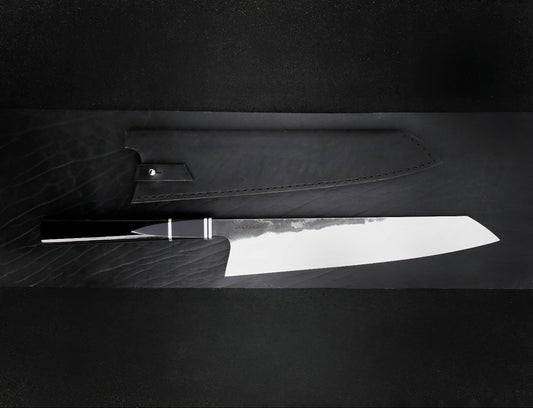
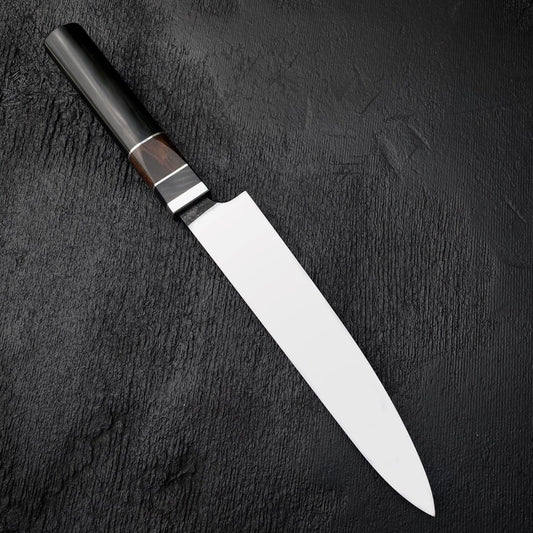
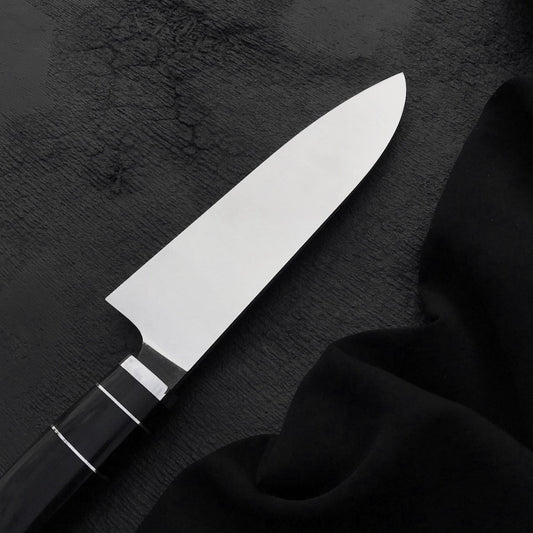
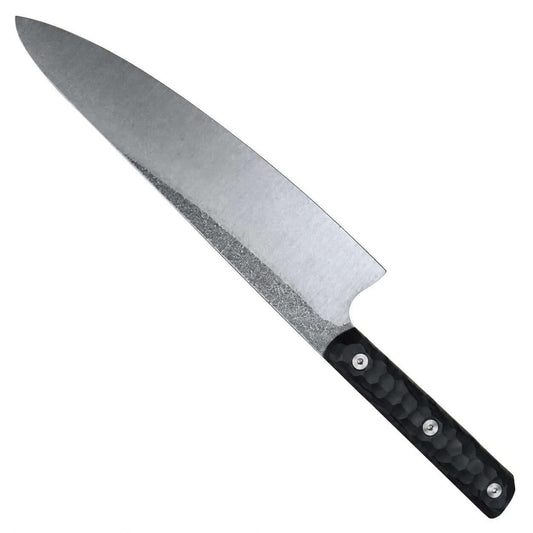
A gyuto is the Japanese take on the Western chef's knife, with a pointed tip and a gently curved edge that rocks through herbs and glides through meat, onions and root vegetables. Our gyuto chef knife pairs that profile with a G10 handle, a durable synthetic that shrugs off moisture. The Japanese chef knife with a natural wood handle covers the same everyday jobs with a warmer, traditional feel in the hand. If you only buy one cooking knife, start with one of these two.
Santoku: Built for Vegetables
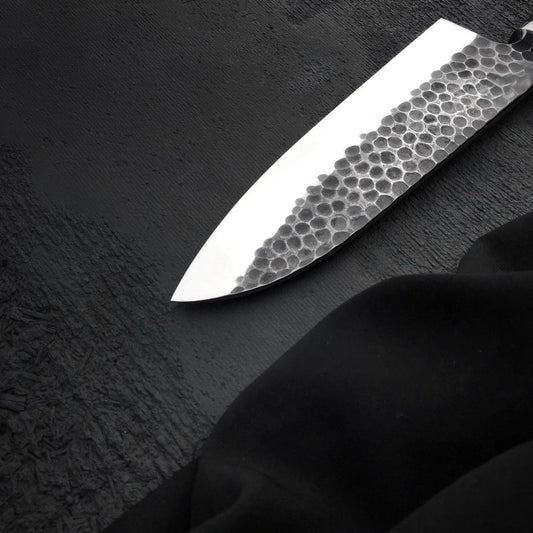
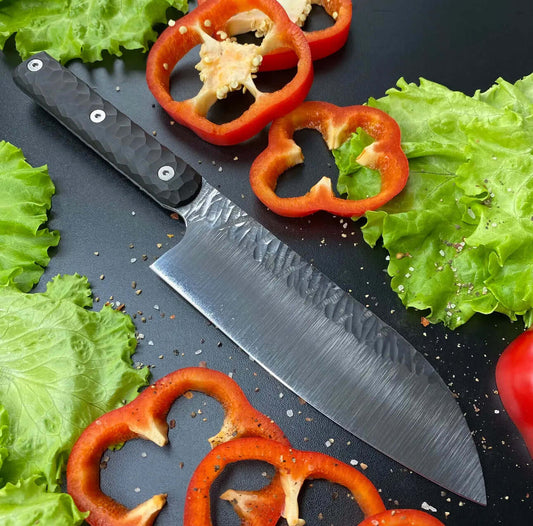
The santoku has a flatter edge and a rounded, downward-sloping tip. Rather than rocking, you cut with a straight up-and-down or forward push, which makes quick, even work of slicing vegetables, dicing and mincing. Cooks who chop more produce than they carve meat often prefer it to a curved chef's knife.
Yanagiba: For Sashimi and Clean Slices
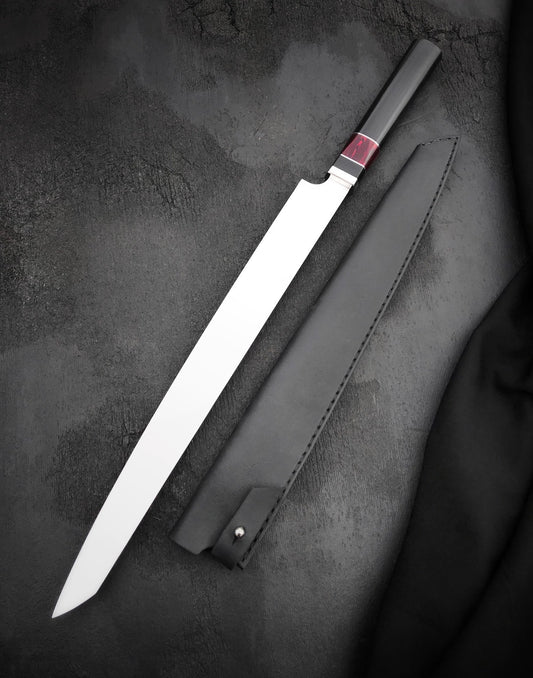
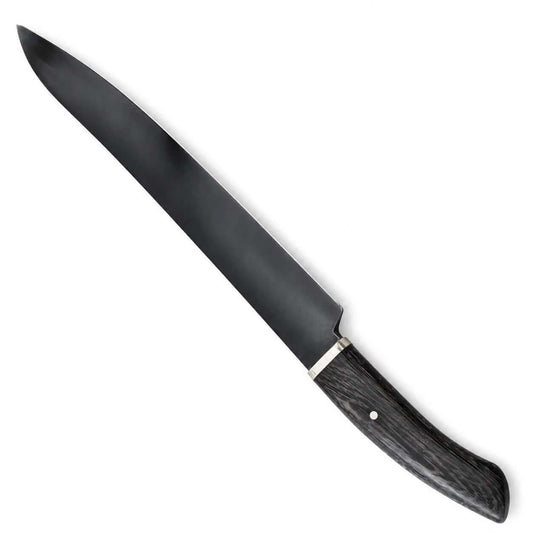
The yanagiba sashimi knife is a long, narrow slicer designed to cut raw fish in a single drawing stroke, so the surface stays smooth instead of torn. It also works well for slicing cooked roasts thinly. It's a specialist blade, best added alongside a chef's knife rather than in place of one.
What High Carbon Steel Means in the Kitchen
High carbon steel takes a very keen edge and is easy to bring back with a whetstone or honing rod, which is why it's a favorite in Japanese-style kitchen knives. The tradeoff is care: unlike stainless steel, it can spot or rust if left wet. Hand wash each knife, dry it right away, and wipe on a thin coat of food-safe oil before storing. Over time the blade may darken to a gray patina, which is normal and helps protect the steel. Keep these knives out of the dishwasher and off glass or stone cutting boards; wood or soft plastic boards protect the edge.
Build Out Your Kitchen
For a matched set instead of a single knife, browse our kitchen knife sets. Heavy jobs like breaking down poultry or chopping through bone call for a thicker blade from our cleaver knives, and you'll find more everyday blades across our kitchen knives.