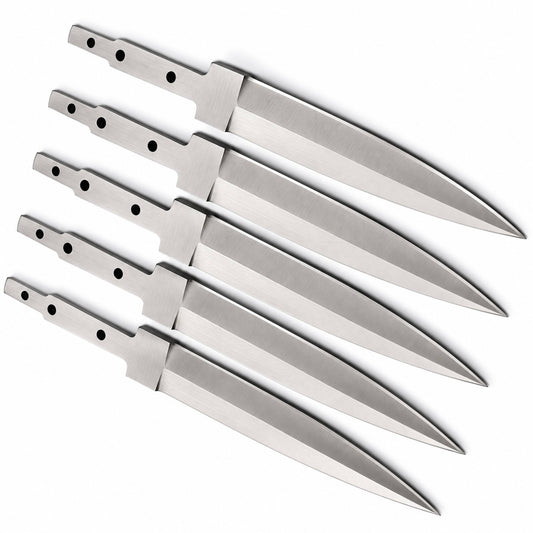
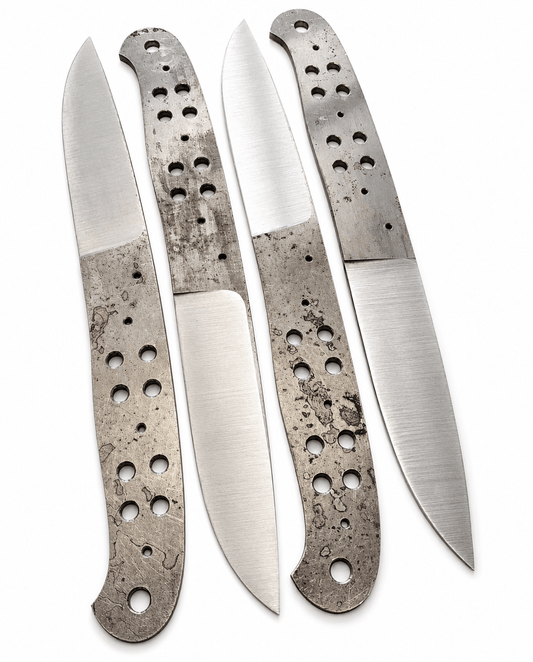
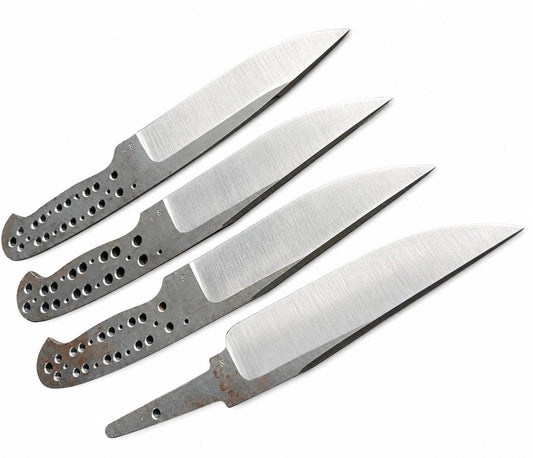
Why Makers Choose 440C Stainless for Knife Blanks
440C is a martensitic stainless steel. It has the highest carbon content of the common 440-series grades, roughly 0.95–1.2% carbon with 16–18% chromium. The carbon lets it harden properly, and the chromium gives it its rust resistance. When heat treated correctly, 440C usually reaches about 58–60 HRC. That's hard enough to hold a useful edge on a working knife and still easy to sharpen on ordinary stones.
For a maker, that balance is the main reason to pick a 440C blank. You get a blade that won't spot the first time it's left damp in a pack or a kitchen drawer. It won't develop a patina the way plain carbon steel does, and you can finish it from satin to near mirror. If you want a finished knife that needs little upkeep, 440C stainless steel knife blanks are a practical place to start.
440C Blade Blank Profiles and What Each Suits
A 440C blank's profile decides what the finished knife will do best. The steel stays the same across shapes, so pick the profile for the job first.
Bushcraft Knife Blanks
Bushcraft blanks usually have a straight or gently curved edge, a sturdy spine and a blade length suited to carving, feathering sticks and general camp work. In 440C, a 440C bushcraft blade blank makes a low-maintenance outdoor knife that handles rain, river crossings and wet wood without constant oiling.
Hunting and Skinning Blanks
Drop point and spear point hunting blanks give you a controlled tip and plenty of belly for field dressing. Skinner profiles have a sweeping edge for long, smooth cuts. Stainless steel is useful here because blood, moisture and fat speed up rust on plain carbon blades. Compare outdoor shapes in other steels in our hunting knife blanks.
Bowie and Camp Knife Blanks
Longer Bowie and camp profiles, usually clip point with a broad blade, are built for chopping, batoning and heavy camp chores. A 440C Bowie blank keeps the classic outline while the stainless steel cuts down on care in humid or coastal climates. Handle choice matters more on a big blade, so plan a full grip with enough length to balance the weight.
Kitchen and Utility Blanks
Stainless steel is the traditional choice for kitchen knives, and 440C works well in chef, paring, utility and fillet blanks. These profiles are usually thinner at the spine and edge for clean slicing. Because they're cleaned often, 440C's corrosion resistance is a real advantage over carbon steel.
Folding and Small Knife Blanks
Smaller 440C blanks for pocket knives, neck knives and compact fixed blades suit makers building EDC-sized pieces. A folding knife blank needs matching liners, a pivot and a lock design, so check the blade's pivot hole and tang shape against your build plan before you order.
440C vs Other Knife Blank Steels
Every blank steel trades one quality for another. These quick comparisons can help you decide whether 440C is the right fit:
440C vs 1095 carbon steel: 1095 is easy to sharpen, tough and takes an even patina, but it needs oiling and drying to keep rust away. 440C gives up some of that easy toughness for much better stain resistance. Choose carbon if you like the traditional look and upkeep, and 440C if the knife will live somewhere wet. See the alternatives in our carbon steel knife blanks.
440C vs D2 tool steel: D2 usually has more wear resistance and edge retention. It's only semi-stainless, though, and can be harder to sharpen. 440C resists corrosion better, which is why makers often use it for kitchen, fishing and coastal-use knives.
440C vs Damascus: Damascus blanks are chosen mostly for their visible layered pattern, and the care they need depends on the steels in the layers. 440C has a plain, even surface that suits clean, modern designs or a mirror polish. Pattern lovers can browse Damascus knife blanks instead.
Working With Heat-Treated 440C Blanks
Our blanks arrive already heat treated, so the hardening and tempering are done. That saves a step, but it changes how you should do the remaining work:
Keep it cool while grinding. Hardened 440C can lose temper at the edge if it gets too hot. Use light passes, dip the blade in water often and never let the steel change color.
Protect the blade during handle work. Tape the blade before fitting scales, drilling pin stock or shaping the handle, so you don't scratch the finished surface.
Pick a handle that suits the knife's job. Stabilized wood, micarta and G10 all pair well with stainless steel. For outdoor and kitchen knives, waterproof handle materials and a good epoxy bond help the whole knife hold up in wet use, not just the blade.
Sharpen to suit the profile. Bushcraft blanks are often given a scandi or flat bevel, while kitchen blanks take a finer, thinner edge. 440C sharpens well on standard whetstones and diamond plates.
Single Blanks, Small Sets and Bulk Lots
Knife blanks are sold several ways, depending on how you work. A single blank suits a one-off custom build or a gift knife. A small set of matching blade blanks lets you try different handle materials on the same profile or make matched knives. Larger lots suit makers who stock a workshop, teach knife-making classes or produce small batches for sale. Buying a set of one profile also keeps the blade shape consistent across a run.
Caring for a Finished 440C Knife
440C is rust resistant, not rust proof. Rinse off salt water, blood and acidic foods, dry the blade before storing it and keep it out of a damp sheath for long periods. A light coat of food-safe oil now and then is enough to keep a finished 440C knife looking clean for years. Hone often and you'll seldom need a full regrind.
Browse the 440C blanks above to find the profile you need, or compare steels and shapes across our knife blank collections before you start your next build.