Choosing Kitchen Knives for Home Cooking
Most cooks do almost all their prep with three knives: a chef knife for chopping and slicing, a small paring or petty knife for close work, and a serrated or long slicing knife for bread and roasts. Everything else is a specialist tool. Start with the chef knife, because it's the one you'll use every day, then add knives for the foods you cook most often.
Western Chef Knives and Japanese Blade Shapes
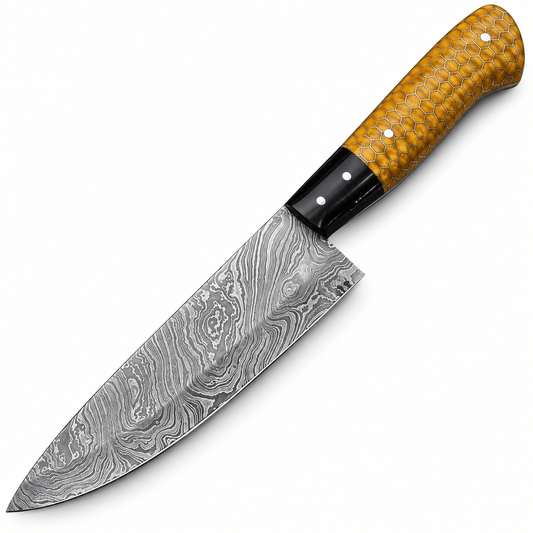
The Western chef knife has a curved belly that rocks on the board, which suits mincing herbs and slicing through vegetables in a rolling motion. Its blade is usually a little thicker, so it handles tough jobs like breaking down squash or cutting through chicken joints.
Gyuto
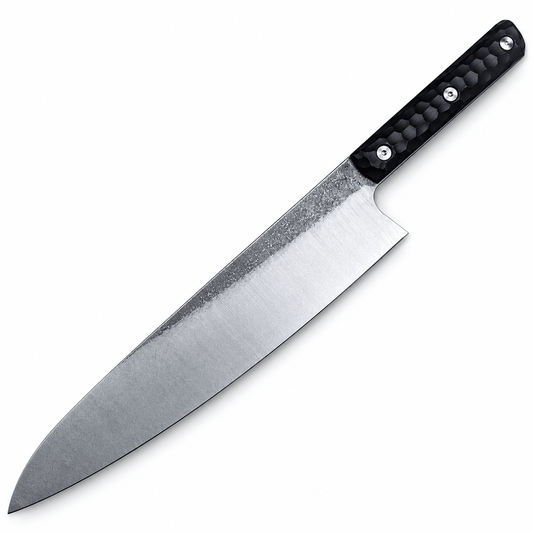
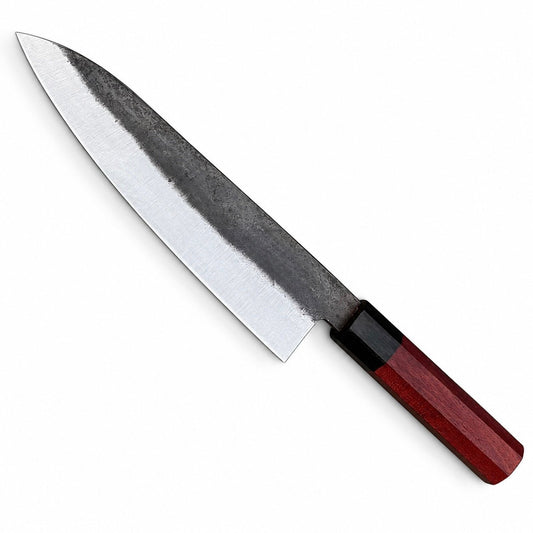
The gyuto is the Japanese counterpart to the chef knife. It has a flatter belly and a finer tip, and it's usually thinner behind the edge, so it slices cleanly with push cuts as well as a rocking motion. It's an all-purpose knife for meat, fish and vegetables.
Santoku
A santoku has a shorter, taller blade with a nearly flat edge and a rounded tip that dips down to meet it. It works best with up-and-down chopping and push cuts, and the wide blade doubles as a scoop for moving food from board to pan. Many home cooks find it easier to control than a long chef knife.
Kiritsuke and Nakiri
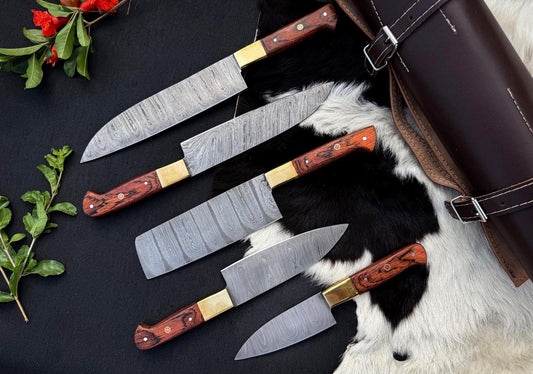
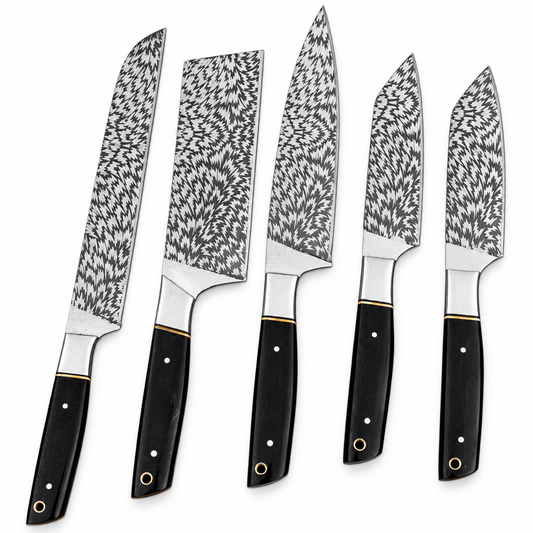
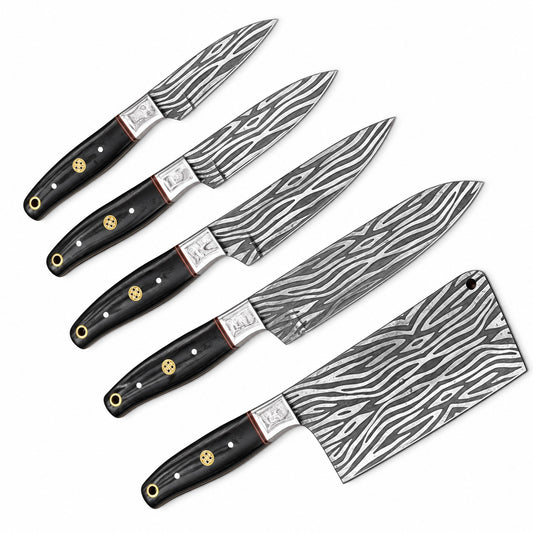
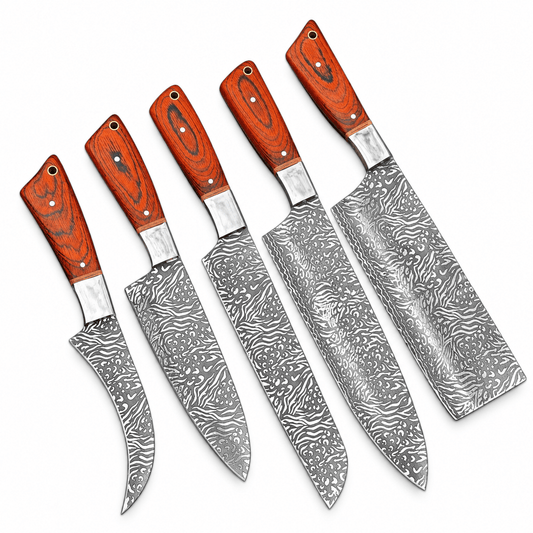
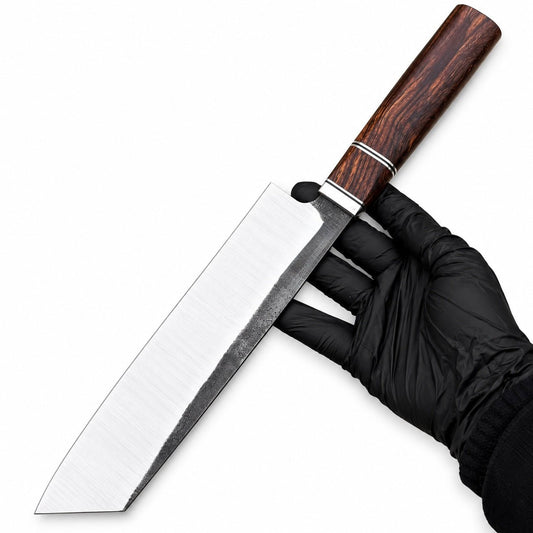
A kiritsuke has a long, flat edge and an angled, clipped tip. It slices like a long chef knife and does fine tip work at the same time, and it makes a striking display piece. A nakiri has a flat, square blade with no tip, made for chopping vegetables in straight up-and-down cuts with the full edge meeting the board.
Specialist Kitchen Knives
Paring and Petty Knives
Paring knives have short blades of about 3 to 4 inches for peeling, trimming and coring fruit. A petty knife is a little longer and slimmer, sitting between a paring knife and a chef knife, and it's handy for small vegetables, shallots and boneless meat.
Boning and Fillet Knives
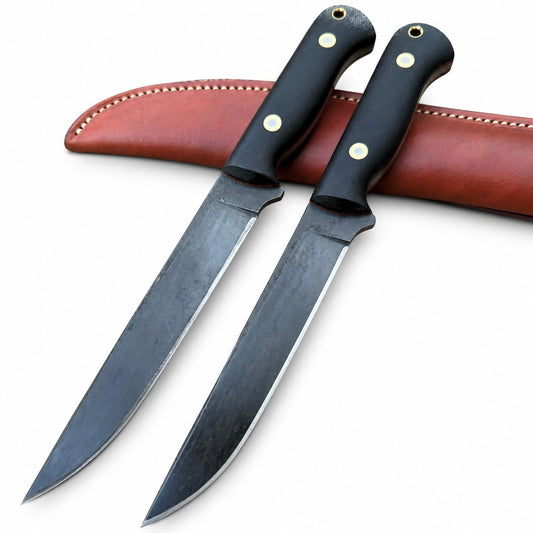
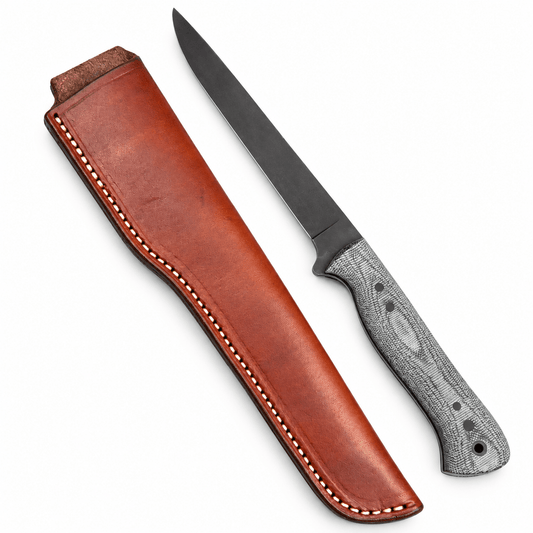
Boning knives have narrow, stiff or semi-flexible blades that follow bones and joints when breaking down poultry and pork. Fillet knives are longer and more flexible, so they bend along a fish's backbone and lift the fillet in one pass. See our fillet knives for blades made for fish.
Bread, Carving and Steak Knives
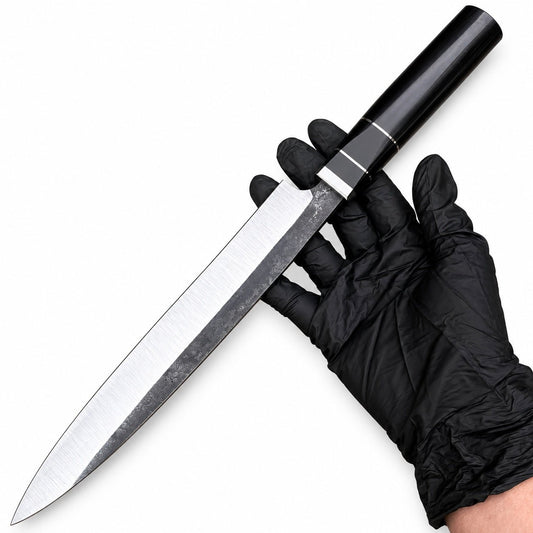
Serrated bread knives saw through crusts without crushing the crumb. Carving and slicing knives have long, narrow blades for clean slices of roasts, brisket and turkey. Steak knives are table knives, usually sold in sets of four to eight, with straight or serrated edges.
Cleavers and Ulu Knives
A meat cleaver has a heavy, rectangular blade that uses its weight to chop through bone and joints. A Chinese-style vegetable cleaver looks similar but is much thinner, and it's used like a large chef knife for slicing, chopping and scooping. Browse heavier blades in our cleaver knives collection.
The ulu is a traditional Inuit knife with a curved, crescent-shaped blade and a handle set above it. It's used with a rocking motion for mincing herbs, chopping vegetables and cutting pizza, and it's easy on the wrist. Our ulu knives include Damascus versions.
Kitchen Knife Steels: High Carbon, D2 and Damascus
High carbon steel takes a very sharp edge and is easy to bring back with a whetstone. It reacts with acidic foods and moisture, so it develops a gray patina over time and needs to be dried right after washing. Many cooks like the patina, which also helps protect the blade.
D2 tool steel is semi-stainless and very wear resistant. It holds its edge through a lot of cutting and stains less than plain carbon steel, but it takes more patience to sharpen.
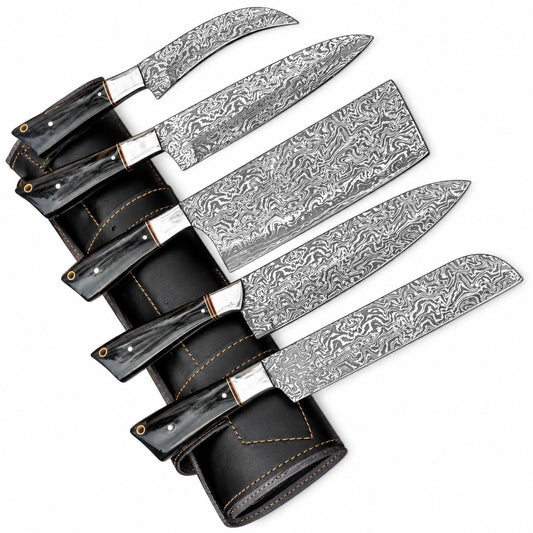
Damascus steel is pattern-welded from layers of steel and then etched to show the pattern. It's chosen for its looks as much as its cutting, and like carbon steel it should be washed, dried and lightly oiled. Stainless steels, common in this category, need the least care but are usually harder to get as sharp as carbon steel.
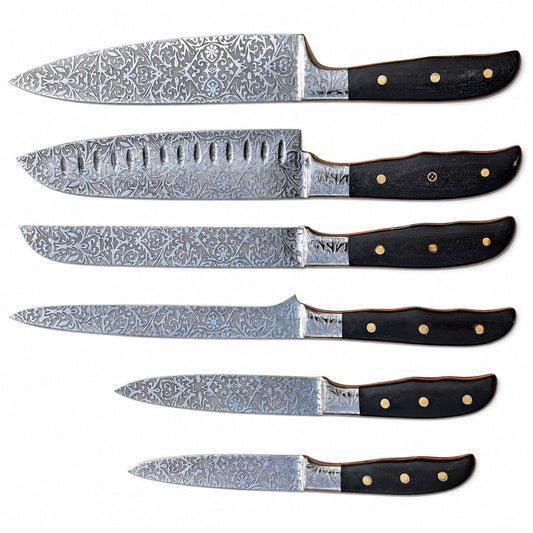
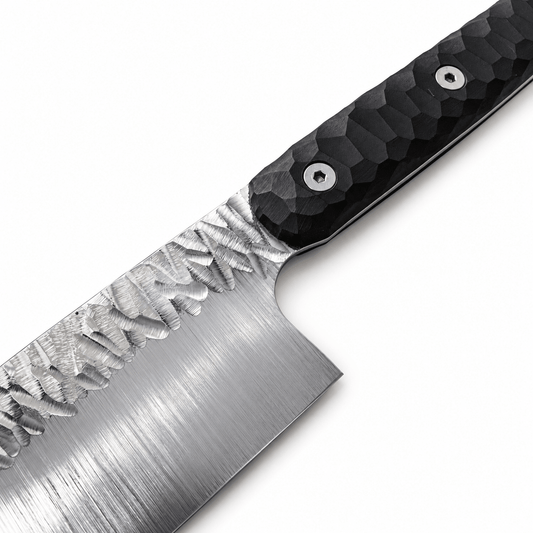
Some blades get a hammered or black coated finish. The hammered dimples help food release from the blade, and a coating adds some stain resistance as well as a distinctive look.
Handle Materials and Balance
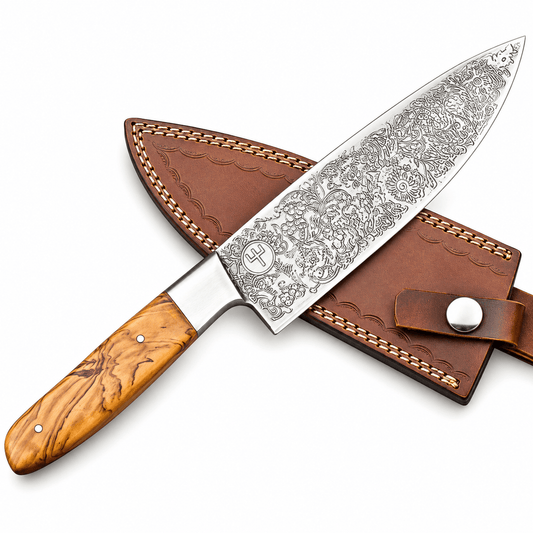
A kitchen knife's handle is in your hand for long stretches, so comfort matters. Wood, including olive wood, gives a warm grip and benefits from occasional oiling. Bone and stag antler have a traditional look, and each piece is unique. Micarta and G-10 are layered composites that resist water and stay grippy when wet, which suits a busy kitchen. Full tang knives, where the steel runs the length of the handle, feel balanced and solid. Hold the knife where the blade meets the handle: a well-balanced chef knife shouldn't tip