What Is a Kiritsuke Knife?
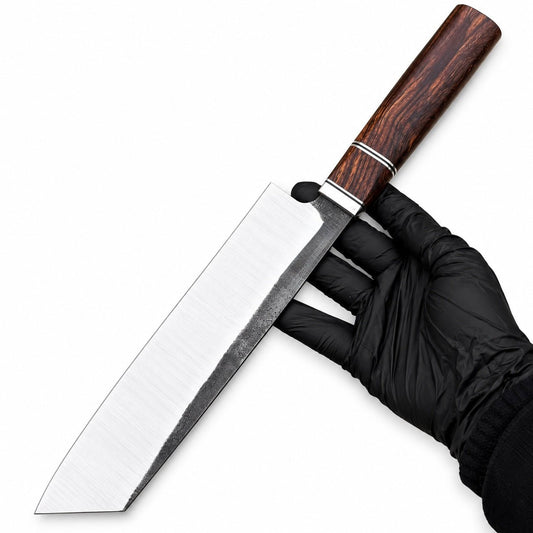
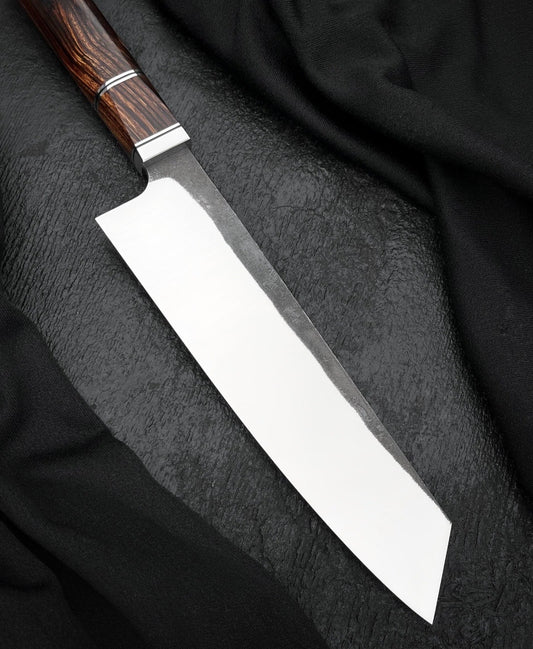
The kiritsuke is recognized by its tip. Instead of curving down to a point, the spine drops at a sharp angle to meet the edge, creating a strong, pointed "reverse tanto" tip. Behind that tip is a long, mostly flat edge that meets the cutting board along its length. In traditional Japanese kitchens the kiritsuke is a single-bevel knife that combines the jobs of the yanagiba slicer and the usuba vegetable knife. It is often described as a knife for experienced chefs because its flat profile and long blade reward good technique.
Traditional and Modern Kiritsuke
A traditional kiritsuke is single bevel, sharpened on one side only, and made for either right- or left-handed use. It produces very precise slices but takes practice to use and sharpen. Most modern kiritsuke knives, sometimes called kiritsuke gyuto or kiritsuke chef knives, are double bevel. They are sharpened on both sides, work for either hand and behave like a chef knife with a flatter edge and an angled tip. That makes them much easier to use in a home kitchen while keeping the distinctive look.
What a Kiritsuke Is Used For
A kiritsuke handles slicing, chopping and fine detail work in one knife. Its long, flat edge makes clean push cuts through vegetables and herbs, and long pull cuts through fish and boneless meat. The angled tip is strong and precise for scoring, trimming and fine cuts on small ingredients. Because the edge is so flat, a kiritsuke suits straight push and pull cuts more than the rocking motion of a Western chef knife.
Kiritsuke vs Gyuto
A gyuto has a gently curved belly and a classic pointed tip, which makes it more forgiving and better for light rocking cuts. A kiritsuke has a flatter edge and an angled tip, which gives it more board contact for push cuts and a stronger point for detail work. Many cooks use a gyuto as an everyday all-rounder and choose a kiritsuke for its precision and its looks. Compare them in our gyuto knives.
Kiritsuke vs Santoku and Bunka
The santoku and bunka are shorter, taller all-purpose knives. A santoku has a rounded tip, and a bunka has an angled tip similar to a kiritsuke's but on a shorter blade. The kiritsuke is longer and slimmer, which gives it more reach for slicing larger ingredients. For a compact, easy-to-control knife, see our santoku knives.
Kiritsuke Sizes
- 7 inches (about 180 mm): a compact, nimble kiritsuke for smaller kitchens and everyday prep.
- 8 to 8.5 inches (about 210 mm): the most versatile size for home cooks.
- 9.5 to 10 inches (240 mm and longer): extra reach for long slicing cuts, large vegetables and fish.
Steels and Finishes
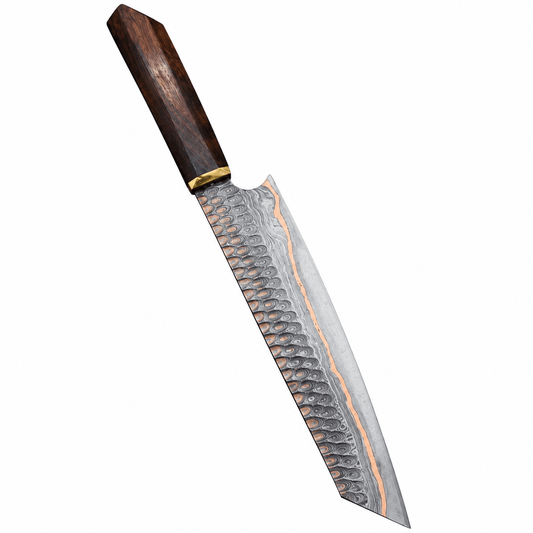
Stainless steels such as 440C resist rust and need little care, which suits everyday cooking. High carbon steels such as 1095 take an extremely sharp edge and are easy to sharpen, but they need to be dried after use and develop a patina. Damascus and copper Damascus kiritsuke knives add a flowing layered pattern, and copper layers bring warm bands of color to the blade. Two-tone, black forged and satin finishes give each kiritsuke a different look.
Handle Styles
Many kiritsuke knives use a traditional octagonal wa handle, which is light, comfortable in a pinch grip and gives the knife a classic Japanese look and a blade-forward balance. Western-style handles with full tang and riveted scales feel heavier and more familiar. Wood, stabilized wood, resin and Micarta are all common choices.
Caring for a Kiritsuke Knife
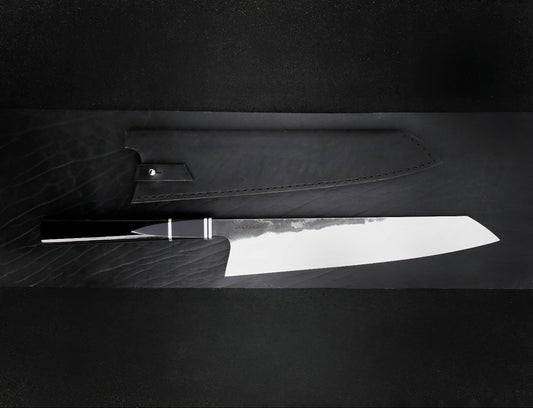
Wash your kiritsuke by hand and dry it right away, especially carbon steel and Damascus. Use a wood or soft synthetic cutting board. Avoid bones, frozen food and twisting cuts, which can chip the thin edge and the fine tip. Store it in a sheath, saya, block or roll to protect the long blade, and sharpen on whetstones. On a double-bevel kiritsuke, sharpen both sides evenly. On a single-bevel kiritsuke, follow the single bevel and flatten the back lightly.
Compare the sizes, steels and handles above to find the kiritsuke that fits the way you cook.