Choosing Hunting and Outdoor Knives by the Job
Outdoor knives have a lot in common: a strong blade, a secure handle and a sheath that rides on your belt. What sets them apart is blade shape and size, because that decides which jobs each knife does well. A hunter gives you control around game. A skinner separates hide cleanly. A camp or bushcraft knife handles wood, food and general chores, and a chopper does the heavy cutting. Most hunters and campers carry two knives: a smaller blade for fine work and a larger one for heavy tasks.
Hunting Knives
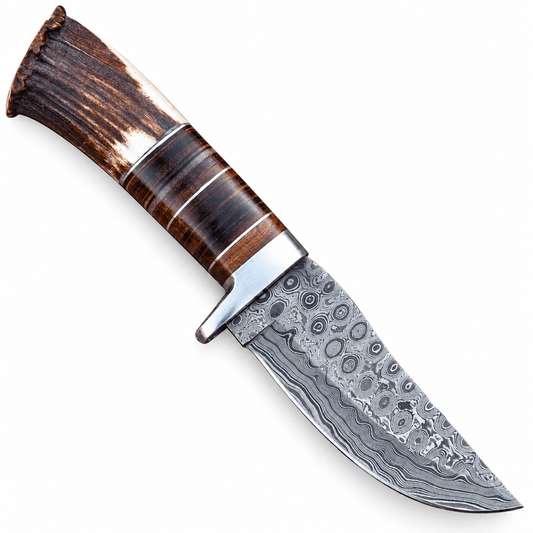
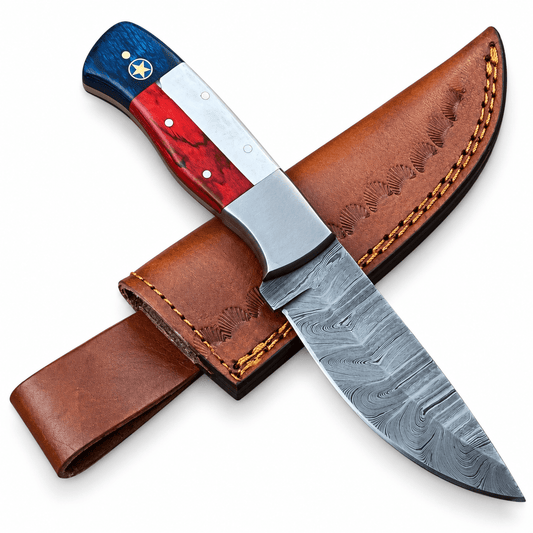
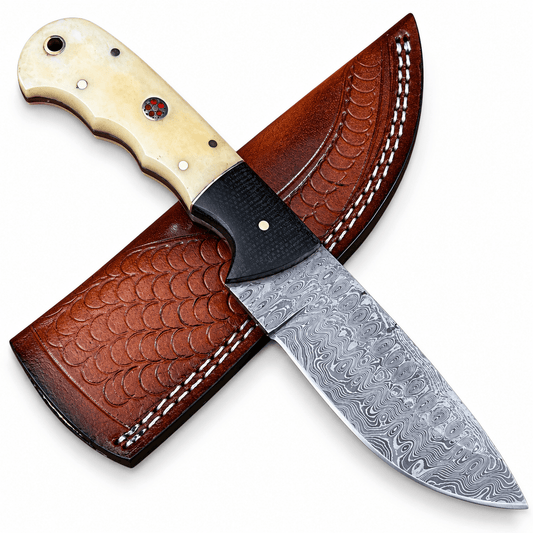
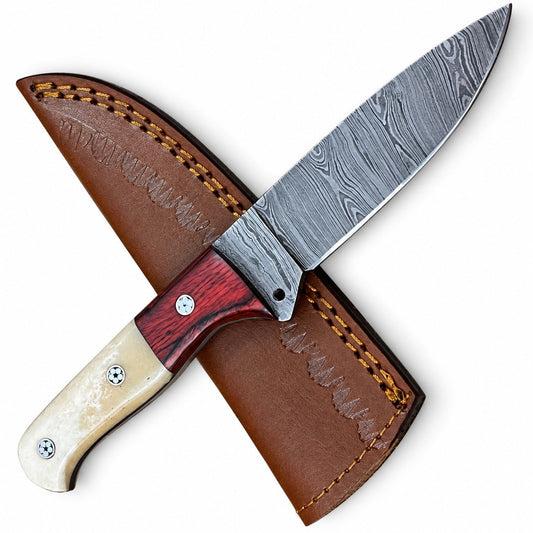
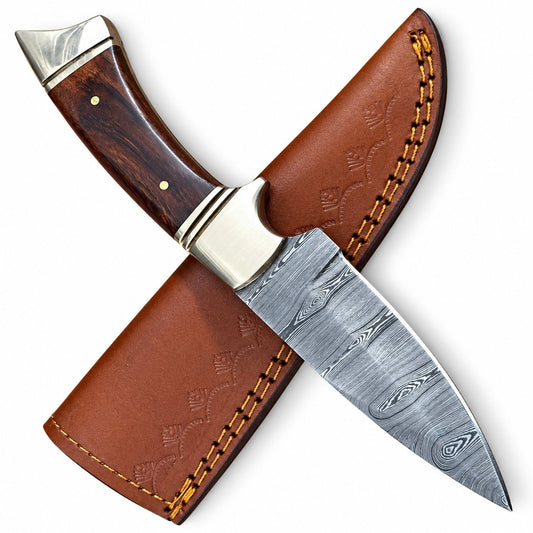
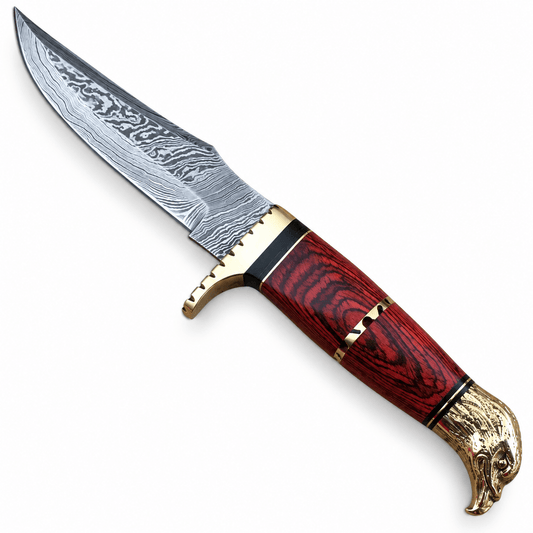
A hunting knife is usually a medium fixed blade with a drop point or clip point. A drop point has a thick, lowered tip that is less likely to cut into the body cavity during field dressing, which makes it the most common hunting shape. A clip point has a thinner, sharper tip for detail work around joints. Caping knives are smaller still, with short, precise blades for working around the head and cape of a trophy animal. Damascus hunters pair these working shapes with a layered steel pattern; see our Damascus hunting knives.
Skinning Knives and Gut Hooks
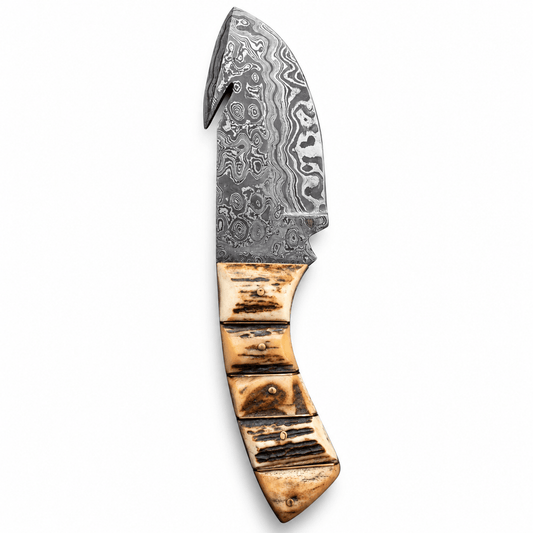
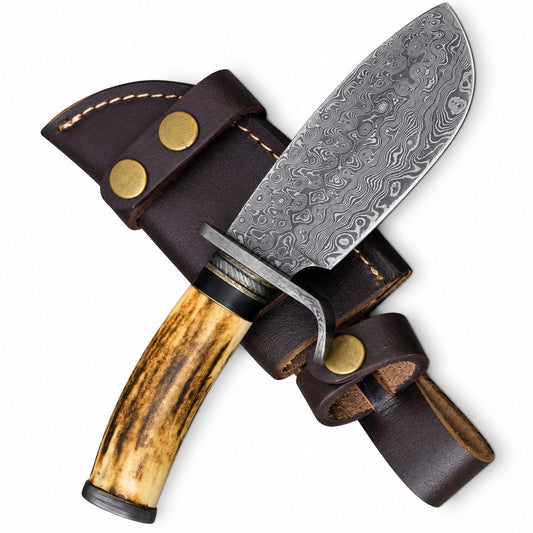
A skinning knife has a wide, sweeping belly that lets you separate hide from meat in long, smooth strokes with less risk of cutting through the skin. Some skinners add a gut hook, a sharpened notch on the spine that opens the hide in one pull without nicking the meat or organs underneath. Field dressing sets pair a skinner with a gut hook, a boning knife or a caping blade, so one roll covers the job from the field to the freezer. Browse our skinning knives.
Tracker Knives
A tracker knife combines several tools in one blade: a straight section for carving, a curved belly for slicing and a notched or stepped spine for light chopping and notching wood. It suits anyone who wants one larger knife for both camp chores and game. Compare the profiles in our tracker knives.
Camping Knives
A camp knife is longer and thicker than a typical hunter. That extra mass helps with splitting kindling, carving feather sticks, clearing light brush and cutting food at camp. Look for a full tang and a handle that fills your hand, because these knives get used hard over long days. Explore our camping knives.
Chopping Knives and Kukri Shapes
A chopping knife carries its weight toward the tip, so each swing drives deeper into wood than a slimmer blade would. The kukri, with its forward-curved blade, is one of the best-known chopper shapes, and wide, heavy camp choppers do similar work. A chopper works best next to a smaller hunter, not in place of one.
Bushcraft and Survival Knives
Bushcraft knives are built for carving, shelter building and fire making. A good one has a blade of about 4 to 5 inches, a full tang, a handle comfortable for long carving sessions and a square spine that can strike a ferro rod. Scandi grinds are popular because the wide bevel is easy to sharpen in the field. Survival knives go a step heavier, with a thicker blade that can handle batoning wood and hard use far from home.
Folding Hunters and Fishing Knives
A folding hunter puts a hunting blade into a pocket-sized knife, which makes it a light backup or a choice for small game and bird hunting. Fixed blades are still stronger and easier to clean for heavy field dressing. Fishing knives and fillet knives use thin, flexible blades that follow the bones of a fish, and folding fillet knives make that easy to carry in a tackle box.
Blade Steels for Outdoor Use
Damascus steel is made by layering and welding different steels, which creates the flowing pattern on the blade. Most Damascus for outdoor knives uses carbon steel layers, so it takes a keen edge but needs to be kept dry and lightly oiled. Copper Damascus adds copper layers for warm, bright bands of color. High carbon steels such as 1095 are tough, forgiving under hard use and easy to sharpen on a field stone, and they build a protective gray patina over time. D2 is a semi-stainless tool steel with long edge life and better rust resistance than plain carbon steel, though it takes more effort to resharpen. Stainless steels such as 440C resist rust best, a good match for fishing and wet country.
Handle Materials for the Field
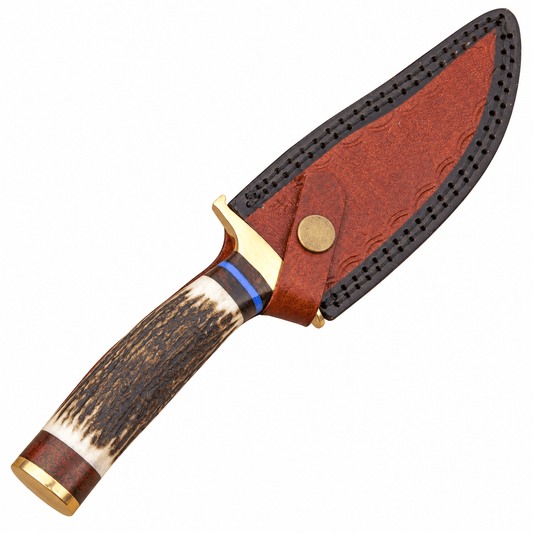
Stag and deer antler give a traditional look and a textured, natural grip. Bone is smooth and light in color, and horn has deep, natural tones. Wood feels warm in the hand and looks best with a little oil now and then. Micarta, made from layers of fabric set in resin, keeps its grip when wet or bloody and doesn't crack. Resin and stabilized materials add color and stand up well to moisture. For cold, wet hunts, a textured or synthetic handle is the practical pick. For a knife that will be handed down, natural materials bring more character.
Blade Length, Tang and Sheath
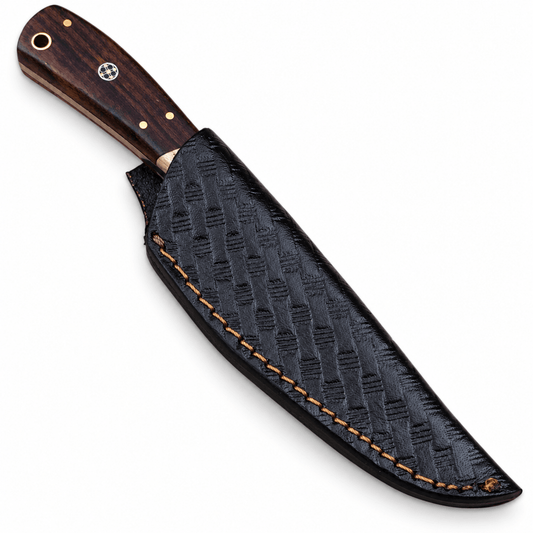
For field dressing deer-sized game, a blade of about 3 to 4.5 inches gives the most control. Camp and bushcraft work usually calls for 4 to 6 inches, and choppers run longer. A full tang, where the steel runs the full length of the handle, is the strongest build for heavy outdoor work; a hidden tang gives a slimmer, more traditional handle. Our handmade fixed-blade knives come with a leather sheath, ready to wear on a belt from the first trip.
Caring for an Outdoor Knife
Wash the blade by hand after cleaning game, dry it fully and wipe carbon steel and Damascus with a thin coat of food-safe oil. Don't store a wet knife in its leather sheath, because leather holds moisture against the steel. Hone the edge lightly after each use instead of waiting for it to go dull, and condition the sheath now and then so it stays supple.
Compare blade shapes, steels and handles above to find the knife that fits the way you hunt, camp and work outdoors.