What Makes a Knife a Classic
A classic knife design is one that stayed in use long after it first appeared because it solved a real problem well. The seax came from early medieval Europe, the tanto from Japan, the Bowie from the American frontier and the KA-BAR from World War II. Each one still shapes how knives are made today. Buying a classic means choosing a proven blade shape with history behind it, whether you plan to carry it, use it at camp or keep it in a collection.
Bowie Knives
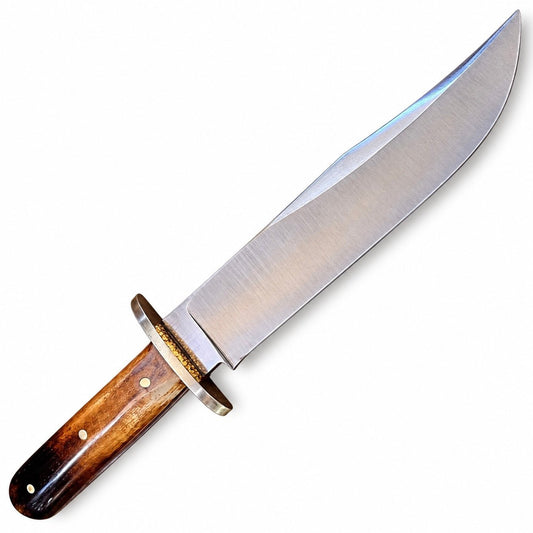
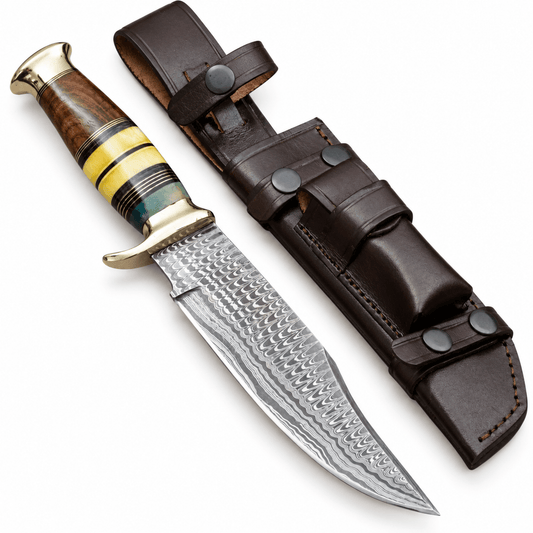
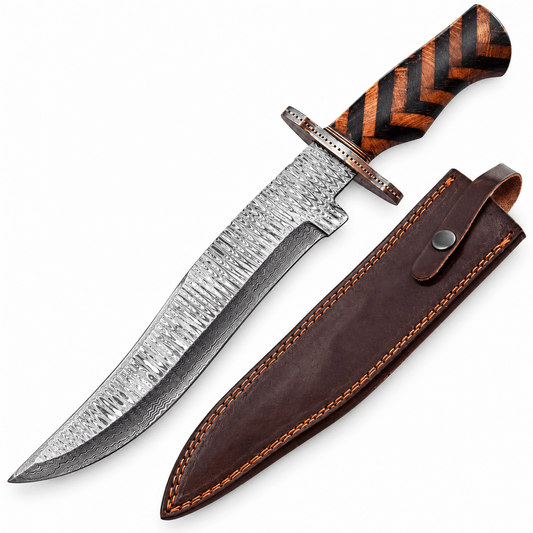
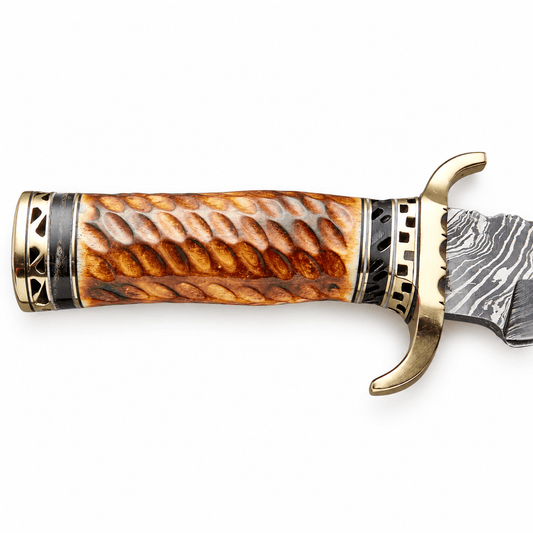
The Bowie is the best-known American knife: a large fixed blade with a clip point, a strong spine and a guard between blade and handle. It is named after Jim Bowie, and through the 1800s it became the all-purpose knife of the frontier, used for hunting, camp work and everyday chores. Bowies range from compact 7-inch blades to large knives over 12 inches, and regional forms include the Sheffield Bowie, the coffin-handle Bowie and the Civil War D-guard Bowie.
Western and Cowboy Knives
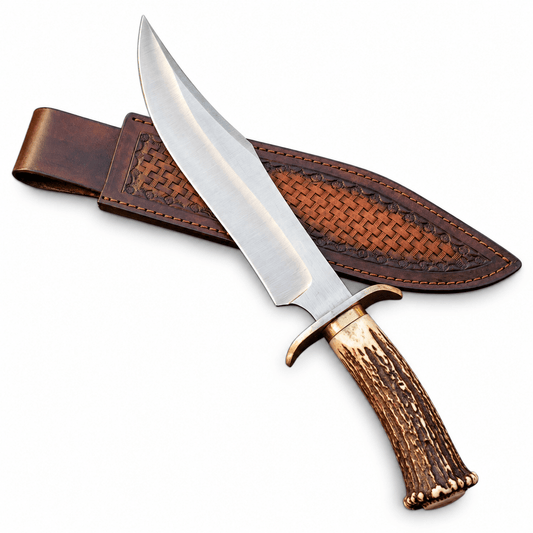
Western knives grew out of ranch life and the cattle trails, where a knife cut rope, prepared food, dressed game and worked leather. They include western Bowies with brass guards and stag handles, Mexican Bowies with long blades and distinctive guards, ranch work knives and cowboy pocket knives. Tooled leather sheaths, often worn horizontally across the belt, complete the look. Explore them in our western and cowboy knives.
KA-BAR Knives
The KA-BAR is a 7-inch clip point knife with a stacked leather handle, a straight guard and a fuller along the blade. It was issued widely in World War II and has stayed in use ever since as a hunting, camp and utility knife. Its simple, rugged design makes it one of the most recognized fixed blades in the world. See our KA-BAR knives.
Tanto Knives
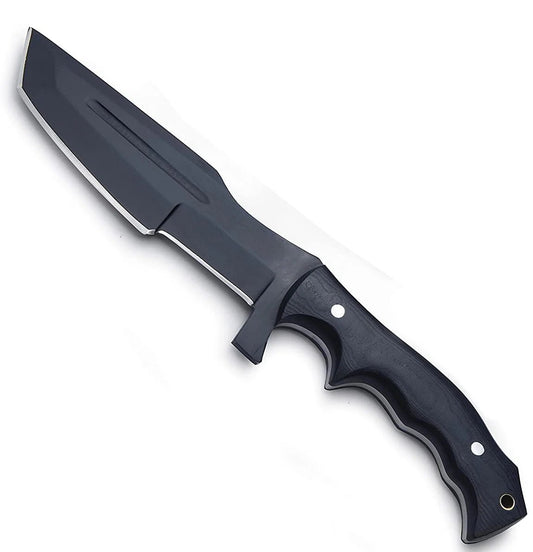
The tanto began in Japan as a short blade worn by samurai, with a straight edge and a strong tip. The modern American tanto keeps that strength but adds an angled, chisel-like point and a separate front edge, which makes the tip very hard to break when piercing tough material. Today the tanto shape appears on fixed blades, everyday carry knives and folders. Compare them in our tanto knives.
Viking Seax Knives
The seax is a single-edged blade carried by Vikings, Anglo-Saxons and other early medieval peoples as an everyday tool and a mark of status. Its best-known form is the broken-back seax, where the spine angles sharply down toward the tip. Seaxes ranged from small utility knives to long blades close to sword length. Handmade seaxes today often pair Damascus or carbon steel with wood, bone or antler handles. Browse our Viking seax knives.
Historical Knives
Historical knives cover designs from many cultures and periods: the kukri of Nepal with its forward-curved chopping blade, African blade forms, 19th-century fixed blades and other patterns that shaped the history of the knife. These pieces appeal to collectors who value a knife's story as much as its use. See more in our historical knives.
More Traditional Patterns
Arkansas Toothpick
The Arkansas toothpick is a long, narrow blade with a straight spine and a sharp point. It is closely tied to the Bowie in frontier history, but slimmer and more pointed.
Nessmuk, Kephart and Puukko
The Nessmuk has a short, wide blade with a high, curved belly, designed by a 19th-century woodsman. The Kephart is a slim, straight-spined woods knife. The Finnish puukko is a small belt knife with a straight blade and a barrel-shaped wooden handle. All three remain popular traditional patterns for camp and bushcraft use.
Blade Shapes and What They Do
The clip point, found on Bowies and KA-BARs, has a concave cut near the tip that makes the point finer and sharper. A drop point lowers the tip for strength and control. The broken back of the seax puts the point low and in line with the hand. The tanto point puts extra steel behind the tip for strength. Knowing these shapes helps you choose a classic knife for how you'll use it, not just how it looks.
Steels and Handles on Traditional Knives
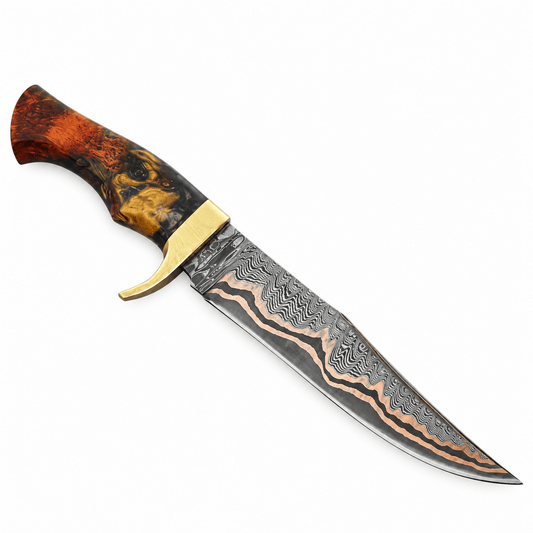
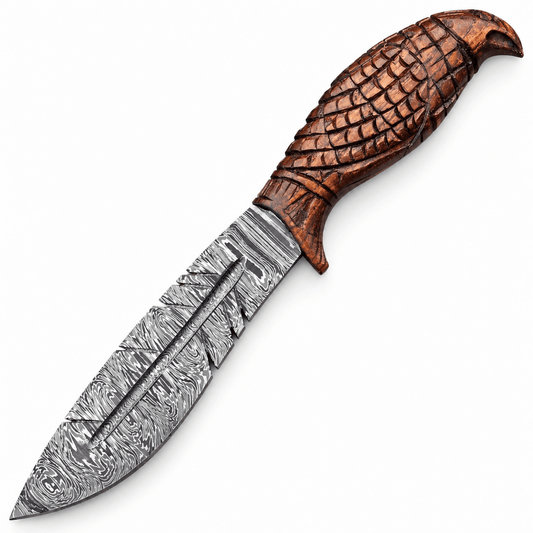
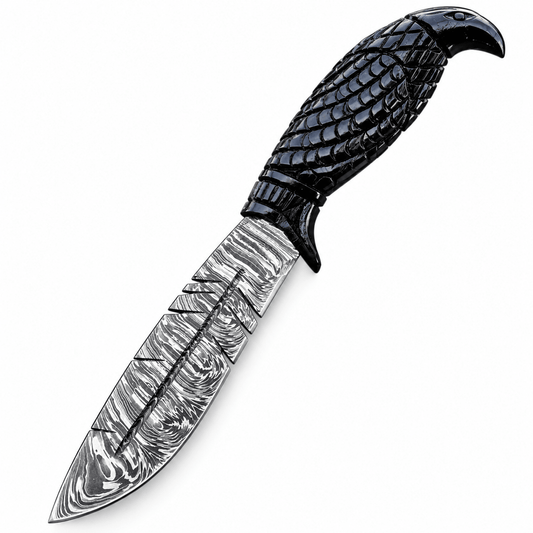
Classic knives were first made in carbon steel, and high carbon steel is still a natural fit for traditional patterns because it's tough and easy to sharpen. Damascus steel, made from welded layers, adds a flowing pattern that suits old-world designs like the seax and Bowie. D2 tool steel holds an edge longer and resists rust better than plain carbon steel. For handles, stag, bone and horn give a period look, stacked leather is the signature of the KA-BAR, and hardwoods like walnut and rosewood suit frontier designs. Brass and nickel silver guards and pommels finish the traditional look.
Caring for a Classic Knife
Many classic patterns were working tools first, and a well-made one can still go hunting, camping or into the woods. Our handmade fixed-blade knives come with a leather sheath. Keep carbon steel and Damascus blades dry and lightly oiled, condition leather and stacked-leather handles now and then, and don't store a damp knife in its sheath.
Browse the classic designs above to find the pattern that fits how you'll carry, use or collect it.