Handmade Damascus Bowie Knives
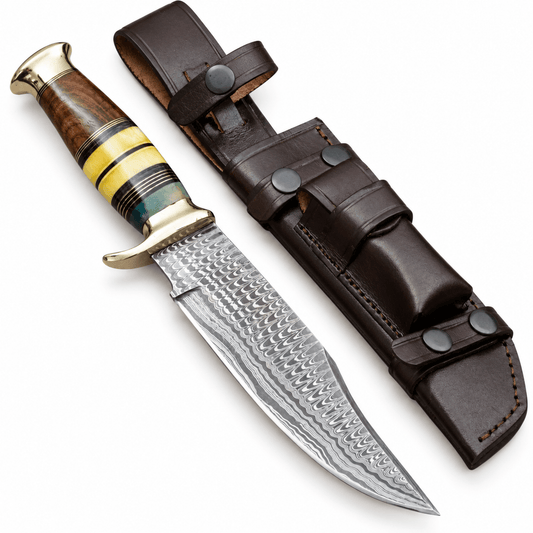
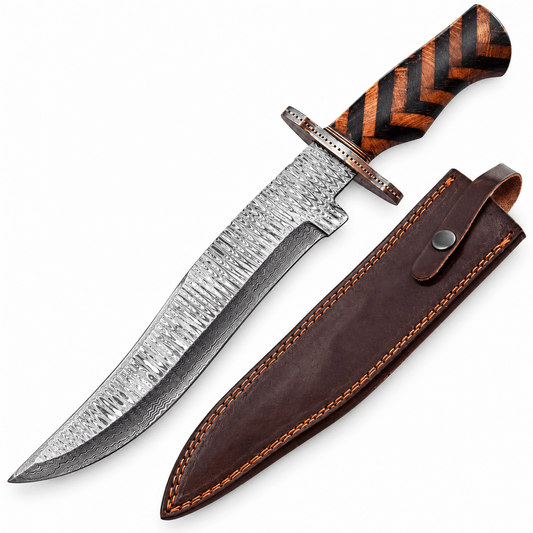
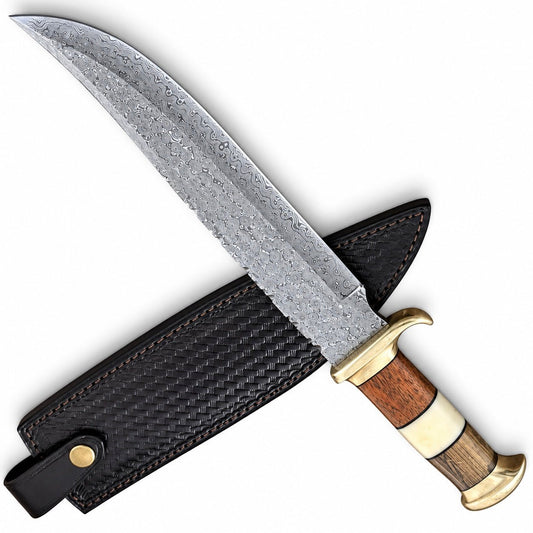
A Damascus Bowie knife combines two recognizable characteristics: the substantial fixed-blade format associated with Bowie-style knives and the patterned appearance of Damascus steel. Within that broad identity, individual knives can differ significantly in blade length, point profile, handle proportions, guard design, overall size, and finishing.
That variety makes this collection more useful than treating every Bowie as essentially the same knife. Some designs emphasize traditional Bowie proportions, while others use larger blades, different point shapes, or more individualized handmade styling.
When comparing Damascus Bowie knives, start with the complete profile and dimensions. The Damascus pattern gives the blade its visual character, but size, construction, blade geometry, and handle design determine how one Bowie differs from another.
Damascus Steel Bowie Knives and Patterned Blades
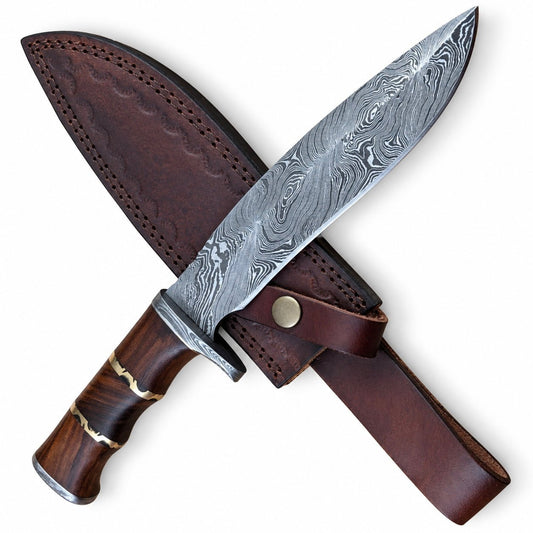
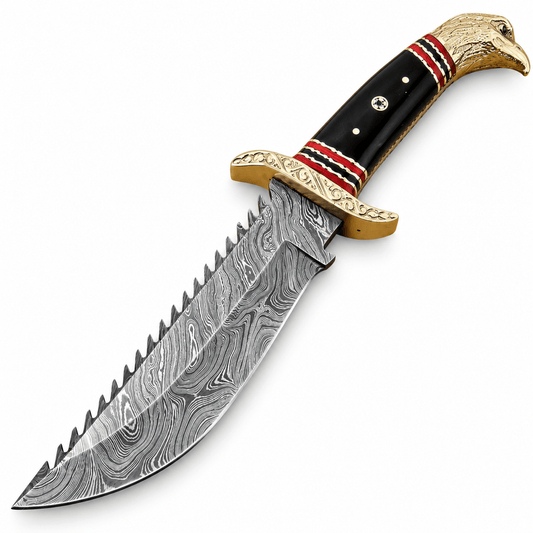
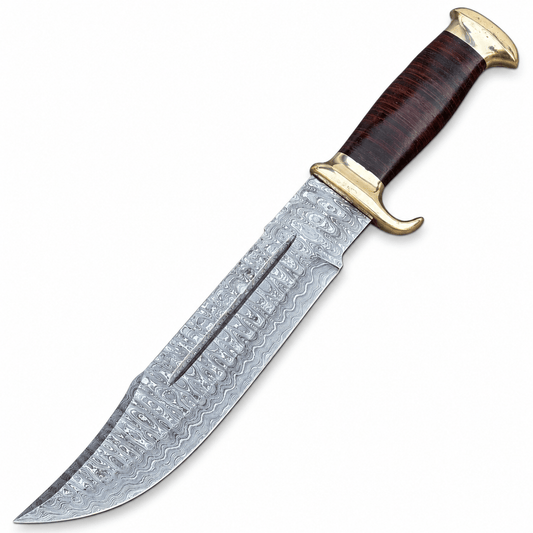
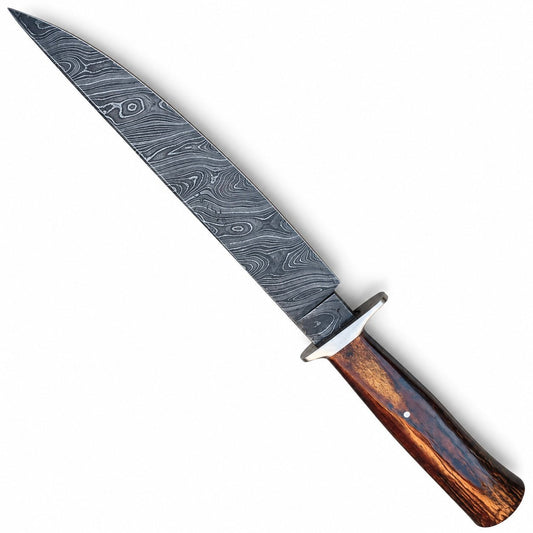
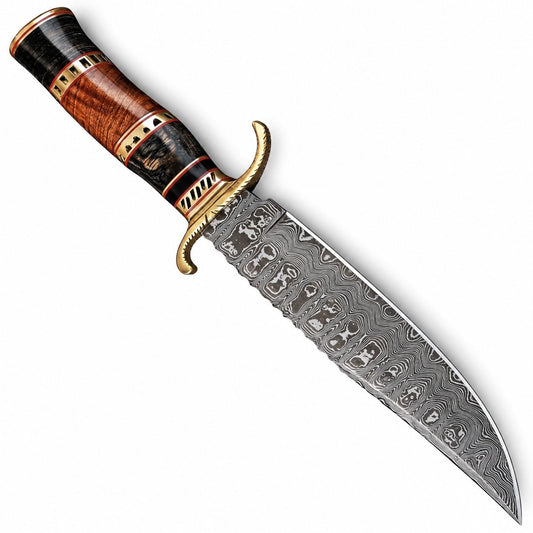
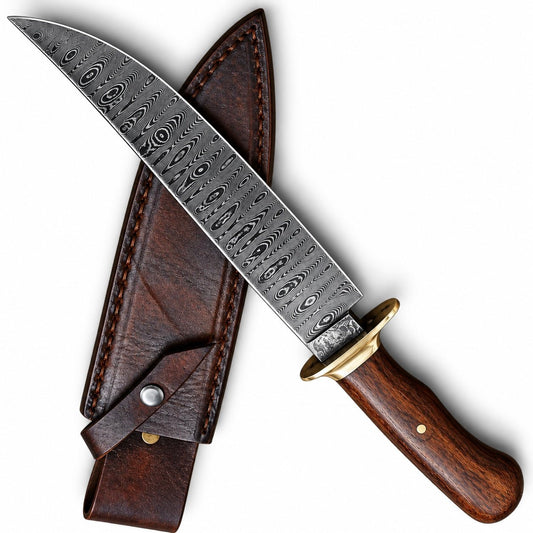
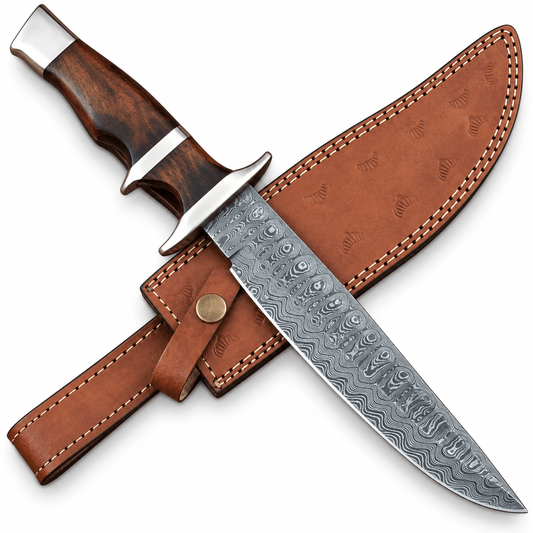
A Damascus steel Bowie knife is immediately distinguished by its patterned blade. Pattern appearance can vary considerably between handmade knives, creating visual differences even among products that share a similar Bowie-style silhouette.
That variation is especially important for shoppers interested in craftsmanship or collecting. Instead of viewing the Damascus pattern as a simple surface decoration, compare how it works with the blade shape, guard, handle, and overall proportions of the finished knife.
The exact steel construction should always be checked on the individual product page. Damascus terminology can describe different steel combinations and manufacturing approaches, so the appearance of two patterned blades does not mean their specifications are identical.
For the same reason, avoid choosing solely by pattern. A Bowie knife in Damascus steel should first match the size and profile you want, with the pattern becoming part of the finished design rather than the only reason for selecting it.
Bowie Blade Profiles and Size Differences
Bowie knives are associated with a substantial fixed-blade format, but there is no single size that defines every modern Bowie design.
Large Damascus Bowie Knives
A large Damascus Bowie knife places greater emphasis on blade presence and traditional oversized Bowie styling. Larger designs can differ not only in blade length but also in blade width, handle size, guard proportions, and overall balance of the design.
Shoppers interested in a large Bowie should compare actual dimensions rather than judging size from product photography. Camera angle and image scale can make knives with noticeably different measurements appear similar online.
Clip-Point and Other Bowie Profiles
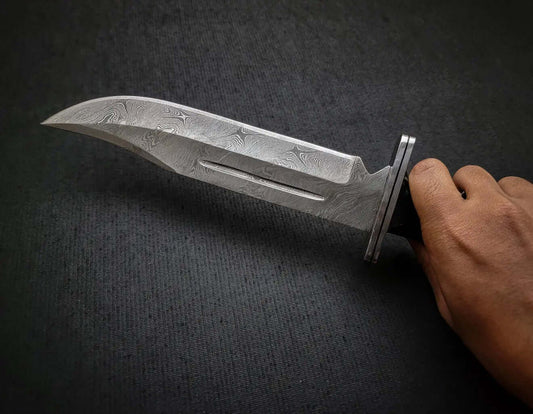
The clip-point profile is strongly associated with Bowie knife styling, but modern Bowie designs can vary in how pronounced that clipped section is.
Some knives use a more dramatic point and sweeping blade shape, while others have a straighter or more restrained profile. These differences affect the visual identity of the knife and are worth comparing when choosing between handmade designs.
Always use the individual product photographs and specifications to identify the exact blade profile offered.
Handmade and Hand-Forged Damascus Bowie Knives
A handmade Damascus Bowie knife can show individual differences that are less noticeable in highly standardized production.
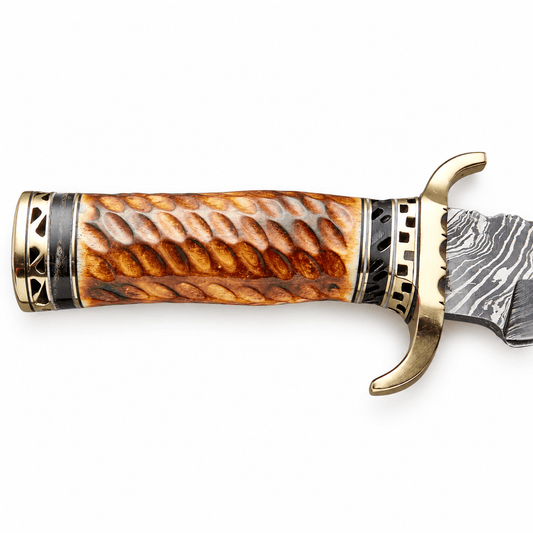
Blade pattern, finish, handle details, and other visual elements may vary from one handcrafted piece to another. This gives handmade Bowies a more individual character, particularly when Damascus patterning is a major part of the design.
A hand-forged Damascus Bowie knife places additional emphasis on traditional bladesmithing terminology. Where a product is specifically identified as hand-forged, its individual listing should provide the relevant construction details.
Because not every handmade product necessarily follows identical construction methods, check the specific product description rather than assuming every knife in the collection was made through exactly the same process.
Custom Damascus Bowie Knives
A custom Damascus Bowie knife gives buyers another way to approach this category when an individual design matters as much as the broad Bowie format.
Where customization is offered, options may vary by product. The starting point should still be the core knife: blade profile, dimensions, handle proportions, guard style, and overall appearance.
A custom Bowie can then be developed around the available choices for that particular design rather than assuming every element of every knife can be changed.
For collectors or buyers looking for a more distinctive piece, this combination of handmade construction, Bowie styling, and Damascus patterning creates considerably more visual variety than a single standardized design.
Full-Tang and Other Construction Details
Terms such as full tang Damascus Bowie knife appear frequently when comparing fixed-blade knives, but tang construction should only be attributed to a specific product when the listing confirms it.
The tang describes how the blade material continues into the handle. Because construction can differ between individual designs, it is better to check the specifications of the Bowie you are considering than assume the entire collection uses one format.
The same principle applies to steel composition, blade thickness, handle material, hardness, grind, and other technical characteristics. These details belong to the individual knife and should not be generalized across every Damascus Bowie.
Damascus Bowie Knives for Outdoor Use and Collecting
Bowie-style fixed blades can appeal to different buyers for different reasons.
Some shoppers focus on an outdoor-oriented knife with substantial fixed-blade proportions. Others are primarily interested in the craftsmanship, historic styling, patterned steel, or display character of a handmade Bowie.
That distinction matters when comparing products. Someone choosing primarily for collecting may place greater emphasis on Damascus pattern, finish, proportions, and visual details. A buyer interested in practical outdoor utility will likely pay closer attention to dimensions, blade geometry, handle design, and overall construction.
For more field-oriented blade profiles beyond the Bowie family, the broader hunting knives collection provides another way to compare fixed-blade designs.
Damascus Bowie Knives vs the Broader Damascus Collection
The wider Damascus knives collection includes multiple knife families that share patterned steel but differ substantially in form and purpose.
Damascus pocket knives use a folding format. Damascus kitchen knives are organized around food preparation. Other outdoor profiles have their own blade shapes and proportions.
Damascus Bowie knives narrow that larger category specifically to substantial Bowie-style fixed blades.
This distinction helps shoppers who already know the type of knife they want. Instead of browsing every patterned-steel knife, this collection concentrates on the intersection of Damascus steel and Bowie knife design.
Likewise, shoppers more interested in Bowie styling than blade material can compare the broader Bowie knives collection for additional steel and construction options.