What Makes a Japanese Kitchen Knife Different
Japanese kitchen knives developed around precise, clean cuts. Compared with Western knives, they usually have thinner blades, harder steel and a sharper edge angle, so they glide through food instead of wedging it apart. They are also lighter, which makes long prep sessions easier on the hand. The trade-off is that a fine edge needs more care: these knives are made for slicing, not for prying, twisting or cutting bone.
Japanese Knife Shapes
Gyuto: the Japanese Chef Knife
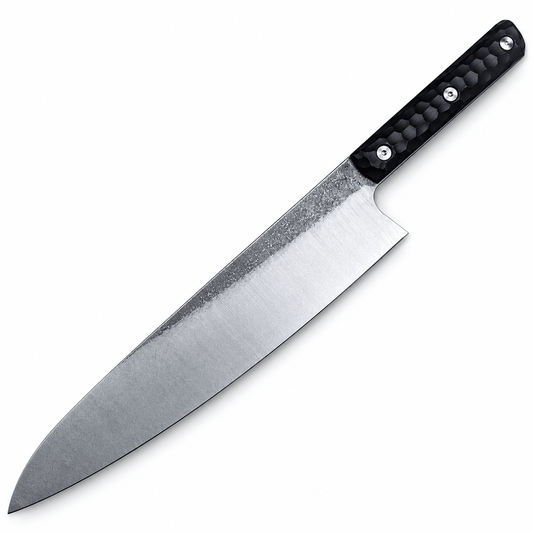
The gyuto is the Japanese take on the chef knife, usually 8 to 10 inches. It has a flatter belly and a finer tip than a Western chef knife, so it suits push and pull cuts as well as gentle rocking. If you want one Japanese knife for everything, a gyuto is the place to start.
Santoku
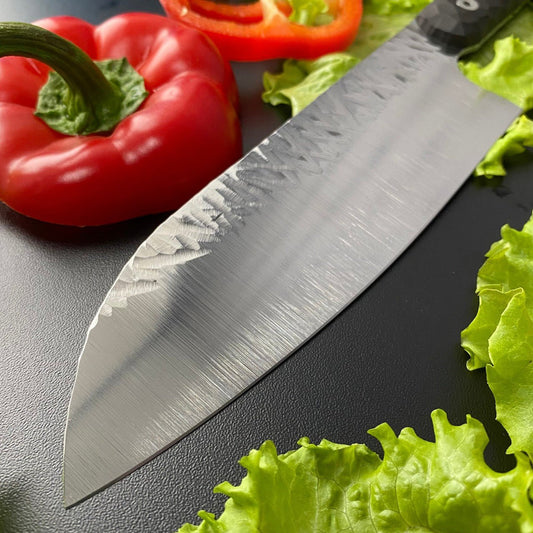
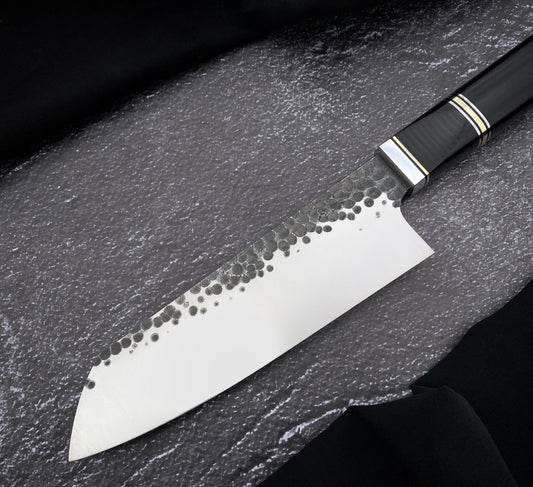
The santoku is shorter and taller, usually 5 to 7 inches, with a flat edge and a rounded "sheepsfoot" tip. Its name is often translated as "three virtues", for meat, fish and vegetables. Many santokus have a granton edge, a row of hollows that helps stop food sticking to the blade.
Kiritsuke
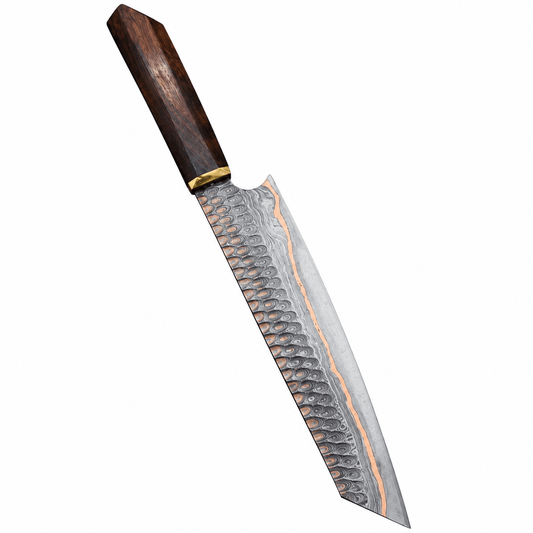
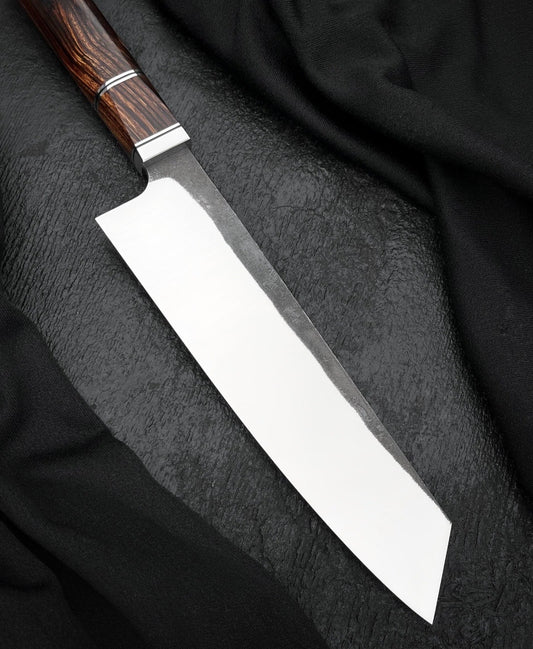
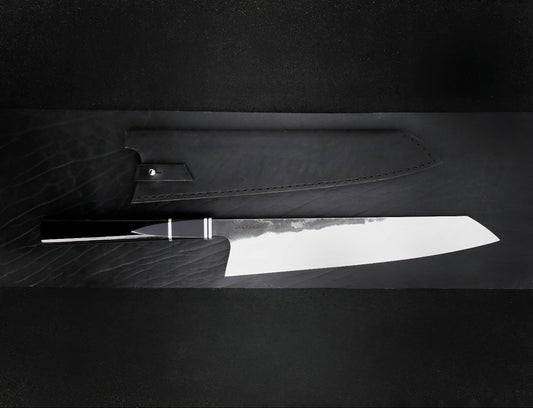
The kiritsuke has a long, straight-edged blade with an angled tip, a little like a reversed tanto. It combines the slicing length of a sujihiki with the chopping ability of a vegetable knife, making it a versatile knife for confident cooks.
Bunka
The bunka is similar to a santoku but finishes in a sharp, angled "k-tip". That point makes it easier to do fine detail work, scoring and precise cuts on small ingredients.
Nakiri and Usuba
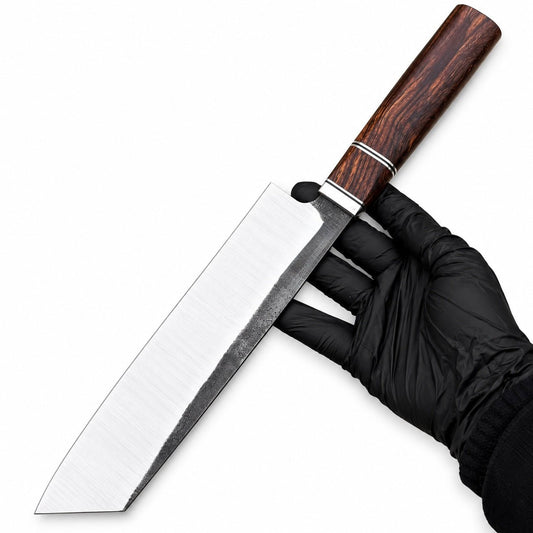
The nakiri is a vegetable knife with a flat, rectangular blade that meets the board along its whole length. That makes it fast and clean for chopping vegetables straight down. The usuba is a traditional single-bevel vegetable knife used for very thin, precise slicing.
Petty Knife
The petty knife is a small, nimble blade of about 5 to 6 inches, between a paring knife and a utility knife. It handles trimming, peeling, slicing small produce and fine detail work.
Sujihiki, Yanagiba and Deba
The sujihiki is a long, thin slicer for roasts and fish. The yanagiba is a long, single-bevel knife used for sushi and sashimi, made to cut fish in one clean pull. The deba is a thick, heavy knife for breaking down whole fish and cutting through small bones.
Japanese Knife vs Western Chef Knife
A Western chef knife is thicker and heavier, with a curved belly built for rocking cuts and more tolerance for rough use. A Japanese knife is lighter and thinner, with a harder, finer edge that slices more cleanly but needs gentler handling. Many cooks keep both: a Western knife for heavy work and a Japanese knife for precise prep.
Steels for Japanese Kitchen Knives
Japanese-style knives are made in harder steels that can hold a very fine edge. High carbon steels take an extremely sharp edge and are easy to sharpen, but they build a patina and must be dried after use. Damascus blades, made from welded layers, often wrap a hard cutting core in softer, patterned outer layers. Stainless steels such as VG10 and 440C resist rust better and need less care. Hammered, or tsuchime, finishes add a textured surface that helps food release from the blade.
Handles: Wa and Western
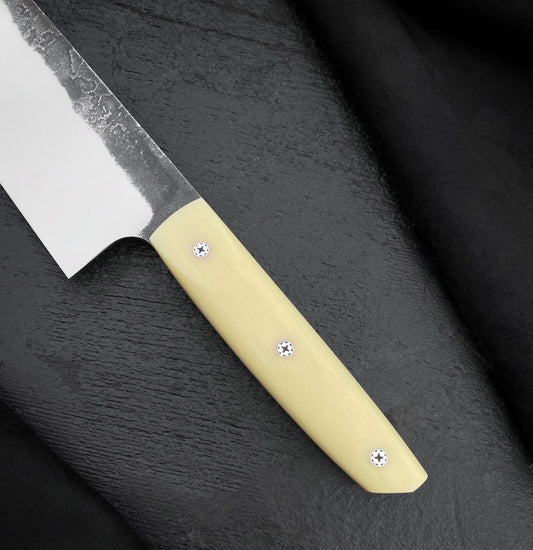
Traditional Japanese wa handles are octagonal or D-shaped and fitted over a hidden tang, which keeps the knife light and moves the balance toward the blade. Western-style handles are full tang with riveted scales and feel heavier in the hand. Wood, stabilized wood, horn and resin are common choices for both.
Single Bevel and Double Bevel
Most gyuto, santoku, bunka, nakiri and petty knives are double bevel, sharpened on both sides, so they work for right- and left-handed cooks. Traditional knives like the yanagiba, usuba and deba are often single bevel, sharpened on one side for very precise cuts, and are made for either right- or left-handed use.
Caring for Japanese Kitchen Knives
Wash Japanese knives by hand and dry them straight away, especially carbon steel and Damascus. Use a wood or soft synthetic cutting board, never glass or stone. Avoid bones, frozen food and twisting cuts, which can chip a hard, thin edge. Store each knife in a saya, block or roll, and sharpen on whetstones to keep the fine edge. For more blade types, see our full range of kitchen knives and our kitchen knife sets.
Compare the Japanese shapes above to find the knife that fits the way you cook.