How to Choose From Our Black Friday Knife Deals
A store-wide sale makes it easy to find a good price but harder to pick the right knife. Start with the job the knife will do: dressing game, camp chores, everyday cutting, cooking, collecting, or building your own knife from a blank. Once the job is clear, the blade shape, steel, length and handle narrow the choice quickly. The sections below cover each type in the sale and what sets them apart.
Bowie Knives
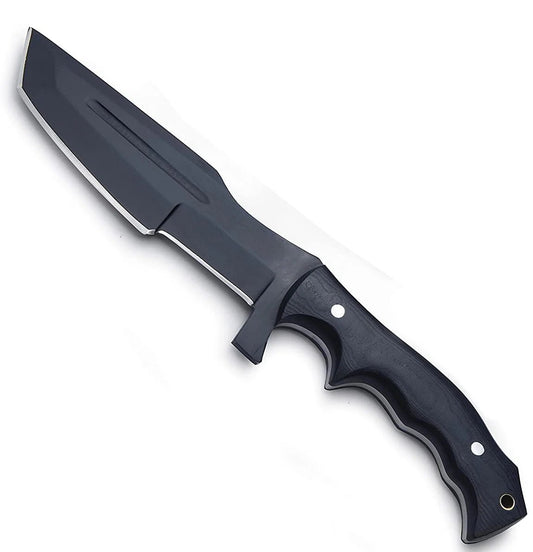
A Bowie is a large fixed blade with a clip point, a wide belly and usually a guard between the blade and handle. Blades commonly run from about 7 to 12 inches. Western and Texas-style Bowies lean toward heavy camp work, while slimmer historical patterns such as the Arkansas toothpick and the coffin-handle Bowie are favorites with collectors. Our full Bowie knife collection includes handmade and Damascus versions.
Hunting and Skinning Knives
Hunting knives are shorter than Bowies, usually with a 3.5 to 5 inch drop point or clip point blade that stays easy to control when field dressing. A gut hook on the spine opens the hide without cutting into the meat. Skinning knives have a deeper, upswept belly for long sweeping cuts that separate hide from muscle. Many hunters carry one of each, or a two- or three-piece set. See the hunting knives collection for drop point, gut hook and skinner patterns.
Damascus Steel Knives
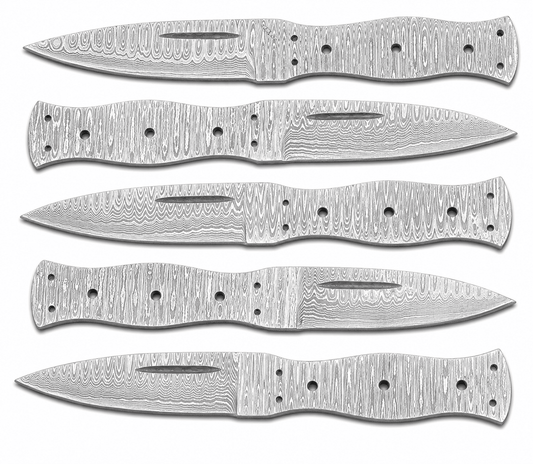
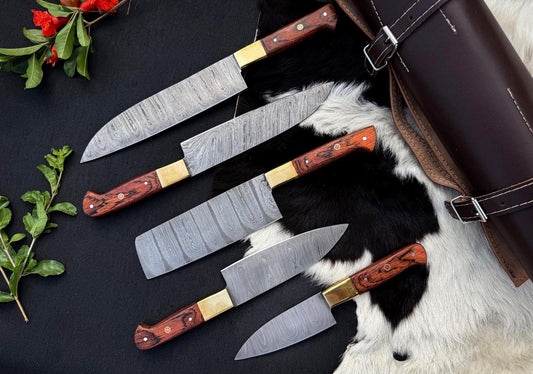
Damascus steel is made by layering and folding two or more steels, then etching the finished blade to bring out the pattern. Twist, ladder, raindrop and feather patterns each come from how the layers are worked. Edge performance depends on the steels in the layers; the high carbon Damascus used for handmade knives sharpens easily and holds a working edge. Because no two patterns are the same, Damascus is the most popular choice for gifts and collections. Browse Damascus knives for hunting, Bowie and folding versions.
Pocket and EDC Knives
Folding knives suit everyday carry: opening boxes, cutting cord, slicing fruit and small camp tasks. Look at the closed length, the weight and the lock. A liner lock or lockback holds the blade open while you cut, while slip joints rely on spring tension and are common on traditional patterns. A 2.5 to 3.5 inch blade covers most daily jobs. A small fixed blade in a belt sheath is the alternative for anyone who wants no moving parts.
Kitchen Knives
Kitchen knives in the sale range from all-purpose chef knives to Japanese shapes. A chef knife or gyuto handles most cutting jobs, a santoku has a flatter edge for push cuts, a nakiri has a square, flat blade for chopping vegetables, and a cleaver splits through larger cuts. Each listing names the exact blade steel, so check it when you compare knives or sets.
Knife Blanks for Makers
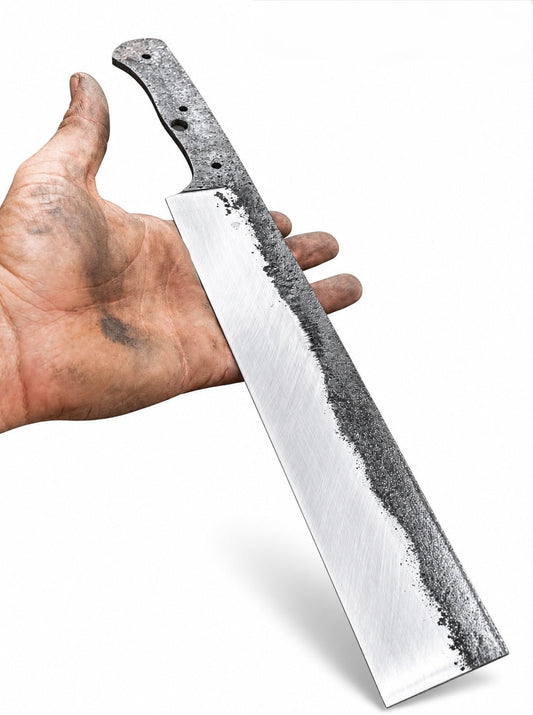
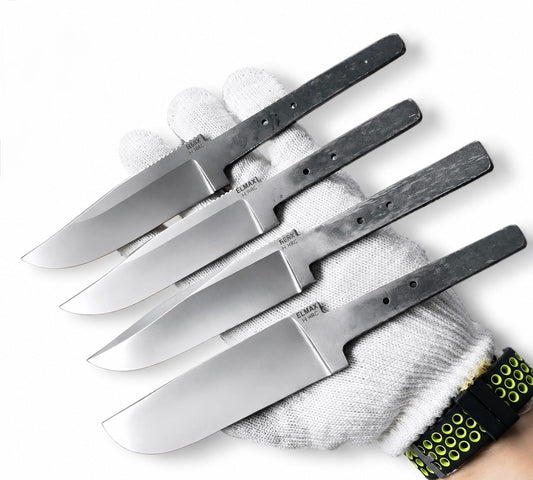
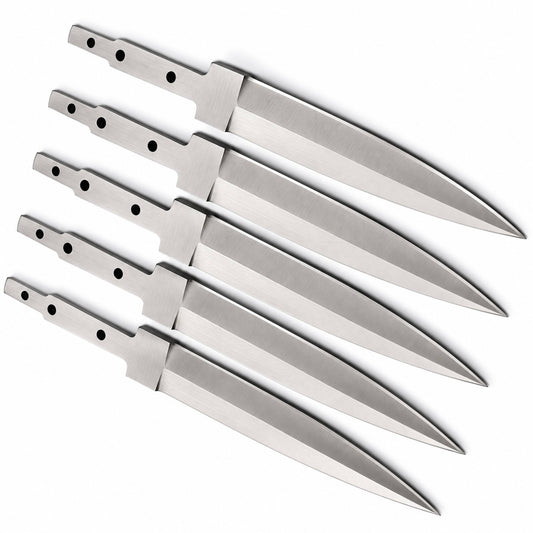
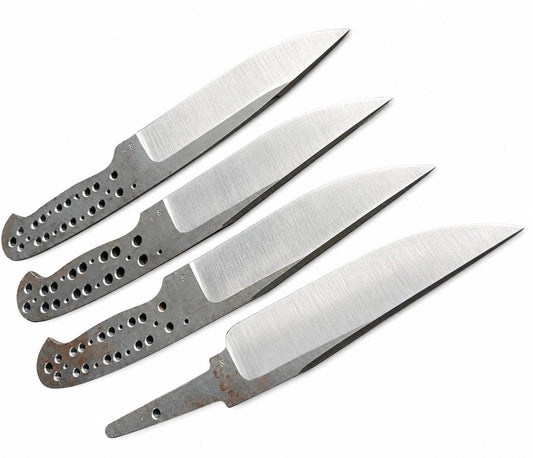
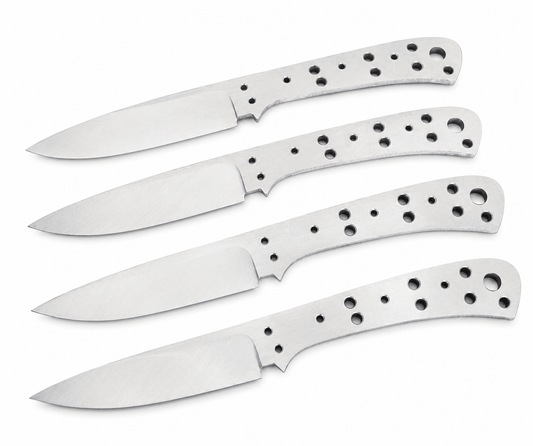
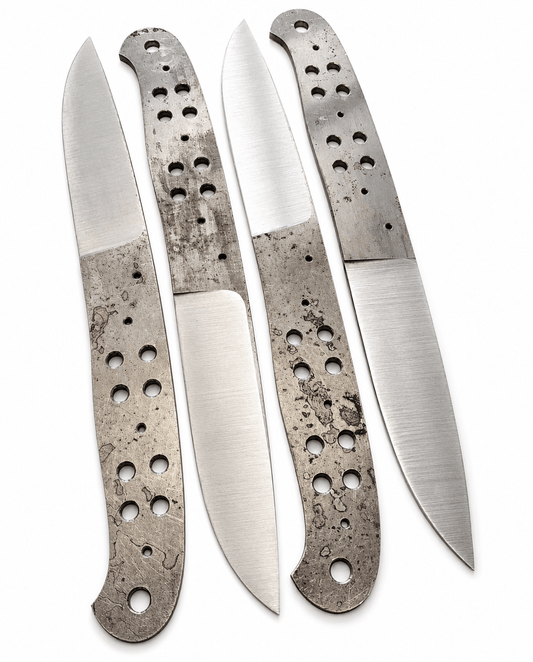
A knife blank is a shaped blade without a handle, ready for scales, a hidden-tang handle or a custom guard. Every blank in our store is heat treated, so you can skip hardening and go straight to fitting and shaping the handle. Full tang blanks take pinned or bolted scales, while hidden tang blanks suit stacked or one-piece handles. Our knife blanks collection includes Damascus, carbon steel, Bowie and hunting profiles.
Movie and Game Replicas
Replica knives recreate blades from films and video games and match the shape, size and finish of the original design. They are made for fans and collectors who want a well-known blade in their collection. The movie replica knives collection groups them by film.
Steel Types in the Sale
Three steels appear across most of the store. Damascus combines layered steels for a patterned blade and is the choice when looks matter as much as cutting. High carbon steel sharpens quickly and takes a very fine edge, but it needs oil and dry storage to prevent rust, and over time it builds a darker patina. D2 is a semi-stainless tool steel with high chromium, so it resists rust better than plain carbon steel and holds its edge for a long time, though it takes more effort to sharpen.
For a knife that will see wet conditions and little upkeep, D2 or stainless is easier to live with. For a knife you enjoy maintaining, carbon steel and Damascus reward the effort.
Handles, Guards and Sheaths
The handle material changes the grip, weight and upkeep. Hardwoods such as rosewood and walnut feel warm in the hand and are easy to refinish. Bone, stag and antler give a traditional look and a textured grip. Resin handles shrug off moisture and come in bright colors. On larger fixed blades, a brass or steel guard stops the hand from sliding toward the edge.
Every knife in the store comes with a leather sheath, which protects the edge and lets you carry the knife on a belt. For long storage, keep the knife out of the sheath, since leather can hold moisture against the steel.
Choosing a Knife as a Gift
Black Friday is when many shoppers buy knives as Christmas gifts. Match the knife to how the person spends their time: a hunting or skinning knife for a hunter, a Bowie or camp knife for someone who spends weekends outdoors, a Damascus folder for everyday carry, a chef knife for a home cook, a replica for a film or game fan, or a set of knife blanks for a maker. Damascus pieces make especially memorable gifts because each pattern is one of a kind.
Caring for Your New Knife
A few habits keep a new knife sharp and free of rust. Wipe the blade dry after each use, and give carbon steel and Damascus blades a thin coat of food-safe mineral oil. Store the knife out of its sheath in a dry place. Wash kitchen knives by hand rather than in a dishwasher. Touch up the edge on a fine stone or strop before it gets dull, keeping close to the original angle, usually around 20 degrees per side on outdoor knives.
Browse the knives above by type or steel, compare the blade lengths and handle materials, and pick the one that fits the work you have in mind.