What Makes a Knife a Western Knife
A western knife is defined by where it came from and how it was used. On the frontier, ranches and cattle trails of the 1800s, a knife was an everyday tool for cutting rope, preparing food, dressing game and working leather. Western knives grew from that life: strong, simple blades with sturdy guards and natural handle materials, carried in leather on the belt. Today the style covers working ranch knives and collector pieces that bring back the look of the Old West.
Western Bowie Knives
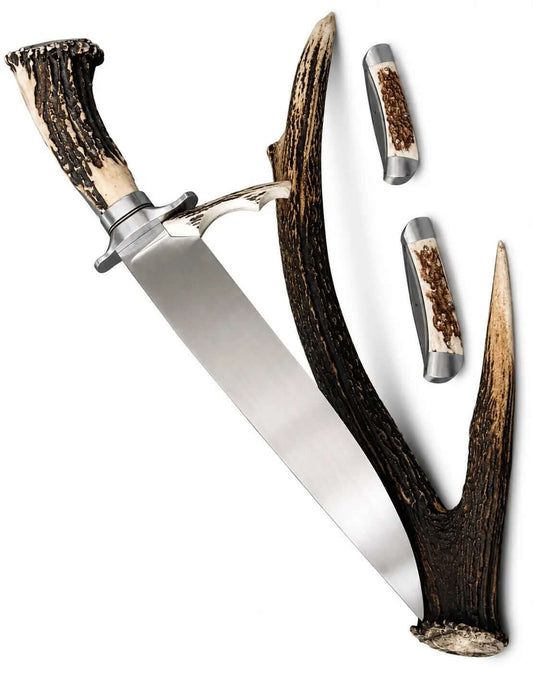
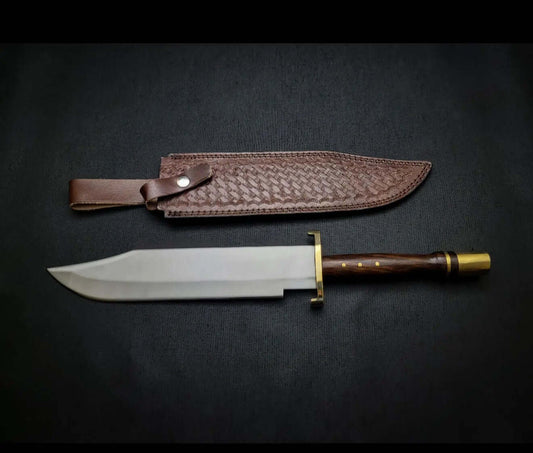
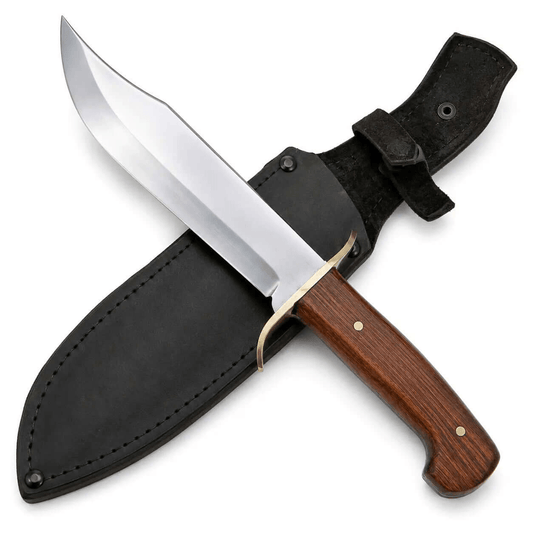
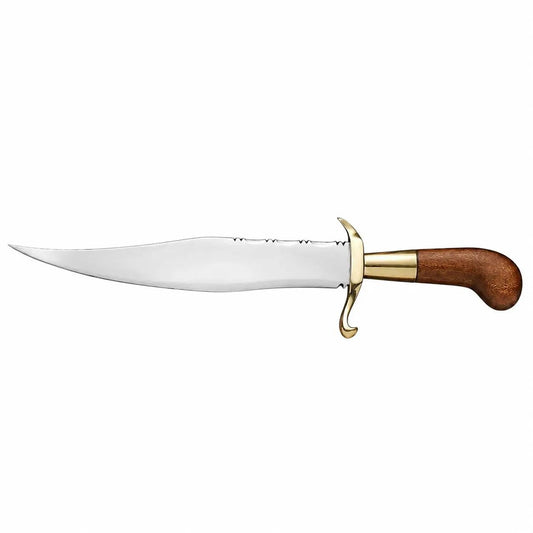
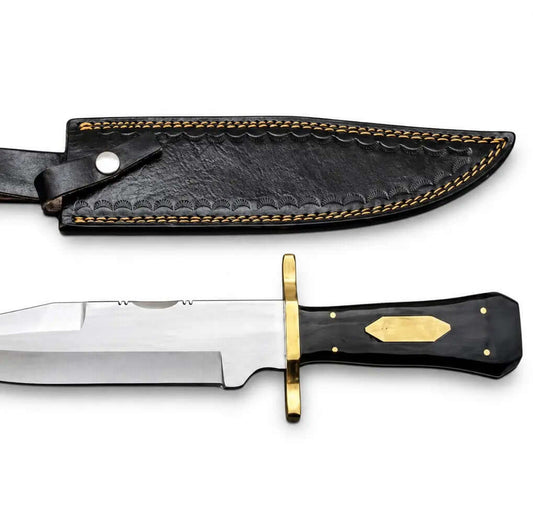
The Bowie is the signature knife of the American West: a large fixed blade with a clip point, a heavy spine and a guard that protects the hand. Western Bowies often add Old West touches such as brass or nickel silver guards, stag or antler handles, file work along the spine and tooled leather sheaths. Sizes run from mid-size blades for camp and hunting to large Bowies over 12 inches that are mostly display pieces. See the full range in our Bowie knives, or the layered steel versions in our Damascus Bowie knives.
Frontier and Regional Bowie Types
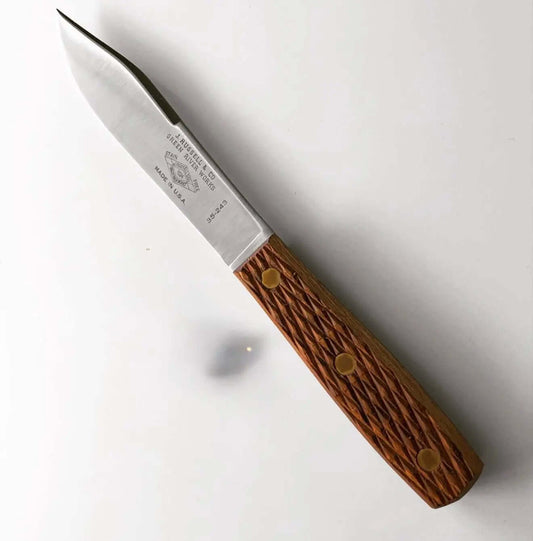
Several Bowie forms are tied closely to the West. The Mexican Bowie has a long blade and a distinctive guard. Coffin-handle Bowies are named for their six-sided handle. The Arkansas toothpick is a long, narrow relative with a straight spine and a sharp point. Many western knives also follow the simple butcher and trade knife shapes carried by trappers and settlers, with plain wooden handles and broad, practical blades.
Ranch Knives and Working Cowboy Knives
A ranch knife is a working tool first. It needs a strong, easy-to-sharpen blade and a handle that stays secure in gloved or wet hands. Typical uses include cutting baling twine and rope, opening feed sacks, trimming leather and handling everyday chores around livestock. A blade of about 3 to 5 inches covers most ranch work, and drop point and clip point shapes are the most common.
Bull Cutter and Calf Cutter Knives
The bull cutter is a traditional ranch pattern with a long, slim blade and a fine point. It is often made as a folding knife, though fixed-blade versions exist. The calf cutter is a smaller relative. Both remain favorites with working cowboys and collectors of ranch knives.
Cowboy Pocket Knives
Many cowboys carried a folder in the pocket alongside a belt knife. Western pocket knives usually have one or two blades, bone, stag or wood handles and brass or nickel silver bolsters. Traditional slip joints have no lock and use a back spring to hold the blade open. Lockbacks hold the blade firmly open for harder cutting. Browse folding designs in our pocket knives.
Western Knives for Hunting
A western knife and a hunting knife often overlap. A drop point western fixed blade of 4 to 5 inches handles field dressing well, and larger western Bowies make good camp knives. If game is your main use, compare these with our hunting knives.
Sheaths and Carry Styles
Leather is part of the western look. Tooled and stamped sheaths with floral, basket-weave or western patterns are traditional, often with a snap strap to hold the knife in place. Some western sheaths ride vertically on the belt. Others carry the knife horizontally across the back of the belt, which is comfortable on horseback and in a truck seat. Cross-draw sheaths sit on the opposite hip, angled so the handle faces your drawing hand. Our handmade fixed-blade knives come with a leather sheath.
Steels and Handle Materials
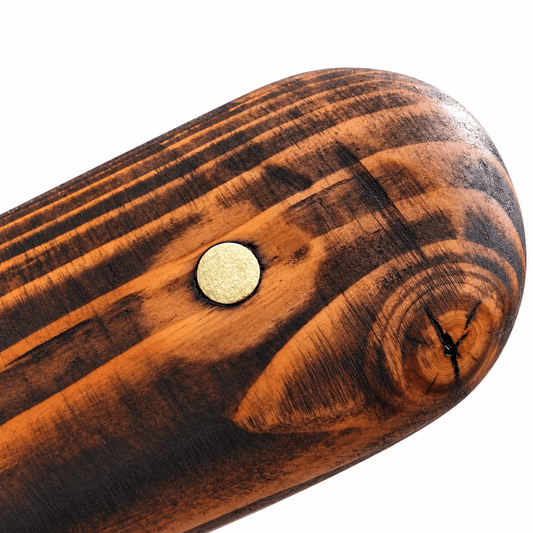
Frontier knives were made in carbon steel, and high carbon steel is still a natural fit for western knives because it's tough and easy to sharpen on a stone. D2 tool steel holds an edge longer and resists rust better, which helps on a working ranch knife. Damascus steel, made from welded layers, adds a flowing pattern that suits western collector pieces. For handles, stag and deer antler are the classic western choices. Bone, horn and hardwoods like walnut and rosewood are also traditional, often finished with brass or nickel silver guards, spacers and pommels.
Caring for a Western Knife
Keep carbon steel and Damascus blades dry and lightly oiled, especially after cutting food or working outdoors. Polish brass fittings now and then if you prefer a bright finish, or leave them to darken for an aged look. Condition tooled leather sheaths so they stay supple, and don't store a damp knife inside one.
Browse the western and cowboy knives above to find the one that fits your work, your belt or your collection.