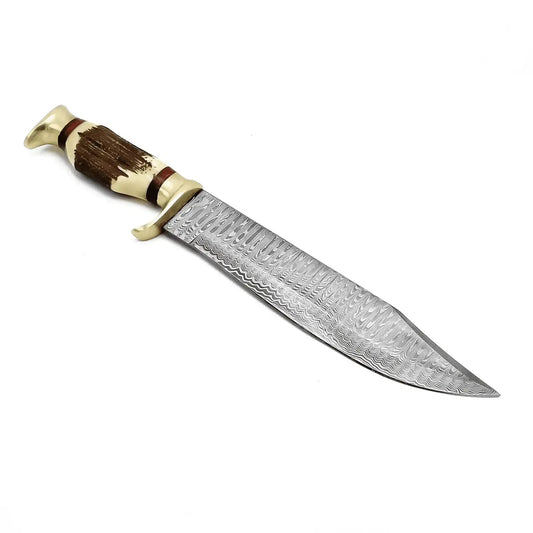
What Is a Damascus Knife?
A Damascus knife has a blade made from two or more types of steel, layered, forge-welded and folded many times into a single billet. After the blade is shaped and heat treated, it is etched in acid. The different steels react differently to the acid, so the layers show up as light and dark bands. That visible pattern is what sets Damascus apart: it runs through the steel itself, not just across the surface.
Pattern-Welded Damascus and Wootz
The name comes from the historic Damascus blades of the Middle East, which were made from wootz, a crucible steel from India with a natural watered pattern. The exact wootz method was lost over time. Modern Damascus is pattern-welded steel: different steels, often a high carbon steel and a nickel-bearing steel, welded together in layers. Pattern welding has its own long history, back to Viking-age and medieval European blades, and it is how nearly all Damascus knives are made today.
Types of Damascus Knives
Damascus Bowie Knives
The Bowie's broad blade gives a Damascus pattern plenty of room to show. Damascus Bowies range from mid-size camp knives to large display pieces, often with brass guards and stag or bone handles. See our Damascus Bowie knives.
Damascus Hunting and Skinning Knives
A Damascus hunter combines a practical drop point or skinning shape with a layered blade. The carbon steel layers take a keen edge for field dressing, and the pattern makes it a knife worth keeping. Explore our Damascus hunting knives.
Damascus Pocket and Folding Knives
Damascus folders put a patterned blade in a pocket-sized knife, often with bone, horn, stag or wood handles and brass bolsters. They're a popular choice for gentleman's carry and gifts. Browse our Damascus pocket knives.
Damascus Kitchen Knives
Damascus is also widely used for chef knives, santokus, nakiris, cleavers and kitchen sets. The layered steel takes a sharp, fine edge for slicing, and the pattern adds beauty to the kitchen. Kitchen Damascus needs to be washed by hand and dried straight away.
Copper Damascus
Copper Damascus adds copper layers between the steel, creating warm, bright bands of color alongside the gray and black of the steel. It's mainly a decorative feature, so copper Damascus knives are usually chosen as collector and gift pieces. See our copper Damascus knives.
Damascus Knife Blanks
Knife makers can start with a finished Damascus blade and add their own handle. Our Damascus knife blanks come heat treated and ready for handle work.
Damascus Patterns
The pattern depends on how the smith stacks, twists, cuts and grinds the billet. Random-pattern Damascus shows flowing, wood-grain-like lines. Ladder Damascus has rungs cut across the blade. Raindrop Damascus shows round, drop-like circles. Twist Damascus is made by twisting the billet before forging, which gives a spiral look. Feather Damascus is split and pressed to form a feather shape along the blade, and star, herringbone and other mosaic patterns are built from carefully arranged pieces. Layer count also changes the look: fewer layers make bold bands, while hundreds of layers make fine, detailed lines.
Is Damascus Steel Good for Knives?
A well-made Damascus blade performs like the steels it's made from. When the layers include high carbon steel and the blade is properly heat treated, it takes a keen edge and holds up well to use. The pattern itself doesn't make a knife sharper or stronger: performance comes from the steel choice, forge welding and heat treatment. Damascus is chosen for its mix of working edge and one-of-a-kind look, which is why it's so popular for both using knives and collector pieces.
Damascus vs Stainless Steel
Most Damascus knives use carbon steel layers, so they can rust if left wet. Stainless steel resists rust with less care but shows no pattern. Stainless Damascus combines stainless steels in layers for a patterned blade with better corrosion resistance. San mai is a related construction, with a hard steel core sandwiched between two outer layers, often of Damascus.
Handle Materials on Damascus Knives
Natural handles suit the old-world character of Damascus. Stag, antler, camel bone and horn give a classic look, while hardwoods like rosewood and walnut add warmth. Resin and turquoise inlays bring color, and Micarta or G10 give a grippy, weather-resistant handle for working knives. Brass, copper and nickel silver bolsters and guards complete the look.
Caring for a Damascus Knife
Wash Damascus by hand and dry it right away, because most Damascus contains carbon steel. Wipe the blade with a thin coat of food-safe or knife oil before storing it. Avoid the dishwasher, and don't leave the knife in a damp leather sheath. Over time the etch can fade with heavy use and sharpening, and a knife maker can re-etch the blade to bring the pattern back.
Browse the Damascus knives above to compare patterns, blade styles and handles and find the one that fits you.