What a Good Kitchen Knife Set Includes
A useful kitchen knife set is built around the knives you'll use every day, not around a high piece count. The core of almost every set is the same: a chef knife for chopping and slicing, a long slicing or carving knife for meat, a mid-size utility knife for sandwiches and smaller produce, and a paring knife for peeling and trimming. Larger sets add a cleaver, a boning knife or a second chef knife in a different size. Before comparing sets, think about what you cook most and check that the set has a blade for it.
Choosing the Right Number of Pieces
4 and 5 Piece Knife Sets
A 4 or 5 piece set covers the essentials: chef knife, slicer, utility knife and paring knife, sometimes with a second smaller chef knife. It's the right size for most home kitchens and a good starter set, with little chance of buying knives you won't use.
6 and 7 Piece Knife Sets
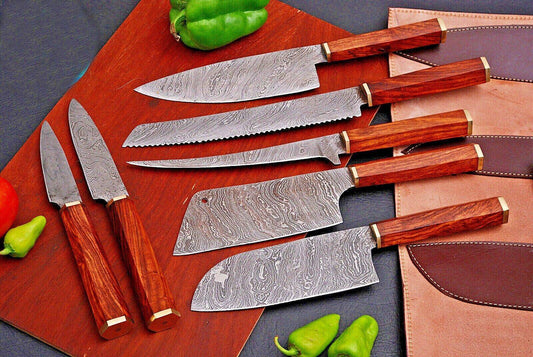
Six and seven piece sets add specialist blades, often a cleaver for chopping through joints, a boning knife, or a long carving knife for roasts and brisket. They suit cooks who break down whole chickens, cut their own steaks, or cook for large groups, and they make a fuller gift for someone setting up a new kitchen.
Larger Sets
Big sets of eight pieces or more usually bring in steak knives or extra sizes of the same shape. More pieces don't make a better set unless each knife has a job in your kitchen, so check the list of blades as well as the count.
Types of Kitchen Knife Sets
Chef Knife Sets
Chef knife sets focus on prep work, with chef knives in two sizes plus slicing and paring knives. Many feature Western chef knife profiles, while Japanese-shaped sets may include a gyuto, santoku, kiritsuke or nakiri. Our chef knives collection has single blades for building around one main knife.
Butcher, BBQ and Carving Sets
Butcher and BBQ sets lean toward meat: a cleaver, a curved boning knife, a long slicer and sometimes a skinning-style blade for trimming fat and silver skin. Carving sets pair a long carving knife with a fork for serving roasts, turkey and ham at the table. For heavier chopping blades on their own, see our cleaver knives.
Steak Knife Sets
Steak knife sets are table knives, usually in sets of four, six or eight, with straight or serrated edges. Straight edges slice cleanly and can be resharpened; serrated edges stay working longer between sharpenings but tear slightly more.
Kitchen Knife Set Steels
High carbon steel sets take a very sharp edge and are easy to resharpen at home. The blades need to be dried right after washing, and they develop a gray patina over time from acidic foods.
D2 tool steel sets are semi-stainless and very wear resistant, so the edges last longer through daily use and stain less, though they take more patience on a whetstone.
Damascus steel sets are pattern-welded from layers of steel and etched to show the pattern, so every knife in the set looks slightly different. They're often chosen as gifts or display sets and need the same washing, drying and light oiling as carbon steel.
Blade Finishes: Polished, Hammered and Black Coated
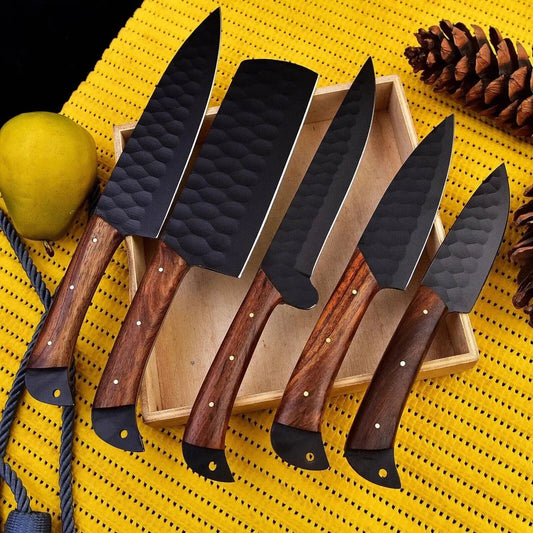
The finish changes both looks and use. Polished and satin blades are the classic look and are easy to keep clean. Hammered blades have small dimples near the spine that break the suction between blade and food, so potato and cucumber slices fall away more easily. Black coated blades add some stain resistance and a modern, matching look across the set; the coating wears gradually near the edge, which is normal.
Handle Materials Across a Set
Because you hold the whole set's handles every day, choose a material that suits your kitchen. Wood, including olive wood and rosewood, gives a warm grip and benefits from occasional oiling. Bone, including camel bone, has a traditional look and natural variation from knife to knife. Micarta and G-10 are layered composites that shrug off water and stay grippy when wet, and colorful G-10 handles make it easy to tell knives apart at a glance. Full tang construction, with the steel running through the handle, gives a solid, balanced feel.
Storage: Rolls, Stands and Blocks
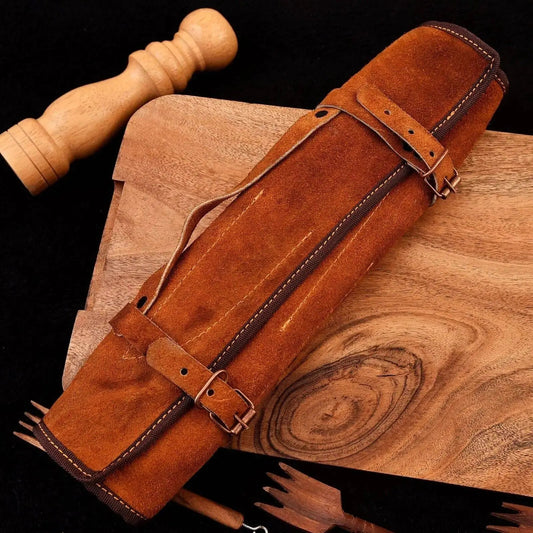
How a set is stored matters as much as the knives, because edges dull fast when they knock together in a drawer. A leather or canvas knife roll keeps each knife in its own slot and travels well, which suits cooks who take their knives to a cabin, a campsite or a friend's kitchen. A wooden stand or block keeps knives on the counter within easy reach. A magnetic strip saves counter space and lets the blades air dry.
Kitchen Knife Sets as Gifts
A matching set is one of the most practical gifts for weddings, housewarmings and new cooks, because it replaces a mixed drawer of dull knives in one go. Engraving is offered on many of our handmade knives, which turns a set into a personal keepsake. For other ideas, browse our gifts collection.
Caring for a Knife Set
Hand wash each knife and dry it straight away; dishwashers dull edges and damage handles. Use wood or soft plastic cutting boards, and keep the knives in their roll, stand or block between uses. A honing rod keeps edges straight from day to day, and a whetstone brings back a dull edge. Give carbon steel and Damascus blades a thin coat of food-safe mineral oil if the set will sit unused for a while.
Compare piece counts, steels and handles above, then browse the collection to find the kitchen knife set that fits your cooking.