What Is a Fixed Blade Knife?
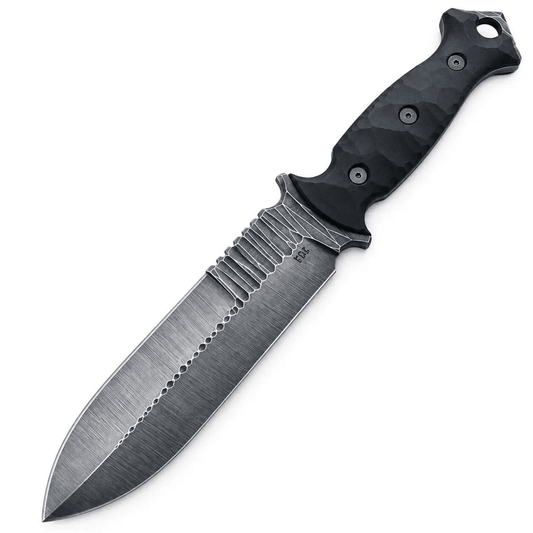
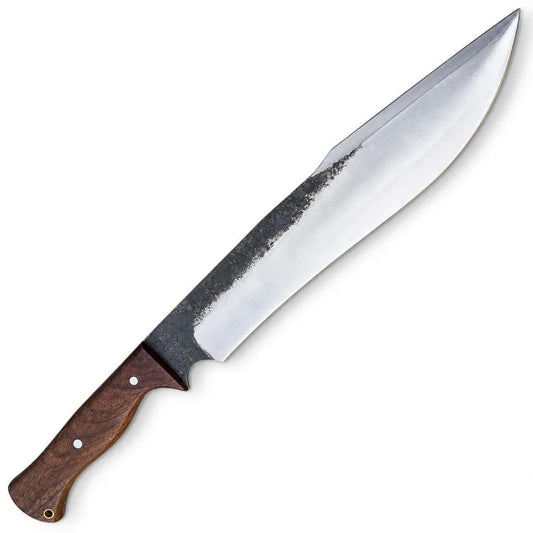
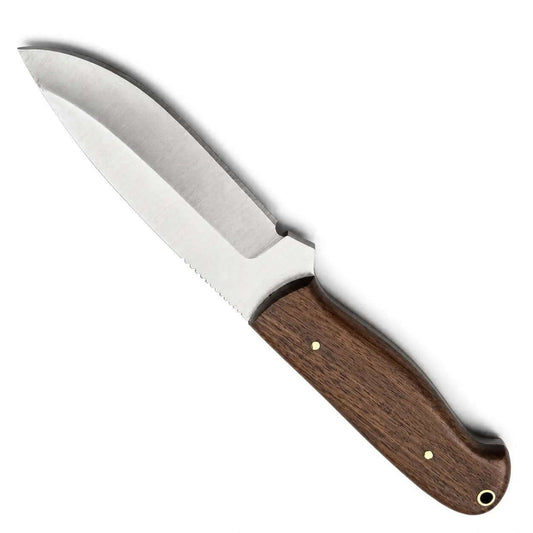
A fixed blade knife has a blade that doesn't fold or move. The steel continues past the blade into the handle as a tang, and the handle is built around it. With no pivot, lock or spring, there's nothing to loosen, jam or fail, which is why fixed blades are the first choice for hunting, camping, bushcraft and any hard outdoor work. They are also easier to clean than folders, because there are no gaps for blood, dirt or food to collect in.
Fixed Blade vs Folding Knife
A folding knife is easier to carry in a pocket, but its strength is limited by its lock and pivot. A fixed blade is stronger, faster to use and safer under heavy pressure, since it can't close on your fingers. The trade-off is size: a fixed blade needs a sheath and is usually worn on the belt. Many people carry both, a folder for small daily tasks and a fixed blade for real work.
Types of Fixed Blade Knives
Hunting and Skinning Knives
Hunting knives are medium fixed blades with drop point or clip point shapes, sized for control during field dressing. Skinning knives add a wide, curved belly for separating hide in long strokes, and some include a gut hook on the spine. See our skinning knives.
Bowie Knives
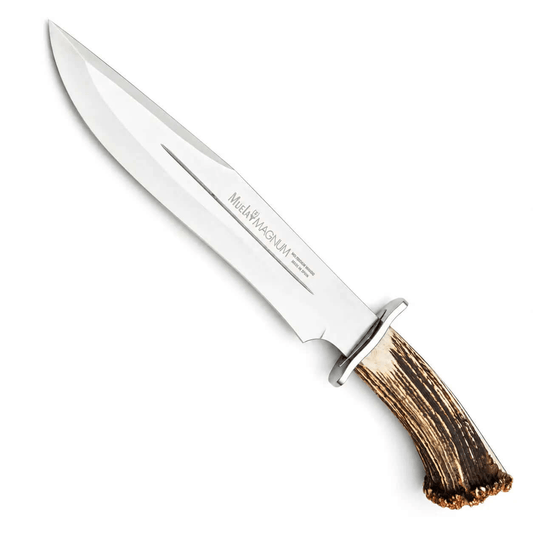
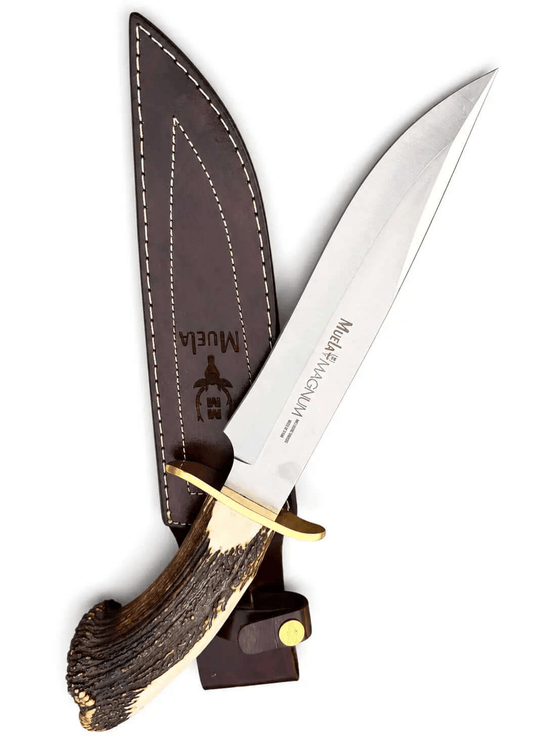
The Bowie is the classic large fixed blade: a clip point, a strong spine and a guard between blade and handle. Bowies range from compact 7-inch blades to large knives over 12 inches and work as camp, hunting and collector knives. Explore our Bowie knives.
Camp, Bushcraft and Survival Knives
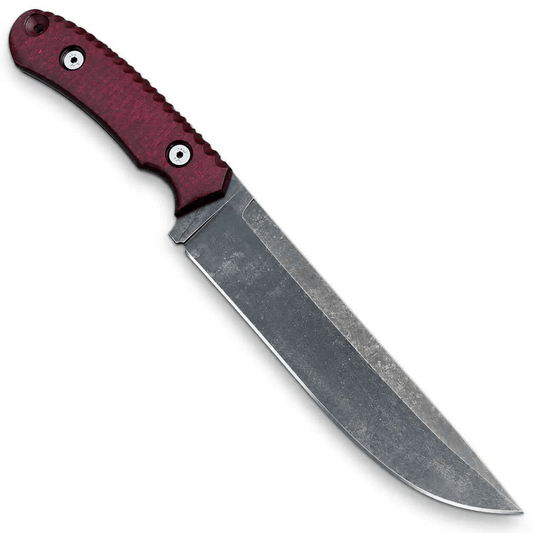
Camp knives are longer and thicker, made for splitting kindling, carving and food prep. Bushcraft knives are usually 4 to 5 inches, with a full tang and a square spine for striking a ferro rod. Survival knives are heavier still, built to handle batoning and hard use far from home. Browse our camping knives.
Tracker, Chopper and Tanto Knives
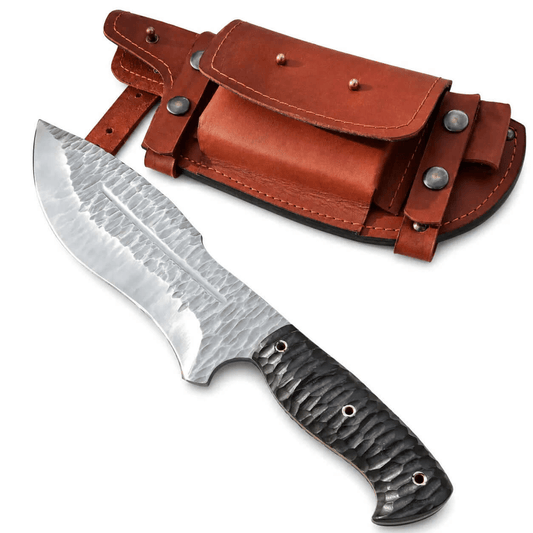
Tracker knives combine a straight edge, a curved belly and a notched spine in one blade for mixed camp work. Choppers carry their weight forward for cutting wood and brush. Tanto knives have an angled, reinforced tip that resists breaking when piercing tough material.
Small Fixed Blades and EDC Knives
Compact fixed blades with 3 to 4 inch blades are easy to wear every day. They give you full-knife strength in a size that rides comfortably on a belt. See our EDC knives.
Tang Types: Full Tang, Hidden Tang and More
The tang is the part of the steel inside the handle, and it decides how strong the knife is. A full tang runs the full length and width of the handle, with the handle scales pinned to each side. It's the strongest build and the best choice for chopping, batoning and heavy use. A hidden tang, also called a stick tang, narrows and runs through the center of the handle. It allows round or carved handles in stag, wood or stacked leather and gives a traditional look. A partial tang runs only part way into the handle and suits lighter tasks.
Blade Grinds and Shapes
The grind is how the blade is shaped down to the edge. A flat grind tapers evenly from spine to edge and slices well. A hollow grind is concave, giving a very thin, sharp edge that's ideal for skinning. A scandi grind has one wide bevel that's easy to sharpen in the field and is popular for bushcraft. A sabre grind starts its bevel partway down the blade, keeping more steel for strength. For blade shape, drop points offer control and a strong tip, clip points a finer point, and spear points a centered tip for balanced work.
Blade Steels for Fixed Blade Knives
High carbon steels such as 1095 are tough, easy to sharpen and forgiving under hard use, and they build a gray patina over time. D2 tool steel holds an edge longer and resists rust better than plain carbon steel, though it takes more effort to resharpen. Damascus steel, made from welded layers, combines a sharp edge with a flowing pattern; see our Damascus knives. Stainless steels such as 440C need the least care and suit wet conditions. Carbon steel and Damascus last longest when kept dry and lightly oiled.
Handle Materials
Stag, antler, bone and horn give a traditional look and a natural grip. Hardwoods like walnut and rosewood feel warm in the hand. Micarta and G10 are layered synthetic materials that stay grippy when wet and don't crack or swell. Stacked leather is light and comfortable in cold weather. Paracord wraps add grip and can be unwrapped for cord. For hard outdoor use, synthetic handles are the most practical. For a knife you'll pass down, natural materials age with character.
Sheaths and How to Carry a Fixed Blade
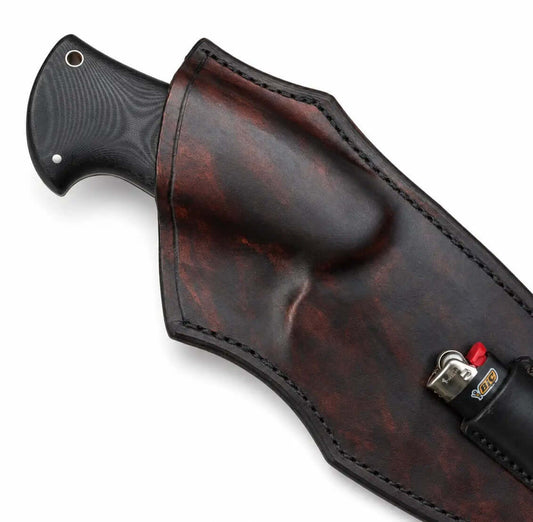
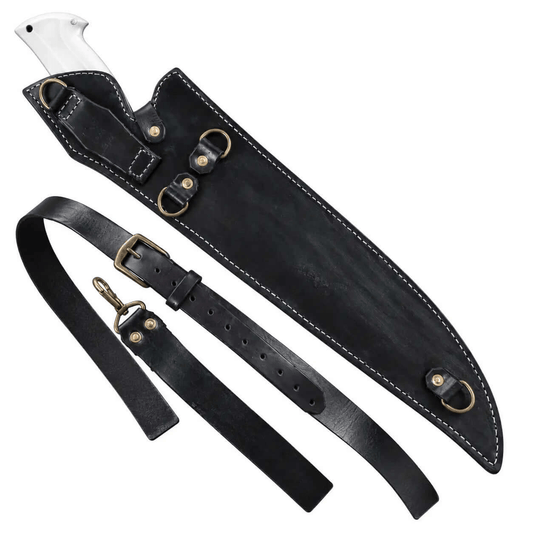
A good sheath holds the knife securely and protects both the blade and you. Our handmade fixed blade knives come with a leather sheath. Leather is quiet, comfortable and traditional, and it molds to the knife over time. Most sheaths ride vertically on the belt. Horizontal sheaths sit across the back of the belt and stay out of the way when sitting or riding. Cross-draw sheaths sit on the opposite hip with the handle angled forward.
Choosing the Right Blade Length
For field dressing and everyday tasks, 3 to 4.5 inches gives the most control. For camp work and bushcraft, 4 to 6 inches is the usual range. Bowies and choppers run from 7 inches upward. Overall length matters as well: a longer handle gives more leverage, and a shorter knife is easier to wear all day.
Caring for a Fixed Blade Knife
Wash the blade by hand, dry it fully and wipe carbon steel and Damascus with a thin coat of oil. Hone the edge lightly and often. Don't store a damp knife in a leather sheath, and condition the sheath now and then so it stays supple.
Compare blade shapes, tangs, steels and handles above to find the fixed blade knife that fits the way you work.